.svg)


Latest Updated: July 2026
Quick summary: Access control in construction means managing who can enter your site, which zones they can access, and when. Modern systems go far beyond a locked gate: they combine smart badges, biometric verification, real-time location tracking, and automated compliance monitoring to give project teams full visibility into their workforce at all times. This guide covers the types of systems available, the benefits, OSHA requirements, and how platforms like Kwant deliver contractor access management at scale.
What is Access Control?
Access control refers to regulating and restricting access to physical and digital resources. It involves determining who can access specific resources, under what conditions, and for what purposes.
Implementing access control systems for construction sites is crucial for maintaining safety and security and ensuring smooth and efficient operations. By effectively controlling access, construction companies safeguard the well-being of their workers and protect valuable equipment and materials. It helps minimize the risk of accidents and comply with regulatory standards.
Kwant access control on construction sites manages who can enter various physical areas throughout the project. It guarantees that only authorized individuals like employees, suppliers, contractors, and visitors can access the site, buildings, or specific rooms at any given time.
What is a Contractor Access Control System?
A contractor access control system is a purpose-built platform that manages the entry, movement, and compliance status of external contractors working on a construction site. Unlike standard employee access systems, contractor access control must account for rotating rosters, multi-tier subcontractor hierarchies, varying certification requirements, and short-term site assignments.
This is one of the most searched questions reaching this page. The answer matters because a contractor access control system does more than verify identity at the gate. It tracks active certifications, enforces zone-level permissions based on trade and authorization level, generates audit-ready documentation, and integrates with project management software to keep labor records accurate.
On a large construction site, a contractor who arrives without a current OSHA certification, an expired COI, or an incomplete site-specific orientation is not just a compliance risk. They are a schedule risk and a liability. A proper contractor access management system prevents that worker from entering until the gap is resolved, automatically, without a safety manager having to manually review a binder of documents.
How to Manage Construction Site Access Digitally
Managing construction site access digitally means replacing paper sign-in sheets, manual badge checks, and spreadsheet-based credential tracking with a connected platform that handles the entire access lifecycle automatically.
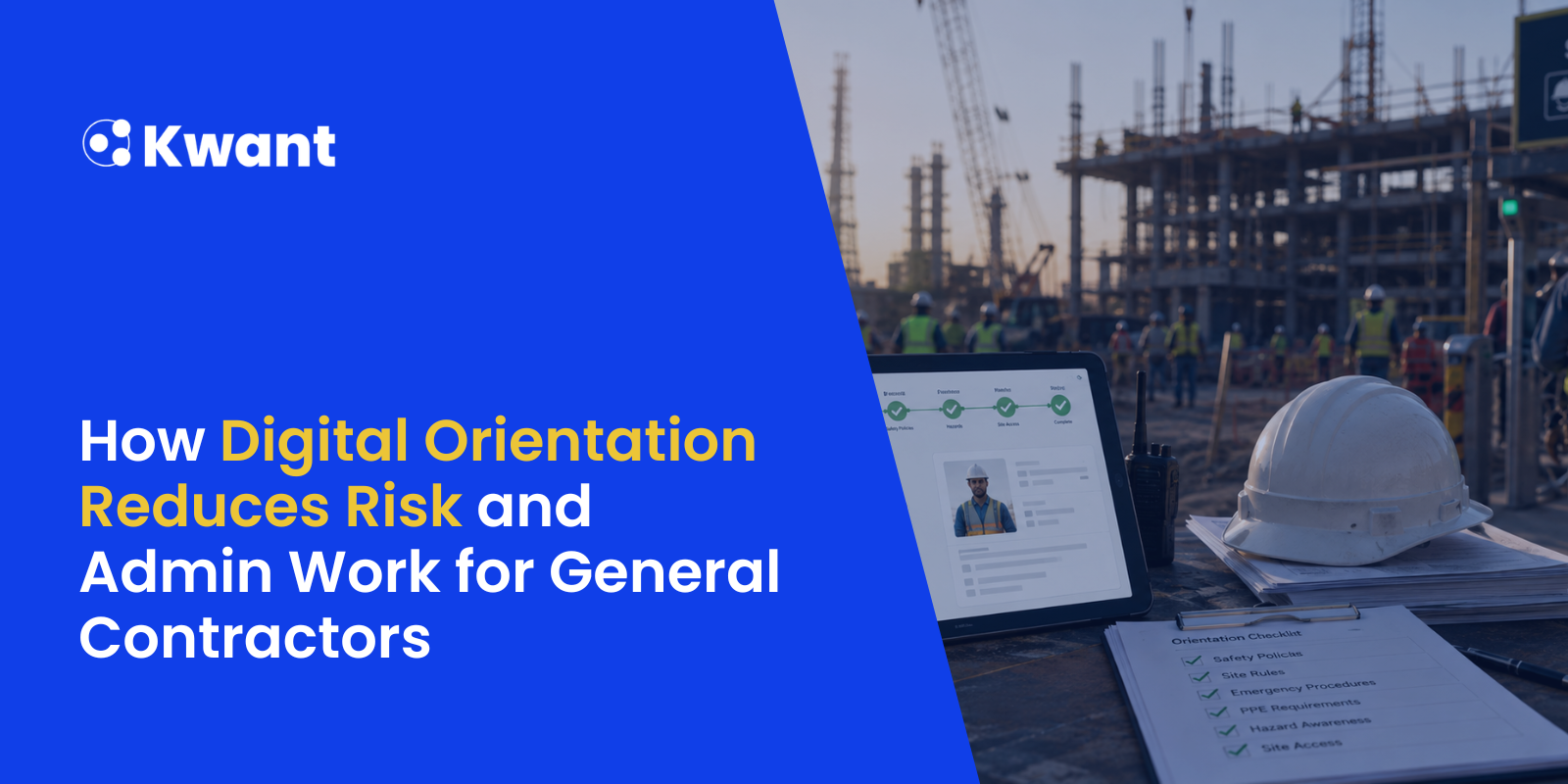
The core workflow looks like this. Before a worker arrives on site, they complete their safety orientation and upload their certifications through a digital onboarding process on their own device. Once their profile is verified, they receive a QR code or smart badge. When they arrive at the gate, their identity is confirmed and their credentials are checked in real time. If everything is current, access is granted. If a certification has lapsed, access is automatically held until it is renewed.
Once on site, zone-level access rules determine where each worker can go based on their trade, authorization level, and the current phase of the build. Every entry and exit is logged with a timestamp tied to a verified identity, building a continuous, audit-ready access record without any manual data entry.
Construction site access control plans are becoming increasingly common as owners and hyperscalers require documented proof of how access will be managed before a project begins. A digital platform supports these plans by making the access record automatic, verifiable, and accessible on demand.
5 Types of Access Control Technology in Market
Access control technologies encompass a variety of methods and systems used to regulate and manage access to physical and digital resources. Here are the key types available in 2026:
- Key Card Systems: Utilizes encoded cards for access control, granting entry when presented to card readers. Common on smaller sites but limited by the risk of credential sharing and lost cards.
- Biometric Access Control: Verifies identity using unique physical traits like fingerprints or iris patterns for accurate authentication. Eliminates the risk of shared or lost credentials.
- Facial Recognition: A facial recognition device iIdentifies individuals by analyzing facial features captured by cameras, providing touchless access and enhancing security. Increasingly used on high-security data center and mission-critical construction sites where identity verification must be tamper-resistant.
- Mobile Access Control: Turns smartphones into digital keys for unlocking doors or gates using mobile apps and wireless technology. Particularly valuable on open sites or campuses where installing fixed hardware at every access point is not practical.
- Turnstile Systems: Uses rotating gates to control passage, often integrated with access control systems to regulate entry and exit efficiently.Kwant's turnstile integration logs every badge event and pushes the data directly into workforce reporting.
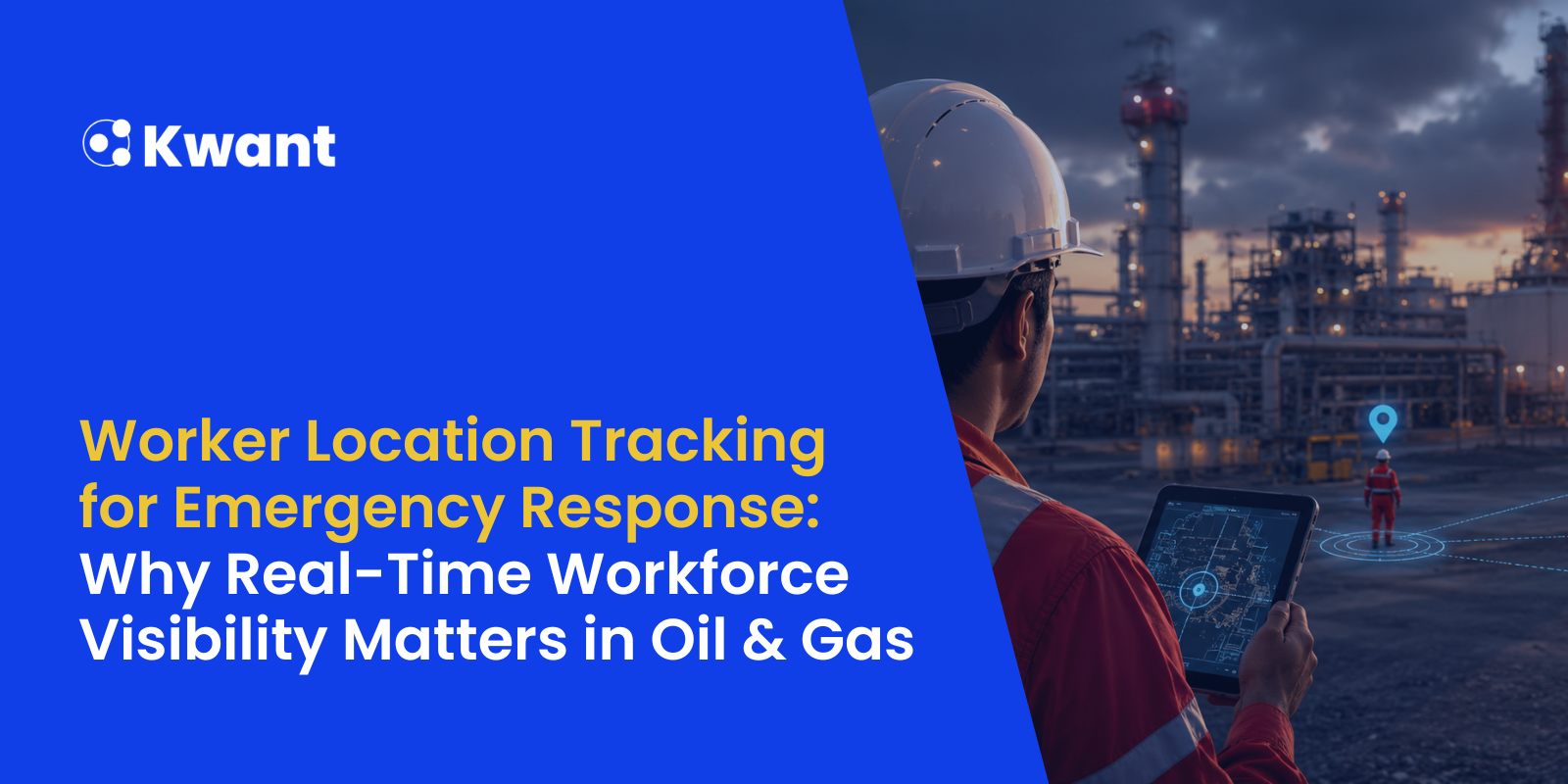
- Smart Badge and IoT Sensor Systems: A newer category that goes beyond gate control. Smart badges communicate with a network of IoT sensors installed across the site, passively tracking worker location through zones without requiring manual check-ins. This enables real-time location tracking, trade stacking detection, zone breach alerts, and productivity heatmaps across the full site footprint.
.png)
What is a Construction Site Access Control Plan?
A construction site access control plan is a documented framework that defines how access to a site will be managed throughout the project lifecycle. It typically covers which access points will be monitored, what credentials workers must hold before entry, how zones will be defined and enforced, what happens when credentials lapse, and how emergency mustering will be conducted.
Owners, general contractors, and hyperscalers increasingly require a formal access control plan as a pre-condition of mobilization. For GCs managing large or high-security builds, having a digital platform that enforces the plan automatically, and generates the documentation to prove it, is the most defensible approach.
Key components of a construction site access control plan include credential requirements by trade and tier, zone definitions and access rules for each project phase, procedures for credential expiration and access suspension, visitor management protocols, and emergency evacuation and mustering procedures.
5 Benefits of Access Control Systems for Construction Sites
Access control technology offers numerous benefits that enhance operational management and safeguard assets in construction sites. Here are the key benefits of using access control technologies on the construction site:
- Workforce Visibility: Access control systems provide real-time visibility of workforce presence on-site. It allows project managers and supervisors to monitor the whereabouts of workers, contractors, and visitors, ensuring that only authorized individuals are on-site at any given time. On large sites with thousands of workers, this visibility extends to zone-level location data through RTLS sensors, not just a headcount at the gate.
- Remote Site Management: Access control allows project managers to remotely manage construction sites. They can oversee access logs, manage permissions, and even implement site lockdowns from a distance. This capability reduces the necessity of physical presence on-site and streamlines operations. This reduces the necessity of physical presence on-site and allows companies to manage multiple locations from one dashboard.
- Enhance site security: Controlling access points throughout the construction site improves security and enhances the experience for everyone at the location. Companies can send emergency alerts to employees and notify them instanly in case of any emergencies.
- Automate Worker Attendance: Instead of relying on manual sign-in sheets, Kwant automates attendance using turnstile and access control software, eliminating bottlenecks at entrances. This automation provides accurate records of worker check-in and check-out times, reducing manual errors and simplifying payroll processing.
- Reporting and Analytics: Access control systems offer construction companies invaluable benefits in reporting and analytics by merging hardware and software to provide real-time data and digital transparency. Incorporating AI-based technology improves these systems with predictive analytics, offering insights into access patterns and operational performance. Kwant provides automated real-time field data for accuracy and consistency.
Site Access and Security: Biometric Access Control in Construction
Biometric access control in construction is growing rapidly, particularly on data center campuses, airport construction projects, and other high-security builds where the consequences of unauthorized access are severe.
The core advantage is identity certainty. A key card can be shared or lost. A biometric marker cannot. Facial recognition systems capture a worker's facial geometry during onboarding and match it in real time at every access point. This eliminates proxy badging, where one worker scans in for another, which is one of the most common ways inaccurate headcounts and compliance gaps occur on large sites.
On a site with 3,000 or more workers rotating across multiple shifts, biometric access control also dramatically reduces queue times at entry points compared to manual badge checks. Workers move through turnstiles faster when verification is automatic.
Construction Site Access Requirements: What Owners and Regulators Expect
Construction site access requirements vary by project type, owner, jurisdiction, and regulatory framework. In 2026 these requirements are more demanding than they have ever been, particularly on mission-critical, government-adjacent, and publicly funded projects.
At the federal level, OSHA regulations govern who may perform certain types of work and what certifications they must hold. Hyperscalers and enterprise data center owners layer additional requirements on top, including NDA acknowledgment tied to badge issuance, background check verification at the individual worker level, zone separation between contractor tiers, and daily headcount reporting by building section.
Publicly funded projects are increasingly subject to MWBE reporting requirements, which require GCs to document and verify the presence and hours of Minority and Women-owned Business Enterprise subcontractors on site. Automated access systems generate this data as a byproduct of normal operations, eliminating the manual reporting burden.
What are Osha construction safety checklist?
Occupational Safety and Health Administration also known as OSHA sets rules and standards to ensure safety at construction sites. Their checklist outlines essential safety measures that must be followed to prevent accidents and injuries. Construction work is inherently risky so employers must prioritize safety.
If the companies fail to meet these standards can lead to serious consequences, including substantial fines, worker injuries, and operational disruptions. Therefore, every employer and contractor must prioritize OSHA compliance to safeguard both personnel and project integrity.
Here is the OSHA construction safety checklist:
- Personal Protective Equipment (PPE): Ensure appropriate PPE such as Hard hats, safety glasses, or face shields is provided and used at all times.
- Scaffold Safety Measures: Use guardrails, mid rails, safety nets, and fall protection systems. Inspect it before each shift.
- Ladders/Stairways: Inspect the ladder for stability and condition before use, place it on a stable surface, and extend 3 feet above the landing.
- Electrical Cords/Tools: Establishes safety requirements for electrical installations. Requirements cover electrical installations, wiring methods, equipment, and grounding.
- Fire Protection: On-site fire suppression systems and personnel training on fire prevention and emergency response for diverse hazards like combustibles and flammables.
- Medical services: Ensures workplace access to medical care, general medical consultation, visible emergency numbers, and accessible, replenished first aid kits in each work area.
Access control intersects directly with OSHA compliance because it creates the verifiable record that a worker completed their required orientation and holds current certifications before setting foot on the site. Without that documentation, compliance becomes an assumption rather than a verified fact.
How does Kwant AI access control system installation work?
Access control installation in the construction industry typically involves several key steps. Here are the Kwant's installation process steps:
- Site Assessment: A Kwant representative will work with you to assess your specific needs and design a customized access control plan for your construction site.
- Equipment Installation: Kwant technicians install biometrics, turnstiles, card readers, badges, and IoT sensors at designated entry points and across interior zones where workforce tracking is required.
- System Configuration: The Kwant system is configured with access levels, user permissions, zone rules, and safety protocols tailored to your project. Integrations with Procore and other platforms are set up during this phase.
- Worker Training: Kwant provides training for your workers on how to use the access control system, the mobile app, and smart badges.
- Ongoing Support: Kwant offers ongoing support to ensure your system runs smoothly and to address any questions or concerns you may have.
Explore Kwant's Access Control System for Construction Site Security
Why use Kwant AI access control software for construction sites
Kwant AI offers innovative easy-to-install access control and turnstiles solutions for construction sites to enhance safety and efficiency. The access control software is complemented by heatmaps and turnstiles, ensuring a secure environment. Kwant’s technology in access control systems for construciton sites streamlines jobsite safety through contactless systems and turnstile options. It makes it easier to manage the flow of personnel and reduce the risk of vandalism and theft.
Benefits of using Kwant’s access control systems for construction sites:
- Automated Credential Monitoring: Effortlessly manage worker certifications such as OSHA and SST, with automated alerts for expirations, ensuring only compliant personnel are on-site.
- Facial Recognition for Verification: AI-powered biometrics like facial recognition improve site security by accurately automating and verifying workers' identities. It mitigates the risks of accidents, vandalism, theft, and identity fraud on the site.
- Efficient Worker Headcount: Automate attendance tracking to improve accuracy and operational efficiency, eliminating entrance bottlenecks. Kwant access control tracks the entry and exit times of the workers and contractors.
- Jobsite compliance: Kwant access control maintains safety regulations effortlessly, reducing heavy fines and liabilities.
- Comprehensive Safety Audits: Conduct thorough safety audits and enforce strict protocols confidently, safeguarding personnel and project integrity.
- Data-Driven Decision-Making: Access real-time insights and analytics through a user-friendly dashboard. It assigns proactive decision-making and predictive safety measures.
You Must Also Read:- What is facial recognition ?
Top 3 Access Control Systems for Construction Sites
Kwant AI
Kwant AI is a workforce management and safety platform that utilizes IoT devices and software to accelerate construction by providing real-time safety and productivity measures. It offers innovative access control solutions tailored for construction sites ncluding data center campuses, oil and gas facilities, airport construction programs, and large-scale multifamily developments.
Kwant automates attendance without the need for traditional turnstiles, headcounts, or sign-in sheets, thus eliminating bottlenecks at entrances. Their system utilizes smart badges and software to streamline site safety, providing heatmaps and turnstile options to enhance security measures.
Other features of Kwant AI are:
- Real-time insights, alerts, and analytics on projects
- Automate construction daily reports
- Smart badges with real-time headcount automation
- Compliance management includes tracking certificates and licenses
- Zone IQ heatmaps for labor distribution and trade stacking detection
- AI Assistant for instant workforce reporting in plain languageFatigue monitoring for high-risk zone workers
- Mobile app with offline scanning capability
Smart Barrel
Smart Barrel is a software that offers a biometric access control specifically for construction sites. It utilizes AI-powered biometric facial verification to enhance site security. The system is easy to set up and can be operational in less than five minutes, with the ability to connect seamlessly to turnstile or maglock access points.
Smart Barrel provides comprehensive CYA (Cover-Your-Ass) reports by automatically logging and verifying every worker that enters and leaves the site, ensuring only authorized personnel have access and improving overall workforce management.
Other features of Smart Barrel:
- Automate your construction time tracking
- Real-time headcounts
- Cost Tracking / Productivity
- Construction Manpower Tracking
Eyrus
Eyrus offers a comprehensive access control platform designed specifically for construction operations teams to monitor real-time activity across project sites. The platform provides flexible zoning, layered security, and a visibility app to manage data effectively, ensuring that the right information is accessible to the right person at all times.
Eyrus NFC-based badges and a real-time dashboard allow for secure access management and insights into site logistics. It offers a versatile solution for construction companies looking to enhance security and operational efficiency. Eyrus access control fits any site and controls and restricts access for 100% of workers.
Other features of Eyrus
- Worker registration and onboarding
- Automate time and attendance
- Video monitoring
- Evacuation and Mustering
- Daily reporting
Want to Know More About Access Control for Construction?
As the construction industry undergoes a digital revolution, Kwant's access control systems are the key to unlocking a future of enhanced safety and maximized productivity. Kwant innovative solutions offer seamless integration of smart badges, turnstiles, and advanced biometrics like facial recognition to ensure only authorized personnel access sensitive areas. Its features include touchless access control, remote access and monitoring, reporting and analysis, employee identification, certifications management, immediate notifications, and full accountings.
Ready to enhance site safety and streamline operations for your next construction project? Request a free demo today and discover how Kwant can elevate your construction site management. Safeguard your workforce and optimize productivity with Kwant AI.
Frequently Asked Questions
1. What is access control in construction?
Access control in construction is the system of policies, technology, and processes that determine who is allowed to enter a construction site, which zones they can access, and when. It combines hardware like turnstiles, biometric readers, and smart badges with software that manages credentials, tracks compliance, and generates audit-ready records. Modern construction access control goes beyond the gate to provide real-time workforce visibility across every zone and structure on the site.
2. What is a contractor access control system?
A contractor access control system manages the credentialing, entry, and compliance tracking of external contractors on a construction site. It verifies that every contractor holds current certifications. It understands that all contractors have completed site-specific safety orientations, and is authorized for the specific zones they need to access. When a credential expires, the system automatically suspends access until it is renewed, without requiring manual intervention from a safety manager.
3. What is a construction site access control plan?
A construction site access control plan is a documented framework defining how site access will be managed from mobilization through project completion. It covers access point locations, credential requirements by trade and contractor tier, zone definitions and enforcement rules, visitor management procedures, and emergency mustering protocols. Owners and hyperscalers increasingly require a formal access control plan before mobilization begins.
4. How do I manage construction site access digitally?
Digital construction site access management begins with a workforce onboarding platform where workers complete safety orientations and upload certifications before arriving on site. They receive a smart badge or QR code upon verification. At the gate, biometric readers or mobile scanners confirm identity and check credential status in real time. Zone-level sensors or access readers track movement across the site throughout each shift. All of this data feeds automatically into reporting, compliance, and payroll systems without manual data entry.
5. What are the OSHA requirements for construction site access?
OSHA does not prescribe a specific access control technology but requires that construction sites ensure only authorized workers perform regulated tasks. OSHA requires all appropriate certifications are current, and that safety orientations are completed before work begins. Access control systems support OSHA compliance by creating a verifiable, timestamped record of every worker's orientation completion, certification status, and site presence, which is the documentation required during an OSHA inspection or audit.
6. What is biometric access control in construction?
Biometric access control uses unique physical characteristics, most commonly facial geometry, to verify a worker's identity at site entry points. It eliminates credential sharing, where one worker badges in for another, which is one of the most common causes of inaccurate headcounts on large construction sites. Biometric systems are particularly common on mission-critical data center builds, airport construction programs, and other high-security projects where identity verification must be tamper-resistant.
7. What is the difference between site access control and building access control?
Site access control manages entry to the overall construction site boundary, typically at perimeter gates and guard shacks. Building access control manages entry to specific structures, floors, or zones within the project, enforcing different permission tiers based on trade, authorization level, and construction phase. A complete construction workforce platform manages both layers from a single system, with zone-specific rules that update automatically as the project progresses.
8. How does access control improve contractor access management on large programs?
On large programs with hundreds of contractors cycling in and out across multiple sites, manual contractor access management is not scalable. A platform like Kwant maintains a central database of every contractor's credentials, certifications, and access history. Workers enrolled once can be deployed to any site in the program with site-specific access rules applied automatically. Compliance issues surface in real time rather than being discovered during audits, and the full contractor access record is available on demand without requiring each site team to compile documentation separately.


%20(1).svg)


