.svg)



Last Updated: August 2026 | Published on November 2025
Overview
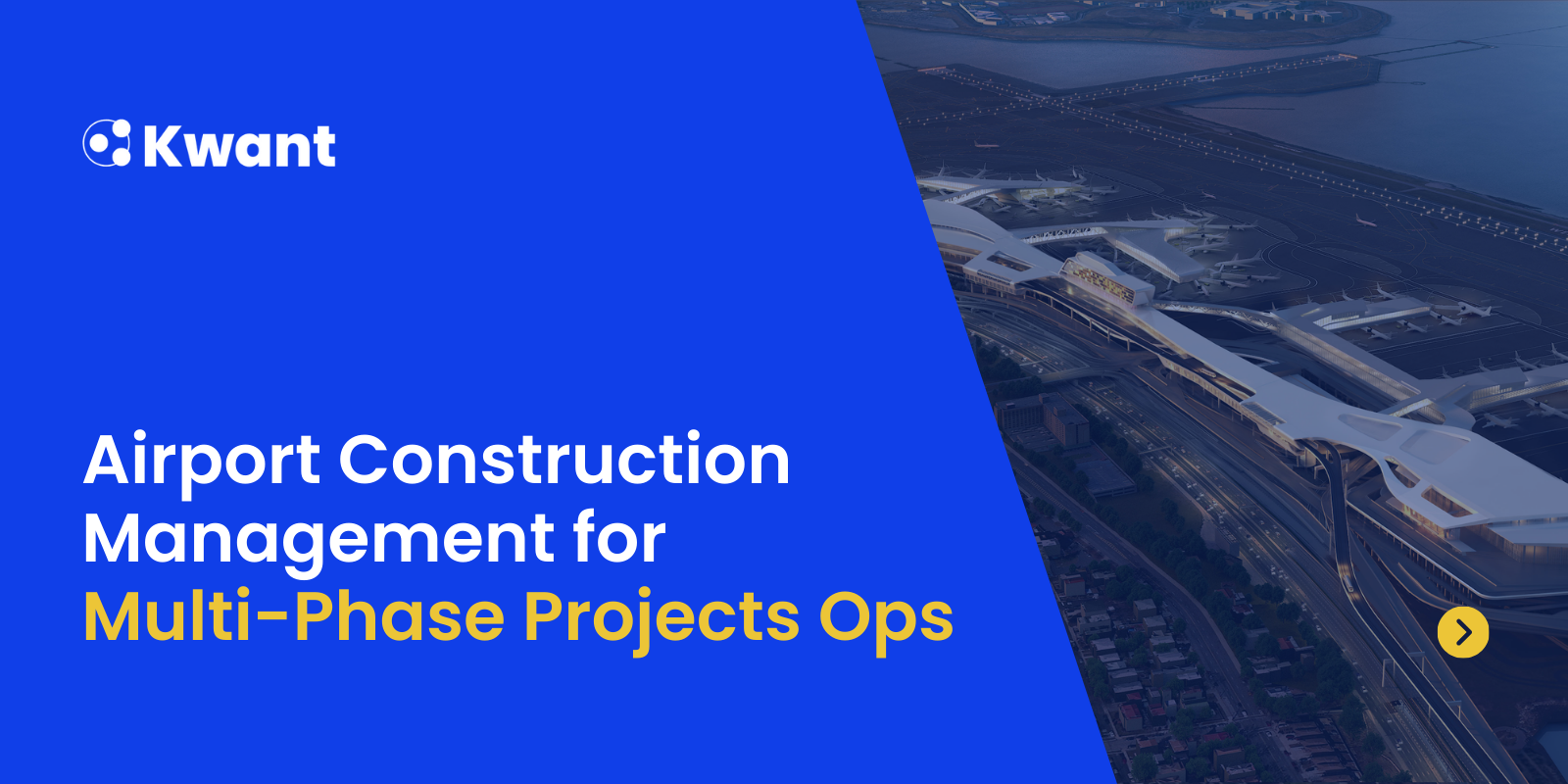
Managing an airport construction project is nothing like building a typical commercial facility. Airports operate 24/7, must ensure passenger safety, and depend on strict coordination with airlines, security agencies, and government authorities. As a result, airport construction management requires detailed planning, real-time communication, and a strong understanding of how every phase affects airport operations.
The scale of investment makes this precision even more critical. The FAA's Airport Improvement Program (AIP) provides more than $3.18 billion annually in entitlement and discretionary grant funds for a network of more than 3,300 eligible airports. On top of that, through the Infrastructure Investment and Jobs Act, a total of $5 billion has been allocated. Approximately $1 billion annually from 2022 through 2026, to provide competitive grants for airport terminal development projects. With federal funding at this level, delivering airport construction programs on time and in compliance is not just a project goal, it is a public accountability requirement.
This article breaks down how to effectively plan, execute, and deliver multi-phase airport construction projects, from early expansion planning to terminal handover.
Understanding the Airport Construction Lifecycle
Phase 1: Airport Expansion Project Planning
Planning is the most critical stage of any airport expansion project. Teams must forecast future passenger traffic, meet regulatory requirements, and coordinate with a long list of stakeholders. This includes airport authorities, airlines, GCs, subcontractors, TSA, and municipal agencies.
During this phase, effective workforce planning and risk evaluation help teams anticipate delays, manage capacity, and sequence complex construction packages. Airport construction project management at this stage also means establishing the digital systems, credentialing workflows, access protocols, compliance documentation, that will govern the entire program before the first worker steps on site.
Phase 2: Airside vs. Landside Uses and Dependencies
Airside areas involve strict access requirements, security protocols, and controlled operations under FAA Advisory Circular 150/5370-2, which governs operational safety on airports during construction. Landside zones such as parking, check-in areas, and roadways must remain operational while construction continues.
Understanding these access restrictions helps teams schedule workers, plan materials movement, and coordinate with airport operations. This distinction is also where airside construction coordination becomes one of the most operationally sensitive aspects of the entire program, covered in detail below.
Phase 3: Airport Terminal Construction
Terminal construction is one of the most visible parts of a project. Passenger flow, queuing, and safety must remain uninterrupted while teams renovate or expand key areas. This requires strategic sequencing, noise control, temporary structures, and night work to reduce disruption. It also demands rigorous safety orientation for every worker before accessing active terminal zones, and worker certification tracking to verify that credentials remain current throughout each construction phase.
Key Challenges in Multi-Phase Airport Construction Management
Working in Operational Environments
Airport construction never fully stops passenger activity. Crews often work next to live terminals, service roads, and runways. Protecting passenger safety and minimizing operational disruptions are daily priorities for every airport construction project management team.
How Contractors Manage Secure Site Access on Airport Construction Jobs
Airport projects involve strict credentialing that goes well beyond a standard construction badge. Workers typically require Security Threat Assessment (STA)-level background checks, airport-issued ID badges, and in many airside zones, escort supervision when operating near active aircraft movement areas. Managing multiple access points and contractor rotations adds significant complexity, particularly on large programs where dozens of subcontractors rotate in and out across different project phases.
Digital access control and facial recognition check-in reduce bottlenecks at entry points by automating credential verification. Smart wearables like IoT-enabled badges and hard hat tags, extend this visibility beyond the gate, giving airport construction managers a real-time view of where credentialed workers are located across airside and landside zones without requiring manual verification at every access point.
How Airside Construction Is Coordinated with Airport Operations
Airside construction is coordinated through a formal Construction Safety and Phasing Plan (CSPP) required by FAA Advisory Circular 150/5370-2. The CSPP defines construction activity windows, worker access routes, equipment staging areas, and the notification actions required for each phase of work. It also governs NOTAM (Notice to Airmen) coordination, only the airport operator may initiate or cancel NOTAMs on airport conditions, and is the only entity that can close or open a runway.
This means airside construction teams must maintain constant communication with airport operations, coordinating daily start and finish times, phasing sequences, and any changes that affect active aircraft movement areas. Errors in this coordination such as a late material delivery, a crew overrunning their approved window can force runway closures or delay flights, with cascading costs across the entire program.
What Logistics Challenges Come with Airfield Construction?
Airfield construction introduces logistics constraints that do not exist on any other type of project:
- Strict time windows: Most airfield work, runway resurfacing, taxiway reconstruction, airfield electrical, can only occur during approved off-peak periods when aircraft movement is suspended.
- Foreign Object Debris (FOD) management: Waste and loose materials are capable of causing damage to aircraft landing gears, propellers, and jet engines. Construction contractors must not leave or place FOD on or near active aircraft movement areas. Under 14 CFR Part 139, certified airports must remove debris, foreign objects, and contaminants promptly from all paved areas and conduct daily self-inspections.
- Controlled material movement: All deliveries, equipment movement, and material staging must be approved and tracked to prevent inadvertent FOD creation or encroachment on active aircraft surfaces.
- Wildlife and erosion management: Disturbed ground near airfields requires active management under FAA guidance to prevent wildlife attractants and erosion debris from entering AOA areas.
Zone-level monitoring tools like Kwant's Zone IQ help safety managers verify that crews remain within approved construction boundaries and that high-risk areas are cleared before flight operations resume. Directly supporting the end-of-shift inspection requirements under FAA regulations.
Data Fragmentation and Compliance Complexity
Large airport projects generate thousands of daily data points from daily reports to compliance documents. Coordinating this information across contractors and internal teams becomes difficult without centralized systems. Fragmented data leads to the same problem seen on other large projects: different departments maintaining different versions of the workforce record, with compliance gaps only discovered during owner audits or regulatory reviews.
Best Practices for Airport Construction Management
Build a Strong Multi-Phase Strategy
Create a clear sequence of work with defined milestones. Include realistic buffers for procurement delays, weather, and stakeholder approvals.
Improve Workforce Visibility and Access Control
Digital workforce tools reduce bottlenecks at entry points. Smart badges, IoT sensors, and zone-based access settings help teams track who is on site and where they are working.
Enhance Safety and Compliance Tracking
Automated credentialing ensures only qualified, STA-cleared workers enter restricted zones. Real-time incident tracking and environmental monitoring help teams respond faster to risks. Worker certification tracking provides automated expiry alerts for OSHA cards, equipment qualifications, and employer-required credentials, preventing access issues that could stall airside work windows.
Use Real-Time Data to Drive Decisions
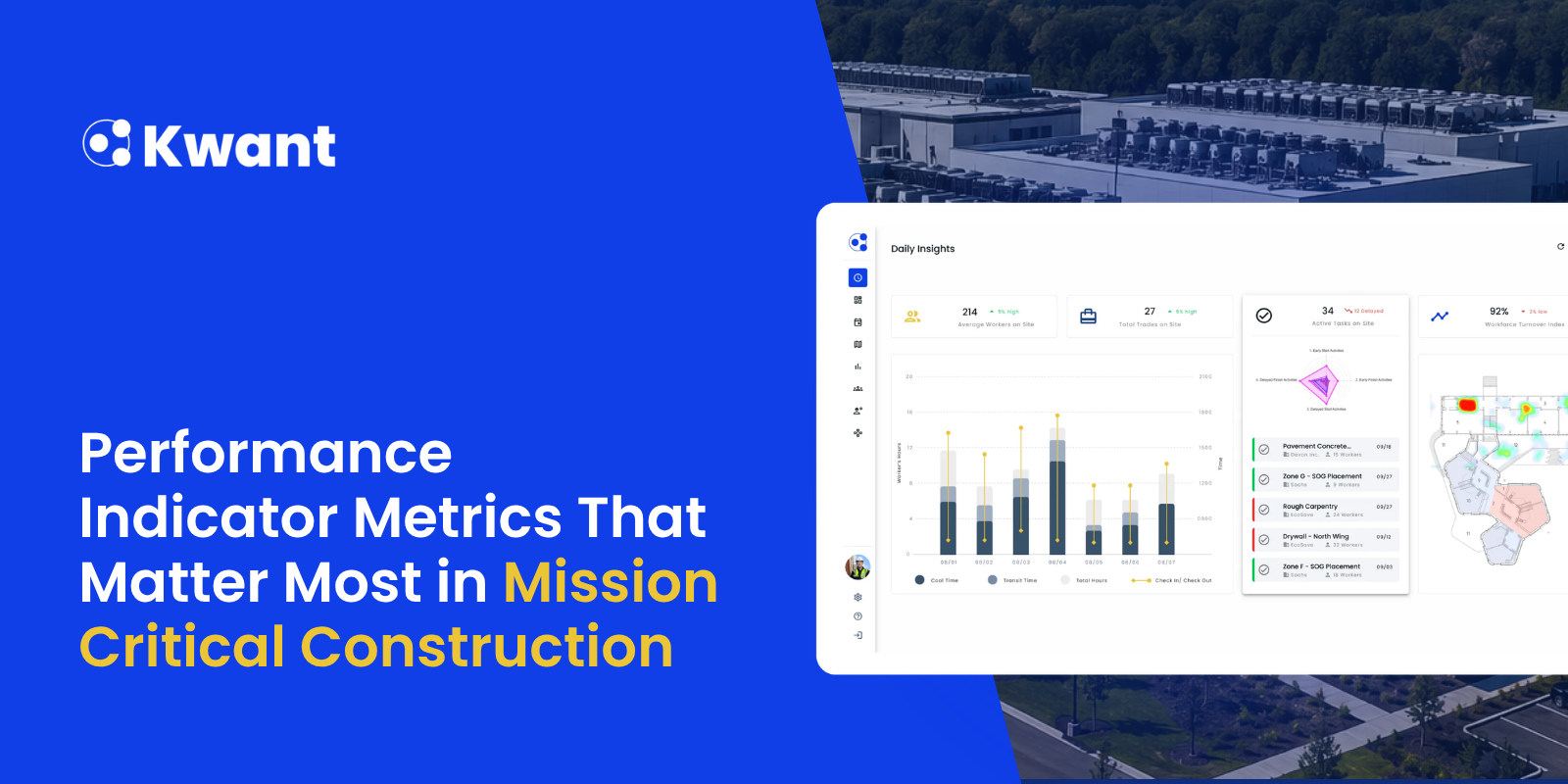
Dashboards and predictive analytics give teams visibility into delays, productivity issues, and safety trends that manual reporting cannot surface in time. This insight helps leaders adjust manpower, improve sequencing, and prevent rework.
Use AI Airport Construction Tools to Drive Decisions
Kwant's Bob AI Assistant enables project teams to query live workforce data in natural language. Asking questions like "How many credentialed workers are currently in Zone C?" or "Which subcontractors haven't completed orientation?" and receive immediate answers without pulling a manual report.
AI-powered predictive analytics takes this further, identifying emerging patterns like overtime increases, declining trade attendance, recurring congestion at access points before they become schedule impacts. For programs managing multiple airport sites simultaneously, portfolio analytics consolidate workforce data across all locations into a single enterprise view.
Case Study Approach: From Check-In to Take-Off
Early-Stage Construction
Work often begins far from the terminals, with utilities, roadway modifications, staging areas, and temporary structures. These early moves set the tone for safety, traffic flow, and scheduling. AI airport construction workflows at this stage focus on pre-arrival credentialing — ensuring every worker from every subcontractor completes safety orientation, background verification, and access registration before their first day on site.
This upstream onboarding reduces mobilization congestion and ensures the access control system already holds verified credentials before a single badge is issued.
Mid-Phase Terminal Construction
Interior construction demands careful coordination. Crews must work around ongoing airport operations, maintain clean routes for passengers, and minimize noise. Sequencing becomes crucial for MEP, drywall, finishes, and inspections.
AI airport construction applications provide continuous workforce visibility throughout this phase. Monitoring zone-level congestion, tracking trade distribution across active work areas, and flagging when labor is not aligned with the construction schedule. For a detailed look at how workforce analytics support this stage, see: How Workforce Insights Keep Airport Expansions on Track.
Final Handover and Operational Readiness
Before opening a new terminal area, teams must verify systems, complete punch lists, and conduct operational tests. Collaboration with airlines, airport staff, and security is essential for a smooth transition. The Workforce OS provides a complete workforce record from initial onboarding through final access revocation.This give airport operators auditable documentation that every person who worked in the new facility was credentialed, oriented, and compliant throughout the program.
How Kwant Helps Simplify Multi-Phase Airport Construction Management
Kwant supports complex airport projects by giving general contractors and project owners real-time visibility into workforce activity and site conditions. Its workforce intelligence platform for airports centralizes safety, access control, compliance, and analytics into a single workflow.
With automated reporting and AI-powered risk insights, mass alert texting, teams reduce delays, improve coordination, and boost safety, critical factors for any operational airport environment.
Final Thoughts
Airport construction projects succeed when planning, communication, and technology come together. By understanding the full lifecycle, from expansion planning to terminal commissioning, teams can deliver high-quality work while keeping airport operations safe and uninterrupted.
Ready to streamline workforce operations on airport projects? Contact Kwant to discover how jobsite intelligence transforms multi-phase airport construction.
Most Asked Questions on Airport Construction Management
1. What makes airport construction management different from typical commercial projects?
Airports run 24/7 and must prioritize passenger safety while coordinating with airlines, security agencies, and government authorities. That means construction teams need detailed, multi-phase planning, real-time communication, and constant awareness of how each phase affects live operations, from terminals to service roads and runways.
2. What are the key challenges in multi-phase airport construction, and which best practices help address them?
Challenges include working next to live operations, complex workforce logistics and access control, and fragmented data and compliance processes. Effective responses include: building a clear multi-phase strategy with milestones and buffers; improving workforce visibility and access control with digital tools (e.g., smart badges, IoT sensors, zone-based access); enhancing safety and compliance via automated credentialing, real-time incident tracking, and environmental sensors; and using real-time dashboards and predictive analytics to spot delays, optimize sequencing, and prevent rework.
3. What is Foreign Object Debris (FOD) and how does it affect airport construction safety?
Foreign Object Debris is any material left on an airside surface that could damage aircraft or injure personnel, thus, is one of the strictest compliance concerns in airport construction. A single bolt, piece of rebar, or fragment of concrete near a taxiway can cause catastrophic engine damage. FAA regulations require active FOD prevention programs on all airside construction projects, including designated staging areas, controlled material movement, and end-of-shift inspections. GCs who don't have real-time visibility into where crews are working and what materials are staged near active airfield surfaces carry significant liability. Zone-level monitoring tools like Kwant's Zone IQ help safety managers verify that crews stay within approved work boundaries and that high-risk areas are cleared before flight operations resume.
4. How do you manage workforce scheduling during night-shift airport construction?
Many airport construction activities like runway resurfacing, airfield electrical work, terminal tie-ins, can only happen during off-peak hours, typically between 10 PM and 5 AM, to avoid disrupting flight operations. Managing rotating night crews across multiple subcontractors requires tight attendance tracking, clear task handoffs between shifts, and real-time confirmation that the right credentialed workers are on-site for each scope. Gaps in shift coverage on the critical path can mean a lost night's work that compresses the entire schedule. Kwant's location-based attendance tracking and zone monitoring give safety managers live visibility into who is on-site, where they are working, and whether tasks are progressing on schedule — without manual sign-in sheets.
5. How does Kwant help simplify multi-phase airport construction?
Kwant gives GCs and owners real-time visibility into workforce activity and site conditions, centralizing safety, access control, compliance, and analytics in one workflow. With automated reporting and AI-powered risk insights, teams coordinate more effectively, reduce delays, and strengthen safety—critical advantages when building in an operational airport environment.

.png)
%20(1).svg)


