.svg)


The 7th American LNG Forum brought together operators, EPCs, and technology leaders in Houston to talk about where the LNG industry is headed, and how to actually get there.
Across two days, the focus wasn’t just on market trends, but on execution: scaling projects, adopting new technologies, and delivering faster, safer, and more efficiently.
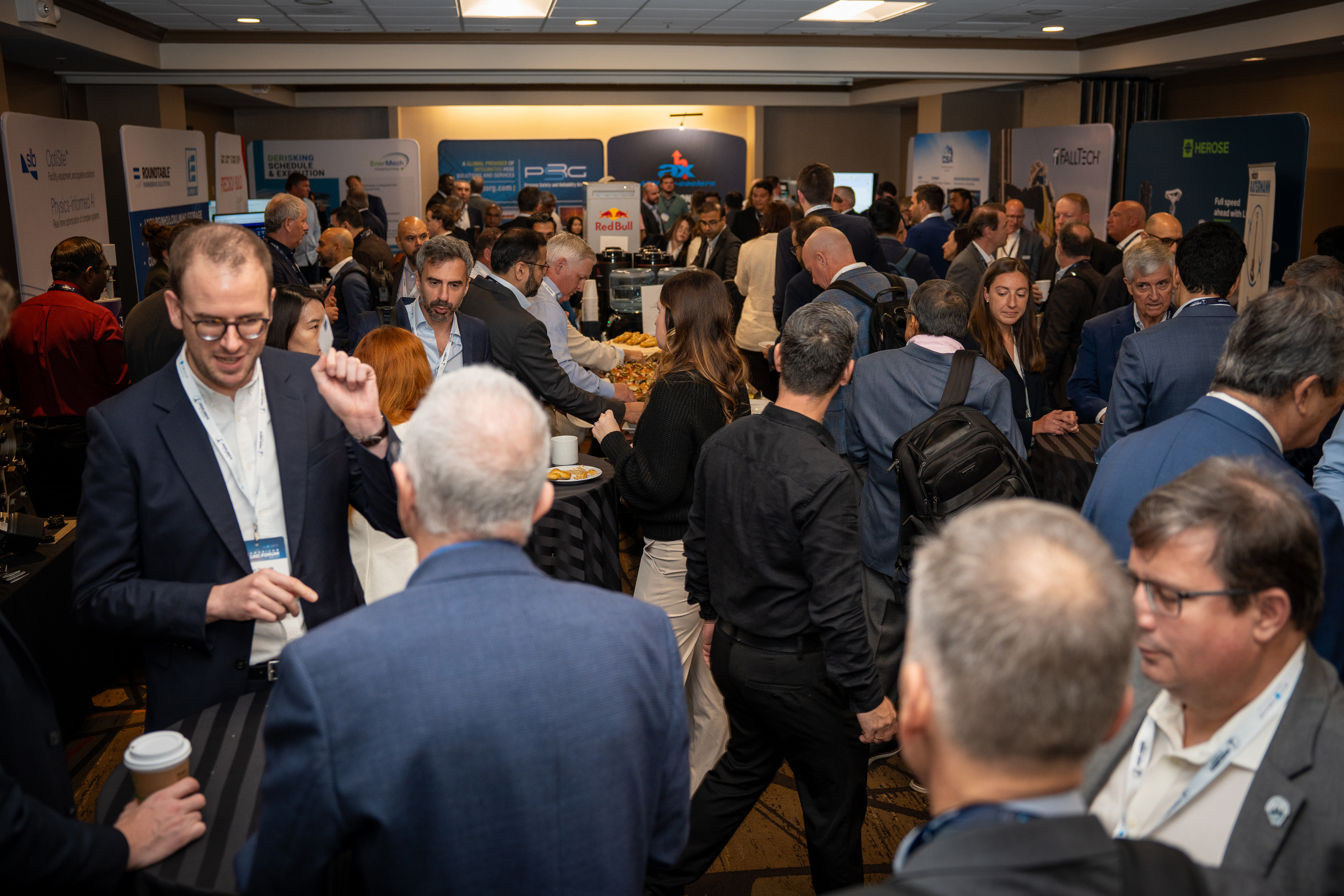
Less theory, more real conversations about what it takes to build and operate at scale.
We heard all the buzzwords.
Upstream. Downstream. Brownfield. Modularization. Floating LNG. Nuclear integration. AI. Automation.
None of this is new.
But what is changing is how seriously the industry is starting to think about connecting it all.
Because when you strip away the terminology, the message was consistent:
The future of LNG will be defined by how well we connect data, people, and processes, not just how much technology we adopt.
Day 1: The Industry Doesn’t Need More Data, It Needs Better Decisions
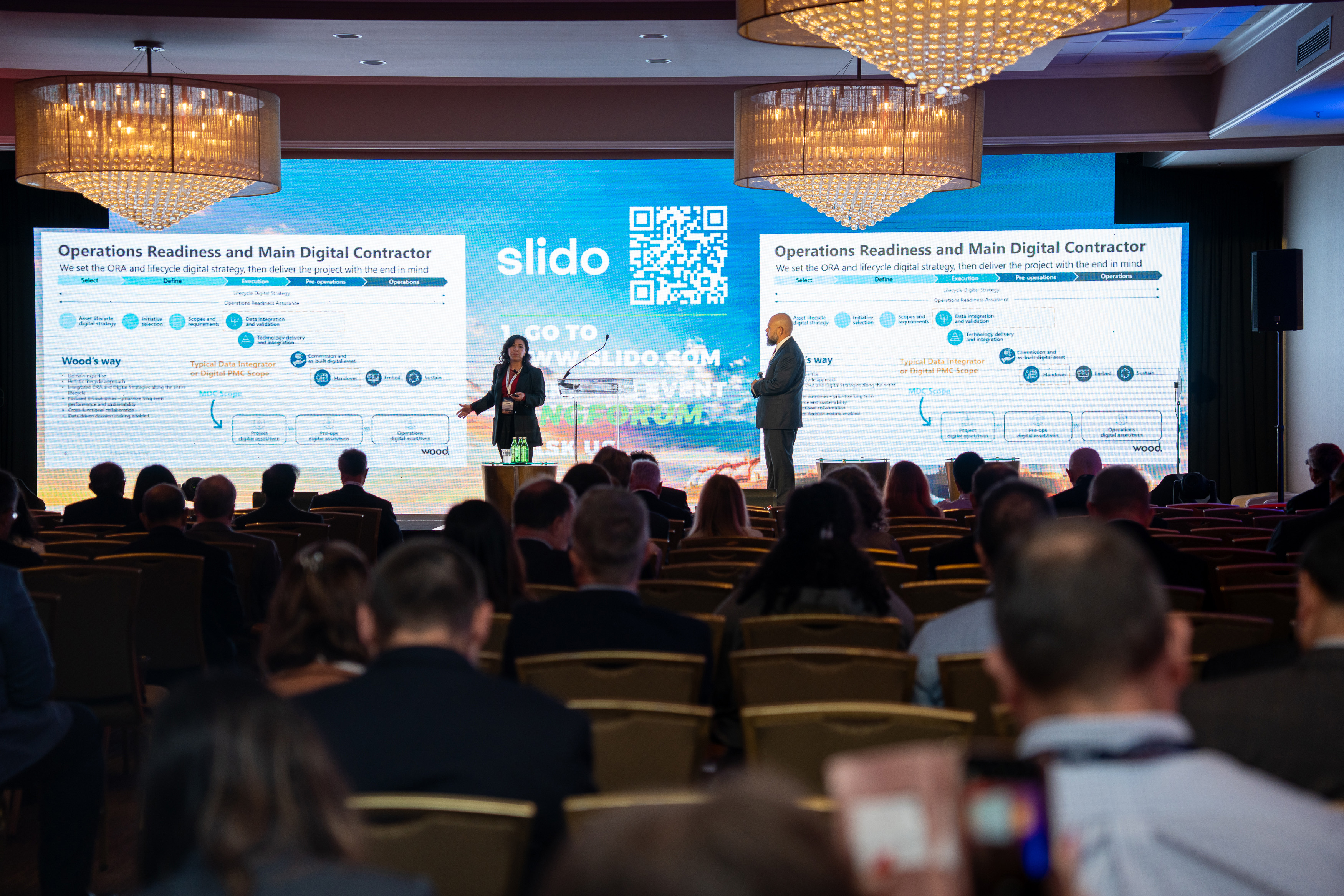
Safety, transparency, and schedule certainty came up repeatedly.
That’s not unique to LNG.
What is unique is the scale.
When you’re managing projects with thousands of workers, tight delivery timelines, and massive capital exposure, small inefficiencies compound quickly.
A key theme emerged:
AI shouldn’t just make hard tasks easier, it should help us make better decisions.
There’s already a massive amount of data being collected across jobsites:
- Workforce movement
- Trade-level productivity by zone
- Time-on-task insights
- Fatigue and safety indicators
But too often, that data is:
Collected… and underutilized.
The opportunity is turning that into real-time decision support:
- What changed between Zone A and Zone B?
- Why did productivity shift week over week?
- Where are early risk signals before they impact safety or schedule?
That shift, from data collection → decision enablement, is where real progress is happening.
.png)
Labor, Trust, and the Reality of Scale
Another theme that stood out:
This industry runs on people.
Even with modular construction and evolving delivery models, the challenge remains:
How do you effectively manage, and retain, thousands of workers on a single project?
Key realities:
- Ongoing labor shortages and competition for skilled craft workers
- The need to build quality into execution from the start
- The importance of trust across partners, especially at scale
And underneath it all:
Consistency of workforce = consistency of outcomes
Which raises a bigger question:
How do we not just manage workers… but create an experience that makes them want to come back?
Day 2: The Industry Is Aligning on Data, Now It Needs a System
Day 2 shifted from awareness to alignment.
Across sessions on LNG technologies and innovation, the themes were consistent:
- Predictive analytics and AI are becoming core to project strategy
- Automation is the starting point, not the end goal
- A single source of truth is critical
- Real-time data is essential for reducing rework and protecting schedule
And one reality that kept coming up:
There are more projects than people to execute them.
Which makes efficiency and decision-making even more critical.
Because something will go off plan. It always does.
The advantage comes down to how quickly teams can respond, and how aligned they are when they do.
That’s where connected, real-time data becomes a true differentiator.

Operational Readiness: Where Strategy Becomes Reality
One of the most relevant discussions focused on end-to-end digital delivery and operational readiness.
The takeaway wasn’t just about technology, it was about intentionality.
- Integrating HSSE, workforce systems, and data strategy early is non-negotiable
- Forward planning is essential to accelerating time to delivery
- Systems need to be designed holistically, not layered in later
The level of detail required to do this well is significant.
And the honest takeaway:
The LNG industry still has room to improve in executing this kind of upfront planning at scale.
As the market grows, so does the opportunity to:
- Build smarter data ecosystems from the start
- Align workforce, safety, and operations systems earlier
- Create better flow of information across the full project lifecycle
Where Kwant Fits In
You can’t fix what you can’t see, and most projects still don’t fully see their workforce.
If the industry is moving toward connected data, better decisions, and more intentional workforce strategies, the gap becomes obvious:
Most systems weren’t built with the workforce at the center.
And yet, that’s where some of the most valuable, real-time data actually lives.
At Kwant, we’ve taken a different approach: starting with the worker, and scaling up to the full project ecosystem.
.png)
On LNG and other large-scale projects, that looks like:
- Capturing real-time workforce data across thousands of workers
- Turning movement, time, and access into actionable insights
- Feeding that data into AI to support faster, better decisions
- Creating a single source of truth for both field and leadership teams
But here’s the part that often gets missed:
If the system doesn’t work for the worker, it doesn’t work at all.
Adoption drives everything.
If there’s friction, people find workarounds.
If people find workarounds, the data breaks.
And if the data breaks, the decisions fall apart.
That’s why we put equal focus on the experience:
- Streamlined onboarding and compliance
- Less day-to-day friction on-site
- Tools to recognize and incentivize the right behaviors
- A more connected, transparent environment for the workforce
The result isn’t just better visibility.
It’s a system that helps teams understand what’s happening in real time, act on it faster, and continuously improve.
That’s when data stops being a report and starts becoming an advantage.
Final Takeaway: The Shift Is Clear
The LNG industry is no longer asking if it should adopt AI, automation, or digital systems.
That conversation is over.
The real question now is:
How do we connect everything in a way that actually improves outcomes?
- Data without context doesn’t help
- Technology without adoption doesn’t scale
- Insights without action don’t create value
The companies that move forward fastest won’t be the ones experimenting at the edges.
They’ll be the ones who:
- Think holistically about their data ecosystem
- Invest in systems that support both people and processes
- Use real-time insight to make better decisions, consistently
Because at this scale:
Execution is the differentiator.


%20(1).svg)


