.svg)

.png)


For Oil & Gas owners, "Day One" of a new facility or a high-pressure turnaround project brings a familiar set of anxieties. You have thousands of workers, remote locations with limited connectivity, and some of the most hazardous work environments on the planet.
In 2026, oil and gas workforce management has moved beyond the turnstile to answer the questions that matter most, simultaneously, in real time, without adding administrative burden to a workforce already operating at the edge of safe capacity.
- Are contractors in a high-hazard zone they aren't certified for?
- Where is the crew located during an emergency muster?
- Is our "Tool Time" being drained by transit time across a 500-acre facility?
Most sites already have a "gate" solution. Many use Genetec—a gold standard for physical access control. But for an Owner, knowing a worker passed through a turnstile at 6:00 AM is the beginning of the picture, not the whole of it.
The "Higher Standard" in O&G is no longer just about Access Control; it’s about Workforce Intelligence. ## Building on the Foundation: The Kwant + Genetec Integration We don’t ask O&G owners to "rip and replace" their existing security infrastructure. Instead, Kwant integrates directly with systems like Genetec.
Before the Gate: Contractor Management Starts at Onboarding
Effective oil and gas contractor management does not begin at the turnstile. It begins before the worker arrives. On a 30-day turnaround where 2,000 to 5,000 contractors mobilize in the first 48 hours, processing safety orientations, verifying OSHA certifications, confirming intrinsic safety equipment training, and issuing site credentials manually is a logistical failure waiting to happen.
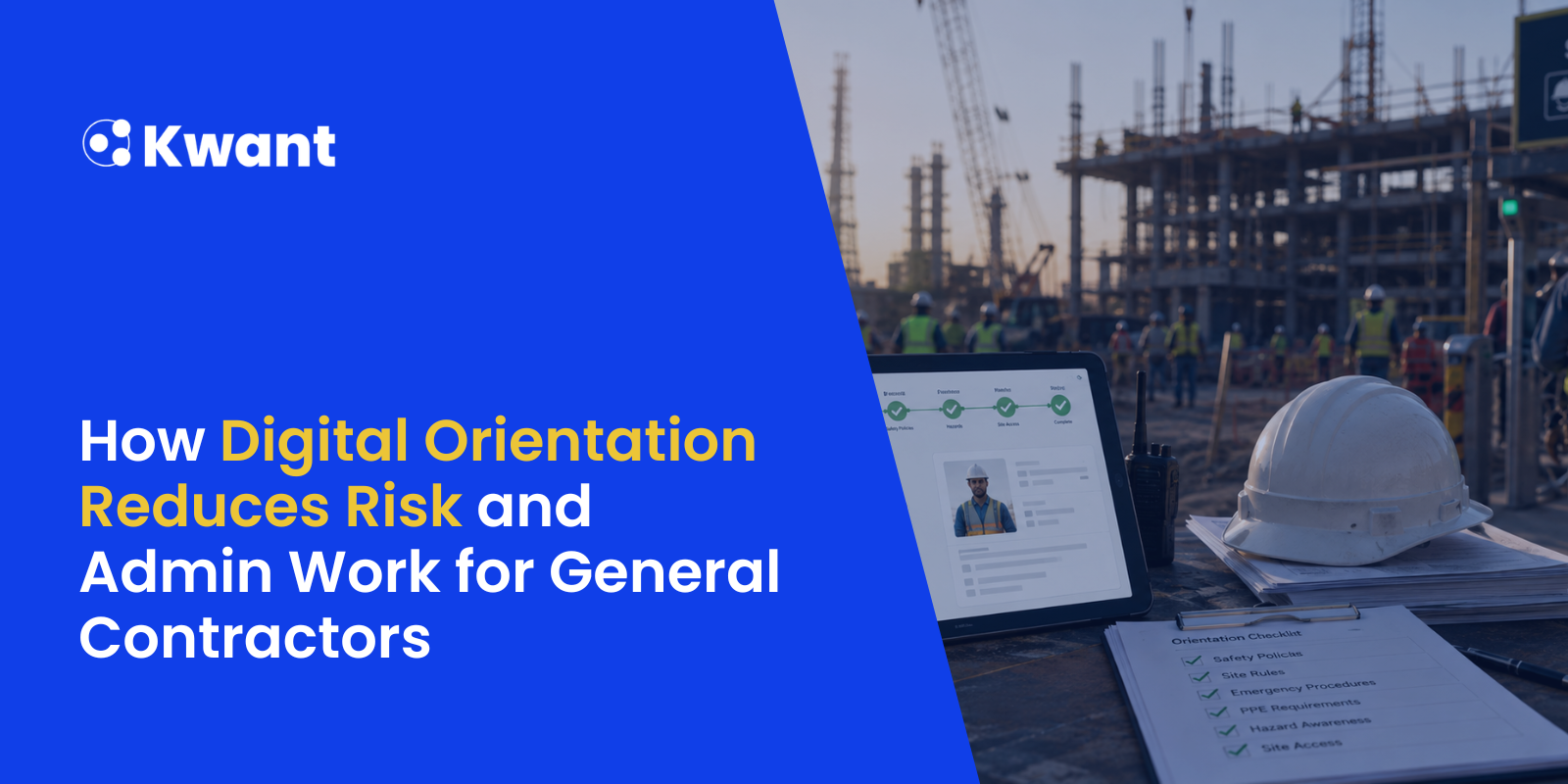
Kwant's digital onboarding allows contractors to complete site-specific safety orientations, upload credentials, and receive their smart badge assignment before they report to the gate. Every worker entering the facility has a verified, timestamped compliance record from their first moment on site. For operators subject to OSHA's Process Safety Management contractor safety program documentation requirements under 29 CFR 1910.119, this digital record is an audit-ready compliance artifact available immediately if an HSE audit requests it, not a stack of paper forms in a trailer.
[Kwant provides Smarter Certificate of Insurance (COI) Management for Safer and Clear View of Compliance in Construction Jobsites]
Building on the Foundation: The Kwant and Genetec Integration
Kwant does not ask O&G owners to rip and replace their existing security infrastructure. Instead, Kwant integrates directly with systems like Genetec.
Genetec's Physical Security Information Management platform handles perimeter access control, camera surveillance, and entry event logging. Kwant's integration layer reads the validated entry event from Genetec and immediately activates the worker's zone-tracking, certification verification, and fatigue monitoring profile within the Kwant platform. From that point forward, every movement through interior zones, every hazard area proximity alert, and every shift hour accumulation is captured by Kwant and tied to the verified identity established at the Genetec-controlled perimeter gate. The two systems share a single source of truth for worker identity without duplicating credentialing data.
While Genetec manages the entry, Kwant manages the experience. Every contractor's smart badge becomes a life-safety and subcontractor tracking instrument, creating a seamless flow from the perimeter gate to the most restricted interior zones.
1. Passive Location Tracking in Complex Environments
O&G sites are notoriously difficult for technology. Thick steel, remote locations, and "dead zones" make traditional GPS unreliable.
- The Kwant Way: Our system offers total flexibility. We use a combination of Bluetooth Low Energy (BLE) and GPS to ensure visibility, even in the "shadows" of a refinery.
- The Benefit: Tracking is passive. Workers don't have to "check-in" at every sub-zone. The data is captured automatically as they move, providing an unbiased, continuous record of construction worksite flow without adding any task to the worker's day.
On sites classified under ATEX or IECEx hazardous zone requirements, the hardware itself must be certified as intrinsically safe before it can be deployed in areas with flammable atmosphere risk. Kwant's smart badges are designed for these environments, meeting the intrinsic safety standards required for use in confined spaces and process areas where conventional tracking devices are prohibited by site regulation.
2. Dynamic Zoning: Restricted, Hazardous, and Slack Zones
Dynamic hazard zone monitoring means zone boundaries are not static configurations set once at commissioning. They update in real time as the site evolves during a turnaround, as new areas become energized, or as temporary confined spaces are opened and closed throughout the project lifecycle.
In a "Higher Standard" facility, not all zones are created equal. Kwant allows Owners to digitally map their site into specific categories:
- Hazard Zones: Instant alerts if a worker enters a high-risk area without the required safety certifications. Under OSHA's PSM standard, operators must control contractor access to process areas and verify contractor understanding of site hazards before entry. A system that generates an automatic alert when an uncertified contractor enters a hazard zone creates a documented control mechanism that satisfies this requirement and reduces HSE audit exposure.
- Restricted Zones: Ensuring that only specialized MEP or specialized contractors are in mission-critical sensitive areas. This enforces the access tiers that protect both the workforce and the facility's operational integrity.
- Productivity Zones: Identifying "Slack Time" (long walks to tool cribs or break areas) vs. "Work Phase" (active time at the face of the work). Productivity Zones identify the gap between Tool Time and transit time. Tool Time is the portion of a worker's shift spent actively engaged in assigned work scope, as distinct from time spent in transit, waiting for materials, or queuing at access points. On a 500-acre facility where a round trip to a tool crib can consume 40 minutes per worker per shift, the difference between reported hours and actual Tool Time can represent 15 to 20 percent of daily labor cost absorbed as unproductive time.
Labor performance analytics surfaces this gap automatically, giving site leadership the data to restructure logistics and recover productive hours without adding headcount.
3. Fatigue Monitoring for High-Risk Shifts
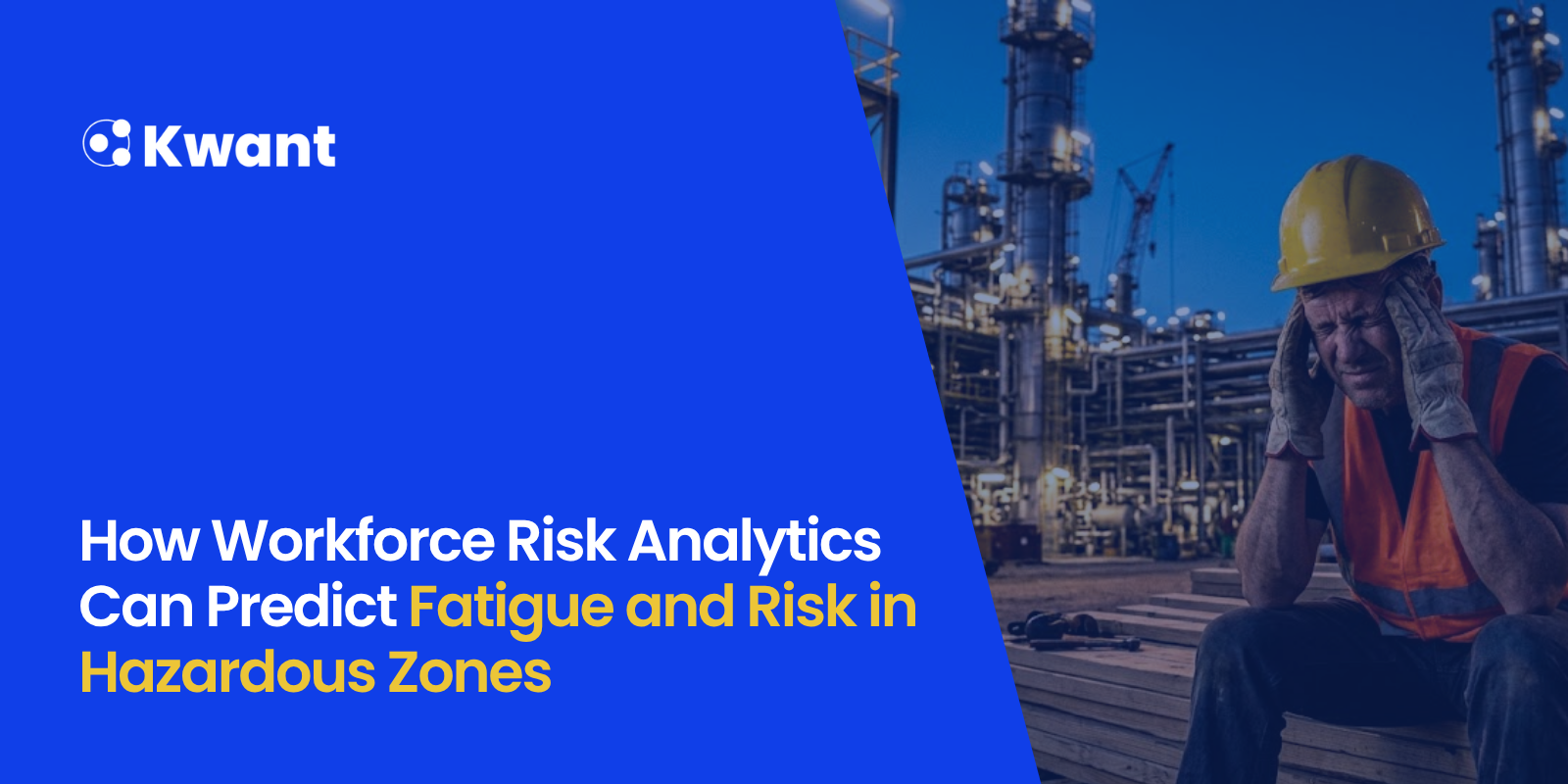
On oil and gas sites where 12-plus hour shifts and rotating crew schedules are the norm, fatigue is not a soft safety concern. It is a measurable injury risk variable. Kwant's Fatigue Management module monitors cumulative shift hours for every worker on site and generates proactive alerts when a worker's consecutive hours in a high-risk zone approach thresholds associated with increased incident risk. The safety team is notified before the next shift begins, not after an incident report is filed.
For confined space workers, lone workers in remote process areas, and commissioning crews operating in energized environments, this monitoring layer is the difference between a proactive safety program and a reactive one.
[Fatigue Is One of the Most Overlooked Safety Risks in Construction: Kwant Provide the Safety Solution for Workforce Management]
4. Real-Time Mustering for Critical Safety
In the event of an emergency, the "clipboard and shout" method is a liability that large turnarounds have never been able to afford and can no longer accept.
- The "Standard": On large turnarounds without automated mustering, evacuation accountability typically takes 60 minutes or even more. Kwant provides a real-time digital manifest. During a muster, safety leaders see exactly who has reached the assembly point and, more importantly, who is still in the danger zone. * The Proof: This model has been proven successful on some of the world’s most confidential and critical O&G sites, reducing muster times from hours to minutes.
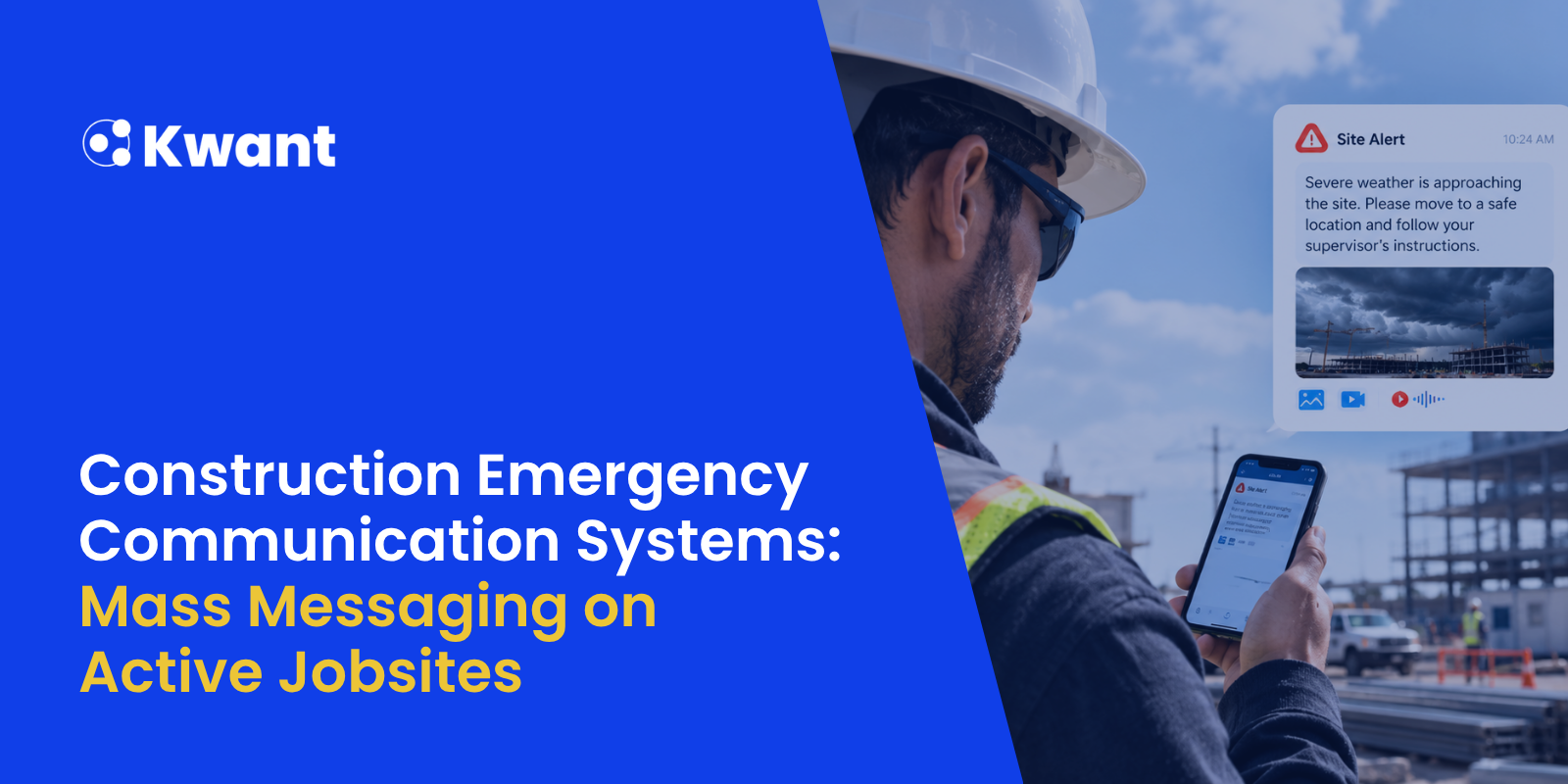
- In parallel, Kwant's Mass Messaging and Alerts capability sends an immediate site-wide notification to every registered worker's device simultaneously, ensuring workers in remote areas or low-connectivity zones receive the evacuation signal regardless of radio range or verbal communication limitations. Emergency response becomes a coordinated, data-confirmed process rather than a manual accountability exercise.
5. Managing the Turnaround with Efficiency
Every day a refinery or processing facility remains offline during a turnaround carries a direct production cost calculated to the hour. When a contractor crew is bottlenecked at a process unit because the prior trade has not cleared the zone, that delay does not just cost a half-day of labor efficiency. It extends the facility's offline period and erodes the commercial case for the entire turnaround budget.
Whether it’s a new build, an overnight shift, or a massive 30-day turnaround, Kwant's AI-powered reporting gives leadership the data to optimize. By understanding labor density and movement patterns, Owners can identify bottlenecks in real-time, ensuring that "Tool Time" is maximized and the facility gets back online faster.
For operators managing concurrent maintenance programs or multiple simultaneous turnarounds across geographically distributed facilities, multi-site workforce coordination through Kwant's Portfolio Analytics provides a unified program view across all active sites without requiring separate reporting processes for each location.
The Insight: Access Control is Only the Beginning
The future of Oil & Gas operations belongs to the Owners who treat their workforce data with the same precision they treat their flow rates.
By layering Kwant’s workforce management on top of your existing access control, you gain more than security—you gain control. You move from "knowing they are on-site" to "knowing they are safe, productive, and exactly where they need to be."
Kwant's real-time site visibility platform scales to support over 10,000 workers on a single O&G site, delivering fatigue monitoring, digital mustering, intrinsically safe zone tracking, and contractor onboarding compliance from a single unified platform.
It’s time to move beyond the gate. It’s time to set a new standard for O&G workforce visibility, safety and management.
See how Kwant works for Oil and Gas Operations with a configured for your facility with our system demo.
FAQs
1. What is oil and gas workforce management?
Oil and gas workforce management is the practice of tracking, verifying, and optimizing contractor and employee activity across a facility in real time, covering entry credentials, zone-level location, certification compliance, fatigue levels, and emergency accountability. It goes beyond gate access to provide continuous visibility into who is where, whether they are authorized to be there, and whether the workforce is performing against the project schedule.
2. How does Kwant integrate with Genetec?
Kwant's integration reads the validated entry event from Genetec's Physical Security Information Management platform and activates the worker's full workforce profile within Kwant, including zone tracking, certification status, and fatigue monitoring. The two systems share a verified worker identity without duplicating credentialing data, giving the operator a unified record from perimeter entry through interior zone activity.
3. What are intrinsically safe smart badges and why do they matter on O&G sites?
Intrinsically safe devices are certified to operate in hazardous areas classified under ATEX or IECEx standards where flammable gas or vapor risk is present. On oil and gas sites, deploying non-certified electronics in these zones is a regulatory violation. Kwant's smart badges meet intrinsic safety certification requirements, making them deployable in confined spaces, process areas, and other restricted environments where conventional tracking hardware is prohibited.
4. How does digital mustering improve emergency response?
Kwant's digital muster replaces manual roll calls with a live headcount that updates in real time as workers reach assembly points. Safety teams see which zones are confirmed clear and which still have unaccounted personnel, reducing evacuation accountability time from over 60 minutes on large turnarounds to minutes. Mass messaging alerts ensure all workers receive the evacuation signal simultaneously regardless of location or radio range.
5. What is Tool Time and how does labor performance analytics measure it?
Tool Time is the portion of a worker's shift spent actively engaged in assigned work scope, as distinct from transit time, material wait time, and access queue time. On large O&G facilities, transit and wait time can absorb 15 to 20 percent of daily labor hours. Labor performance analytics captures zone-level time data for each worker automatically, surfacing the gap between total shift hours and actual productive time so site leadership can restructure logistics and recover cost without adding headcount.
6. How does Kwant support multi-site oil and gas operations?
Portfolio Analytics aggregates workforce data across all active sites simultaneously into a unified program dashboard, giving program leadership real-time visibility into labor deployment, schedule performance, and safety compliance across geographically distributed facilities without requiring separate reporting from each site. For operators running concurrent turnarounds or maintenance programs, this multi-site workforce coordination capability replaces fragmented site-by-site reporting with a single source of truth.

%20(1).svg)


