.svg)

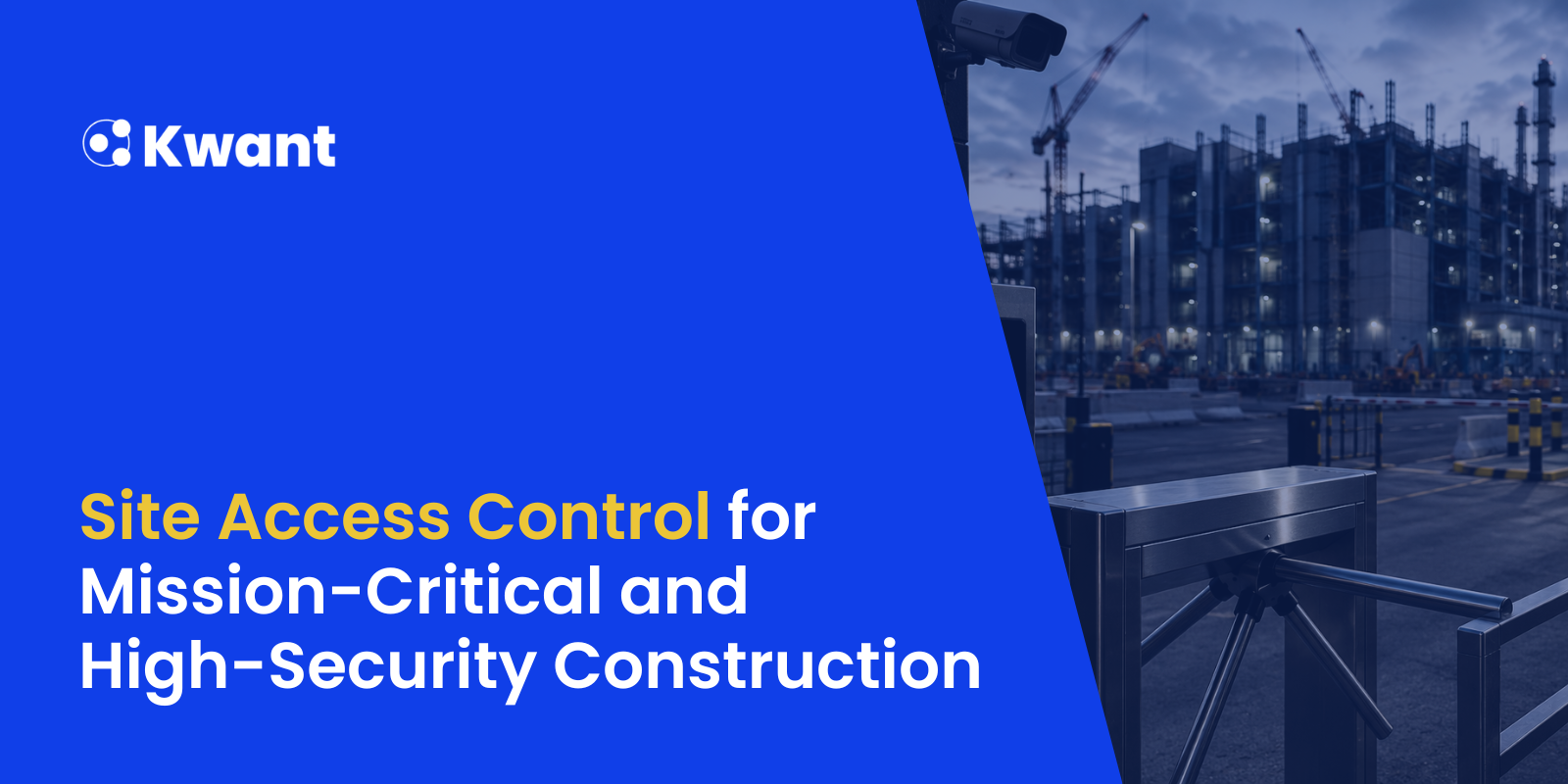


Every construction site controls access in some fashion. A fence, a gate, someone checking badges at the entry. The function is basic: keep unauthorized people out, maintain a general sense of who is inside. For most commercial builds, that level of control is sufficient.
Data center construction is not like most commercial builds. The site perimeter encloses a future security zone that the owner will eventually hold to standards that govern the largest cloud computing and financial infrastructure in the world. The construction process doesn't pause that obligation. It creates a security environment that needs to operate at a high standard even while the building is incomplete, workers are rotating in and out daily, and the contractor population includes dozens of firms across multiple tiers.
Managing access on a mission-critical project to the standard the owner will eventually require is the central challenge. It is not primarily a technology problem. It is an operational architecture problem. Understanding that access control on this kind of project needs to do three things simultaneously: enforce physical security, ensure workforce compliance, and generate the documentation. All of which will eventually need to review from owners and auditors.
What Distinguishes Mission-Critical Access Control From Standard Construction
The distinction starts with the owner's baseline requirements. Hyperscalers and enterprise colocation operators routinely include specific workforce security provisions in their construction contracts: background check requirements at specified depths, NDA acknowledgment before site access is granted, and in some cases, explicit zone separation requirements between different contractor tiers based on clearance level. These are contractual obligations, not suggestions, and non-compliance has contract implications.
On top of the owner's requirements, the physical environment of an active data center build adds complexity. A phased delivery schedule means that part of the building may be live: with active servers, network infrastructure, and climate control systems, while construction continues in adjacent sections. The boundary between the live environment and the construction environment needs to be managed with a rigor that isn't required on a greenfield site.
Zone separation within the construction perimeter adds another layer. The site perimeter is tier one. The building shell and general construction areas are tier two. Active MEP rooms, raised floor areas, and fiber vault zones carrying live equipment are tier three or higher, with access requirements that may include additional background check depth and owner-authorized access lists. This layered structure needs to be enforced automatically, without depending on a guard shift to memorize which contractors are cleared for which zones.
Explore Kwant's biometric product that automates identity confirmation at acces
Managing the Live / Under-Construction Boundary
The phased delivery model that defines most large data center builds creates an access challenge that gets minimal attention in standard access control discussions: managing the physical and credentialing boundary between a live operational environment and an active construction environment on the same campus.
In practice, this means a portion of the building is housing powered-on servers, active fiber infrastructure, and functioning climate systems. While MEP crews, structural teams, and commissioning technicians are working in adjacent halls or on the same floor. The consequences of the wrong person entering the wrong area are not hypothetical. An unauthorized worker entering a live MEP room during commissioning can disrupt systems, create safety exposure, and trigger a security review that puts the GC in a difficult conversation with the owner.
What this requires operationally is a tiered credentialing structure that distinguishes between the general construction population and the subset of workers cleared to work near or within live infrastructure. Those distinctions need to be enforced at the access point in real time, not managed through supervisor awareness or posted signage.
A few specifics that effective access management handles here:
Credential differentiation at the zone level. Workers cleared for general construction zones need a different credential configuration than workers entering active MEP rooms. That difference should be enforced by the system, not by a guard checking a list.
Phase-based access updates. As portions of a campus go live, access permissions need to update automatically. A crew that had access to Hall B during construction should not retain that access once Hall B enters the commissioning phase without an explicit re-authorization.
Real-time alerts on zone violations. When a worker presents credentials at a zone they are not cleared to enter, the system should log the denial and alert the relevant site manager. On a large campus with multiple active zones and hundreds of workers per shift, this is the only way to catch access anomalies before they become incidents.
This is where access management on a mission-critical build requires a different operational posture than standard construction. This is why the decision for construction management platform selection matters before the first shovel goes in the ground.
Building the Contractor Tier Hierarchy in Practice
The concept of tiered access is straightforward. The operational reality of building and maintaining that hierarchy across a multi-sub, multi-phase data center project is where most teams underestimate the complexity.
Here is how effective GC teams typically architect the system:
The GC sets the program-wide access policies. This includes
- which background check depth is required for each zone tier,
- which certifications are required for specific trades,
- what the NDA acknowledgment process looks like, and
- which zones are owner-restricted versus GC-managed.
These policies become the foundation that every sub must comply with before any worker accesses the site.
Each first-tier sub manages their own workforce within those boundaries. The sub's compliance team enrolls their workers, verifies credentials, and confirms background check status. They cannot grant access that exceeds the GC's configured policy, the system enforces the ceiling.
Labor vendors submit their workers through their direct employer. Workers brought in by a labor vendor are enrolled under the sub who hired them, which means credential accountability stays in the right place.
What breaks the hierarchy: Several failure modes are common on large builds. Background check requirements that vary by sub rather than being standardized at the GC level. Zone access permissions that are manually managed by a security guard rather than system-enforced. Credential updates that happen on a batch basis rather than in real time, creating windows where lapsed credentials go undetected. And the most operationally costly problem, no automated revocation when a scope concludes.
The teams that manage this well treat the tier hierarchy as a standing operational system, not a setup task. It requires active maintenance as the project phases change, as new subs come on, and as owner requirements evolve.
Explore Kwant’s Worker Certification Tracking: Collect, track, and verify in Real-Time
The Compliance Cost of Inadequate Access Management
Access control failures on mission-critical projects accumulate costs in three categories that most site teams only see clearly in retrospect.
The first is audit exposure. When an owner's security team conducts a site review, which hyperscalers do regularly on active builds, they are looking for documentation that confirms their contractual requirements are being met. Background check records, NDA acknowledgment logs, zone access histories, visitor records. If this documentation doesn't exist in a clean, exportable format, the GC is in a difficult conversation. Reconstructing documentation from multiple disconnected systems takes time and produces incomplete records.
The second is credential gap liability. Without automated enforcement, the gap between when a credential lapses and when someone notices is measured in days or weeks on a site with a large, rotating contractor population. During that window, workers with invalid credentials continue to access zones that their current compliance status would not permit. The liability from an incident during that window is compounded by the documentation gap.
The third is operational cost. Sites with manual access control processes like paper forms, guard review of credentials, manual roster reconciliation are slower. Workers queue at gates. New crews arriving for their first day spend productive time on administrative processing. On large projects with hundreds of workers per day, the aggregate cost of this friction is real.
What the Audit Conversation Actually Looks Like
There are two types of GCs when a hyperscaler security team shows up on-site for a review.
The first type has the records. The security team asks for background check documentation on a specific subcontractor's crew. The site manager pulls the export in three minutes, hands it over, and the review moves forward. If there's a zone access anomaly the security team wants to investigate, a worker who appeared in a restricted area, the access log surfaces the full event timeline, including the credential check result at the time of entry. The conversation is short because the answers are immediate.
The second type spends two days before the review pulling records from disconnected systems, cross-referencing badge logs with spreadsheets, and calling subcontractors to verify background check dates. The documentation produced is incomplete. The security team finds gaps. The GC is now in an escalation conversation about contractual compliance, and the relationship with the owner has taken a hit that affects future work.
The distinction between those two situations is not primarily about compliance effort or process discipline, it is about system architecture. Sites that generate documentation as a continuous byproduct of normal operations don't scramble when the auditor arrives. Sites that manage access manually have no other option.
On programmatic data center builds where a GC is running multiple projects for the same hyperscaler, this matters beyond any single project. Owner security reviews are one of the mechanisms through which GCs build or damage the trust that determines whether they get the next campus.
The Architecture of Effective Mission-Critical Access Control
The access management architecture for a mission-critical build needs to solve three simultaneous problems:
- Identity assurance (every person on site is who they say they are),
- Compliance currency (every person on site has current credentials for the zones they access), and
- Documentation completeness (every access event is recorded in a format that supports audit).
Identity assurance is achieved through biometric enrollment. Every worker registers fingerprint or facial recognition data linked to their identity documentation and employer record before they access the site. Badge sharing is structurally eliminated, not just policy-prohibited. Identity is confirmed at the physical access point, not assumed from a badge that someone might have borrowed.
Compliance currency is achieved through live credential checking at every access event. The access control system queries the credential management database at the time the worker presents at a gate, not at the time the credential was last verified. If a background check expired yesterday, the worker is denied access today automatically, without requiring anyone to notice.
Documentation completeness is a function of the system architecture. Every entry, every exit, every credential check, every denial, every exception is recorded with a timestamp in a format that can be exported for audit review. The documentation isn't assembled when the auditor arrives, it exists continuously as a byproduct of normal operations.
Managing Multi-Tier Contractor Access at Scale
A large data center build can have the GC, ten to fifteen major specialty subcontractors, and additional labor vendors operating simultaneously. Managing access for this population requires a tiered enrollment architecture where each level of the hierarchy manages its own workers within boundaries set by the tier above.
The GC sets the program-wide access policies: which credentials are required for which zones, what background check depth is required for each tier, what owner security provisions apply across the site. First-tier subs enroll their workers against those policies and manage their own credential verification workflow. Labor vendors submit their workers through their direct employer. No one at any tier can grant access that exceeds the permissions set by the tier above them.
Just-in-time access management handles the phased nature of large builds. A structural crew active during steel erection does not carry forward access permissions into the MEP commissioning phase. Access windows are tied to phases and scopes of work, and they are revoked automatically when the scope concludes. This is not just a security feature, it is a compliance feature, because it ensures that access records accurately reflect who was authorized to be where, and when.
Real-Time Accountability: What Happens When Something Goes Wrong
Consider a scenario that plays out on large data center builds more often than most site teams expect: a contractor vehicle strikes a transformer in Hall B. The building management system triggers an alarm. The superintendent needs a full headcount of everyone inside the building in under four minutes to confirm no workers are in the affected area.
On a site with a manual or badge-only access system, this is a scramble. Supervisors radio each other. Someone pulls a paper roster. Zone-level accountability depends on whether a guard was tracking entries into Hall B. Four minutes becomes twenty, and the count is still uncertain.
On a site with real-time zone-level access management, the site manager pulls the ZoneIQ dashboard. It shows 34 workers currently inside Hall B, with trade and employer breakdown. A mass alert goes to every worker's badge. Within four minutes, the muster count is complete and confirmed against the live headcount. The incident report includes a precise record of who was inside, when they entered, and when they mustered out.
This is what workforce accountability infrastructure actually delivers. Not just the absence of problems, the ability to respond to them immediately and completely when they occur.
Standardizing Access Across a GC's Data Center Program
The access management conversation at the project level is well understood. What gets less attention is what happens when a GC running four, five, or six simultaneous data center builds tries to standardize access protocols across all of them.
The most common failure pattern: each project makes its own access control decisions. Different platforms. Different zone naming conventions. Different background check depth requirements from sub to sub. Different onboarding workflows. The result is a GC with significant data center experience that still can't produce consistent workforce data across its own portfolio, because nothing is connected.
This matters for several reasons beyond compliance:
Owner visibility. Hyperscalers who are running multiple simultaneous builds, sometimes with the same GC, increasingly want workforce and compliance data at the portfolio level, not just the project level. A GC that can provide that visibility is a more valuable partner than one that produces project-specific reports in different formats.
Deployment speed. When a GC has a standardized access management program, standing up the system on a new project is a configuration exercise, not a vendor selection process. The background check requirements, the zone tier definitions, the sub enrollment workflow, all of it transfers. That removes weeks from the pre-mobilization timeline.
Field team adoption. Workers and supervisors who have used the same system on a previous project don't need to re-learn it. That reduces friction at mobilization and improves compliance rates in the early phases of a project, which is when access management failures are most likely to occur.
The GCs who are building durable relationships with hyperscalers are thinking about this at the program level. Access management on a single project is a compliance function. Access management standardized across a GC's data center portfolio is a competitive differentiator.
What High-Performing Data Center GCs Do Differently With Access Data
The GCs with the cleanest audit records and the strongest owner relationships on mission-critical projects are not just managing access more carefully. They are using access data operationally, not only for compliance but for project management.
Real-time headcount by zone, drawn from the access control system, is a labor management tool. When the data shows that a work package has fewer workers in the active zone than the staffing plan calls for, that is a schedule signal — visible the same day, while there is still time to make a call to the subcontractor. When the data shows unexpected density in a zone that is supposed to be clear because of a sequencing conflict, that is a coordination signal.
Access anomaly monitoring like unusual zone entries, after-hours access patterns, workers accessing areas outside their cleared tier, adds a behavioral security layer that hardware-only access control doesn't provide. The pattern doesn't have to represent an intentional security event to be worth reviewing. It might represent a worker who is habitually entering the wrong zone because the physical wayfinding is unclear. Either way, the data surfaces it.
Evaluating a Site Access Control Platform for Mission-Critical Projects
Biometric identity confirmation at the access point, not just badge presentation. On any site with an owner-imposed background check requirement, badge sharing is a contractual and security risk. Biometric confirmation at the gate eliminates the gap.
Live credential checking at every access event. The credential database should be queried at the time of access, not on a batch update cycle. The difference between real-time and daily-batch credential checking is the window in which a lapsed credential goes undetected.
Zone-level permission configuration manageable by the site team. Access tier rules should be configurable without requiring the vendor to make changes. As the project phases change, as owner requirements evolve, and as new security events require rapid policy updates, site-team configurability is a practical necessity.
Owner-facing documentation access. The platform should support role-based access for owner security representatives who need to pull documentation directly, without routing requests through the GC team.
Visitor and vendor management with pre-registration. Visitors who are enrolled digitally before they arrive move through the entry process faster and generate cleaner documentation than walk-in visitor logs.
Integration with the GC's project management and compliance tools. Access data that lives in an isolated system is compliance documentation. Access data that flows into Procore, Primavera, or the GC's ERP is a project management asset.
Standardization across projects, not just one site. The platform should support a GC running multiple projects like shared access policies, consistent zone configurations, and portfolio-level visibility and not just single-site deployment.
Conclusion
The security standard that an owner will apply to the finished data center doesn't start at occupancy. It starts the day construction begins, because the decisions made about access management during construction determine the quality of the audit trail, the integrity of the compliance record, and the credibility of the GC's documentation when questions arise.
GCs who treat access control as an administrative function, managed reactively, documented after the fact are taking on risk that is invisible until it isn't. The audit request, the compliance exception, the owner conversation about a zone access anomaly: these events arrive without warning, and the quality of the response depends entirely on the quality of the records.
The teams who manage this well don't experience those conversations as crises. They have the records. They answer the questions. They move on. That is what systematic access management actually delivers, not the absence of questions, but the ability to answer them immediately and completely.
See how Kwant manages site access, credential compliance, and zone-level permissioning on mission-critical construction projects. Request a demo at kwant.ai.
Frequently Asked Questions
What is jobsite access management and why does it require dedicated infrastructure on data center builds?
Jobsite access management is the operational system that controls who enters a construction site, which zones they can access, and under what conditions. On standard commercial sites, this is typically handled through basic badge systems and periodic roster reviews. On data center builds, the combination of owner-imposed security requirements, layered zone access structures, and large multi-tier contractor populations requires infrastructure that enforces rules automatically and generates documentation continuously because manual processes cannot maintain the required standard at scale.
How do biometric systems eliminate credential fraud and badge sharing on large construction sites?
Biometric access systems require the physical presence of the enrolled individual to grant access, a fingerprint or facial recognition match that cannot be transferred. This structurally prevents badge sharing, where one worker presents another worker's credential. On mission-critical sites where owner-required background checks are tied to individual workers, badge sharing is both a security failure and a contractual compliance failure. Biometric confirmation at the gate closes that gap in a way that badge-only systems cannot.
How does an integrated workforce compliance platform handle just-in-time access management for phased builds?
Just-in-time access management allows site teams to activate access windows tied to specific scopes of work and automatically revoke them when the scope concludes. In practice, this means a structural crew active during the steel phase doesn't carry forward access into the commissioning phase. Phase-based access windows are configured in the platform and execute automatically, no manual revocation required. This keeps the access record accurate and the active access population limited to workers with a current legitimate reason to be in each zone.
What documentation should a GC maintain for owner security reviews on data center projects?
The documentation that owners and hyperscaler security teams typically request covers: background check records with depth and date for each worker, NDA acknowledgment records, site orientation completion records, zone access logs showing who accessed which areas and when, visitor and vendor entry records, and exception logs showing any access denials or zone violations and how they were resolved. An integrated access management platform generates all of this continuously as a byproduct of normal operations. Sites managing this manually scramble to produce it on request.
How does access control integration with the workforce compliance platform improve project management beyond security?
When access data is integrated with workforce management, the access log becomes a project management tool. Real-time headcount by zone and trade, compared against the daily staffing plan, surfaces mobilization shortfalls and sequencing conflicts while there is still time to respond. Zone density anomalies flag coordination problems. Contractor headcount trends become a leading indicator of schedule risk. The security function and the project management function draw from the same data, and both improve.
At what project scale does the investment in a dedicated access management platform become justified?
On mission-critical projects, the justification is less about project scale and more about owner requirements. If your client has contractual workforce security provisions like background check requirements, NDA enforcement, zone separation requirements, you need a system that can enforce and document those requirements continuously. The scale threshold for pure operational ROI (where the time saved on credential management, gate processing, and audit preparation exceeds the platform cost) is typically around 150 workers with more than five active subcontractors. On data center projects, both thresholds are usually exceeded before the first concrete pour.
How should a GC approach access management standardization across multiple data center projects?
Standardization starts with treating access policy as a program-level decision rather than a project-level one. That means the GC sets consistent background check requirements, zone tier definitions, and sub enrollment workflows that apply across all active projects, rather than allowing each project team to make those decisions independently. The right platform supports this by allowing access policies to be templated and applied across projects, so standing up a new site is a configuration exercise rather than starting from scratch. GCs who have built this standardization are deploying faster, producing cleaner compliance documentation, and delivering more visibility to owners across their portfolio.
%20(1).svg)


