.svg)

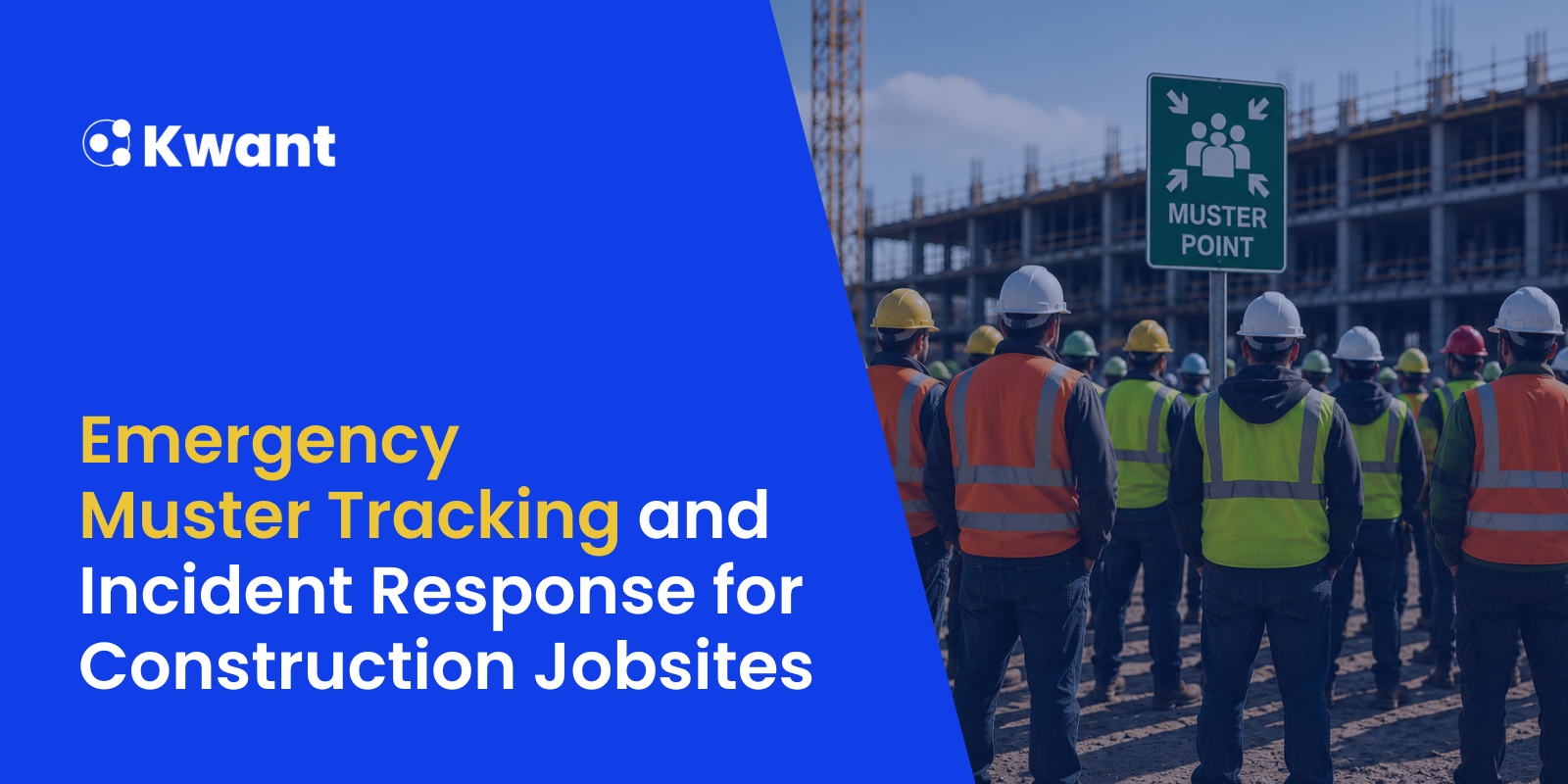


The paper roster worked fine during every drill. The foreman would shout the names, the crew would answer, and the safety manager would mark the headcount complete. Efficient, familiar, unremarkable.
Then came the actual emergency, a propane release in the mechanical area, a full site evacuation, crews from seventeen subcontractors moving to eight different muster points simultaneously. The foreman with the roster was missing. The roster itself was last updated on Monday and it was Thursday. Three workers who had been released early weren't on anyone's list as gone. Two visitors from an equipment supplier who arrived at 11 a.m. weren't in the system at all. Forty-five minutes after the evacuation order, the site safety manager still couldn't tell the fire response team whether the building was clear.
That scenario is not unusual. It is the predictable consequence of using paper-based muster processes on sites where the construction workforce management handles large, dynamic, and cross multiple contractor tiers. The process that works for a drill, where conditions are controlled and the roster is current, fails in a real emergency precisely when it matters most.
Why Paper Muster Processes Fail When Conditions Are Worst
The paper muster process has two dependencies that emergencies tend to break. The first is a current roster. For the process to work, someone needs to have updated the site population list since the last time it was checked. This includes accounting for workers who came in late, workers who left early, visitors who arrived mid-morning, and temporary workers added by subcontractors that day. On a large site with a dynamic workforce, this is an administrative task that is perpetually slightly out of date.
The second dependency is the foreman. The paper process assumes that the foreman is at their muster point, has the roster, and can accurately account for their crew. Emergencies don't honor these assumptions. Foremen may be in areas of the site that require evacuation themselves. The roster may be in a trailer that is inaccessible. A foreman managing a crew of thirty may not have a reliable count of who showed up that morning versus who was replaced by a substitute worker from the labor agency.
OSHA standard 29 CFR 1926.35 requires construction employers to have procedures for accounting for all workers after evacuation. The standard doesn't prescribe the method, but the method needs to work in the conditions of an actual emergency, not just the conditions of a planned drill. Paper processes that consistently fail to account for all workers within a reasonable timeframe are not compliant in spirit, even when the paperwork shows a completed drill.
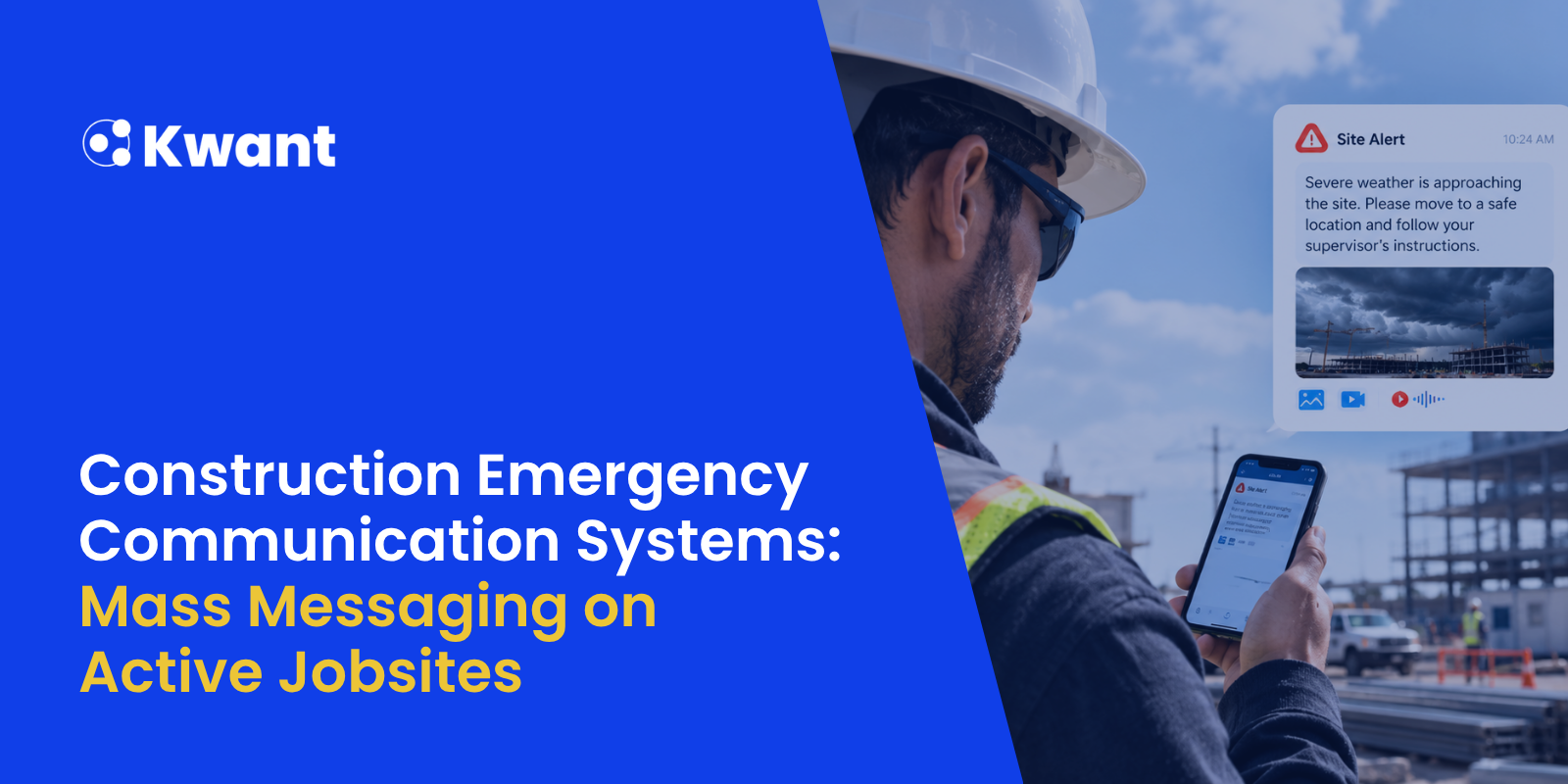
In the high-risk, fast-paced environment of construction, effective and rapid communication is essential for safeguarding workers and keeping projects on track. With constant exposure to hazards from unpredictable weather and equipment malfunctions to site-specific emergencies construction teams need real-time updates to make quick, informed decisions.
The Specific Accountability Failures That Create Legal and Safety Exposure
Unaccounted workers during an emergency are not just a safety failure, they are a liability event. When a post-incident investigation establishes that the site could not accurately account for all personnel within an acceptable time frame, and someone was harmed during that window, the documentation gap compounds the legal exposure significantly.
The most common accountability failures on large construction sites fall into three categories. The first is the visitor and vendor gap. Day visitors like owner representatives, equipment suppliers, inspection teams, architect walkthroughs, are typically logged in a separate sign-in book that is not integrated with the workforce management system. During an emergency, reconciling the visitor log with the access control record is a manual process that takes time the emergency response timeline doesn't have.
The second is the substitute worker gap. Subcontractors frequently deploy workers as day labor replacements who are not in the site's primary workforce management system. These workers may have been through site orientation, but their presence is not tracked in real time in any system that generates an emergency headcount.
The third is the multi-muster-point coordination problem. When a large site has eight muster points managed by seventeen foremen from different contractors, the central safety manager's visibility depends on all seventeen foremen completing their roll calls and reporting results through some communication channel that works during an emergency. Phone trees, radio check-ins, and verbal reports to a central coordinator are all processes that introduce delay and error in proportion to the number of concurrent check-ins required.
What Digital Muster Tracking Actually Replaces
Digital muster tracking does not replace the foreman. The foreman is still accountable for their crew's safe evacuation and confirmation at the muster point. What digital tracking replaces is the manual processes that create the gaps: the paper roster that is always slightly out of date, the visitor log that isn't connected to access data, and the phone tree that can't scale to seventeen simultaneous muster point check-ins.
The foundation is the access control system. When every person who enters the site, worker, visitor, vendor, owner representative, passes through a biometric or badge-enabled gate, the access system maintains a real-time record of who is on site at any given moment. This record is current not to the last time someone updated a spreadsheet, but to the last gate access event which is typically minutes ago, not days.
When an emergency is declared, the muster tracking platform draws from this record to generate an instant site population list, organized by muster point assignment. The list shows who the foremen need to account for, not who was on the site last Wednesday, but who badged in today and hasn't badged out. Foremen confirm their crew's presence at the muster point through a mobile app, and the central safety manager sees all muster points simultaneously on a dashboard that updates as each confirmation is entered.
The emergency workflow becomes: alarm triggers → system generates muster list from live access data → foremen receive mobile notification with their assigned crew list → foremen confirm presence at muster point → safety manager sees real-time accountability dashboard → first responders receive a clear answer to 'is everyone accounted for?
How Real-Time Worker Accountability Works Across Contractor Tiers
The multi-contractor coordination problem is where digital muster systems deliver the most value over paper-based alternatives. On a site where seventeen subcontractors each use their own internal headcount process, the GC's safety manager is dependent on seventeen separate data streams being accurate and being reported through a communication channel that works under emergency conditions.
A unified digital muster system replaces the seventeen data streams with one. Every subcontractor's workers are enrolled in the same access control system. Muster point assignments are pre-configured by zone and contractor, when a worker's crew is assigned to Muster Point 3, that assignment is in the system before the emergency occurs. It is not determined by whoever happens to shout directions during the evacuation.
The foreman's mobile app shows exactly who the platform expects to see at their muster point, based on the live site population list. The foreman confirms presence or marks a worker as unaccounted. Exceptions are immediately visible to the safety manager. The first responders don't need to wait for a verbal report from a radio chain, they see the dashboard.
Visitors and vendors are handled through the same visitor management workflow. A day visitor who was pre-registered in the platform and entered through the main gate is on the muster list automatically. A walk-in visitor who was logged in the traditional paper sign-in book is not. The transition to digital visitor management, pre-registration with identity capture before arrival, is the mechanism that closes this gap.
OSHA Compliance, Owner Requirements, and What Documentation Actually Proves
OSHA 29 CFR 1926.35 sets the emergency action plan requirement for construction. The practical compliance implication for muster tracking is that the employer must have a defined process for accounting for all employees after evacuation, and that process must actually work. The regulation requires the plan to be in writing, reviewed with employees, and updated when procedures change or the workforce changes. A digital muster system that generates a timestamped record of every drill and emergency event, including headcount accuracy and time to full accountability, produces the documentation that supports this compliance requirement continuously.
Owner requirements on mission-critical projects frequently go further. Data center owners, refinery operators, and healthcare construction owners often require contractors to demonstrate specific emergency response capabilities as a contract condition, not just an emergency action plan on paper, but evidence that the plan works in practice. Drill records that show time to full accountability, contractor-by-contractor compliance rates, and unaccounted worker resolution timelines are the evidence that answers these requirements.
The documentation that a digital muster system generates is not primarily valuable for normal operations. It is valuable in the three situations where it matters most: an actual emergency, a post-incident investigation, and an owner or regulatory compliance review. Having it is not onerous. Not having it, in those three situations, is very difficult to explain.
What Sophisticated Construction Safety Programs Are Doing That Others Are Not
The construction safety programs with the most reliable emergency response records share two practices that paper-based programs typically don't have. The first is pre-drill data review. Before a scheduled evacuation drill, the safety team reviews the current site population in the platform. They confirm whether or not all active workers are enrolled, that the muster point assignments are current, and that the visitor management is active. The drill tests the process, not the data catch-up.
The second is unannounced drill integration. The most honest test of an emergency response system is an unannounced drill that gives the process no preparation time. Sites that run regular unannounced drills and review the results - time to full accountability, accuracy of the muster list compared to the access control record, contractor-specific exception rates. They are building a track record that identifies process gaps before they matter in an actual emergency.
The integration between muster tracking and the broader workforce management platform is the third differentiator. When the muster system draws its site population data from the same access control and credentialing platform that manages daily workforce operations, the data quality of the emergency response system improves as a byproduct of maintaining operational quality in normal conditions. There is no separate muster database to maintain - the access control record is the muster source of truth.
Evaluating a Muster Tracking System for Your Site
- Offline functionality is non-negotiable. In a serious site emergency, network connectivity may be unavailable. The muster system must function completely offline, generating the site population list, supporting foreman mobile confirmation, and updating the safety manager dashboard. All this without requiring a live connection.
- Integration with access control, not a parallel enrollment process. A muster system that requires separate enrollment from the access control system introduces a synchronization gap. The system should draw its population data directly from the access control record in real time.
- Pre-configured muster zone assignments. Manual muster point assignment during an emergency introduces delay and error. Zone-to-muster-point mapping should be configured in advance, so the emergency headcount distribution is automatic.
- Mobile-first design for foremen. The foreman confirming their crew at a muster point in the field needs an app that works one-handed, loads immediately, and shows exactly who they need to account for. Desktop-oriented interfaces are not appropriate for this use case.
- Drill mode with automated performance scoring. The platform should support scheduled and unannounced drills that generate the same timestamped records as a real event, with automated scoring of time to full accountability and contractor compliance rates.
- Visitor management integration. The muster system is only as accurate as the site population list. Visitor and vendor management must be integrated, not a separate paper log, for the muster list to be reliable.
Emergency muster tracking is not a technology problem. It is an information problem - the challenge of knowing, with confidence, who is on your site at any given moment and being able to confirm their safety within a timeframe that emergency response requires.
Digital muster tracking solves the information problem by replacing the stale data of paper rosters with the live data of an access control system that is updated with every gate event. The foremen are still in the field. The safety manager is still directing the response. The mobile tools just give both of them better information than a paper form and a phone call can provide.
The sites that will fail their next unannounced drill are not failing because their people don't care about safety. They are failing because their systems generate a site population list that is three days out of date, and in a real emergency, three days is long enough for everything to have changed.
See how Kwant's integrated access control and muster tracking gives construction sites real-time worker accountability during emergencies. Request a demo at kwant.ai.
Frequently Asked Questions
What is emergency muster tracking and how does a digital system differ from a paper-based process?
Emergency muster tracking is the process of accounting for all personnel on a construction site during an evacuation or emergency. A paper-based process relies on foremen calling names against a roster that may be out of date, then reporting results through a communication chain to the central safety coordinator. A digital system draws from the live access control record to generate an instant, current site population list at the moment the emergency is declared, distributes it to foremen via mobile app, and provides the safety manager with a real-time dashboard that shows all muster points simultaneously.
What does OSHA require for emergency action plans on construction sites?
OSHA standard 29 CFR 1926.35 requires construction employers to maintain a written emergency action plan that includes emergency reporting procedures, evacuation routes and assignments, procedures for accounting for all employees after evacuation, roles for employees who remain for critical operations, and designated personnel responsible for emergency actions. The plan must be communicated to all employees and reviewed when it changes or when the workforce changes significantly. The key compliance implication is that the accounting procedure needs to actually work, not just exist on paper.
How does digital muster tracking handle visitors and vendors who are not part of the regular workforce?
Visitors and vendors who are pre-registered in the platform and enter through an access-controlled gate appear on the muster list automatically, assigned to the visitor muster point configured for their access category. This requires the visitor management workflow to be integrated with the access control system, not maintained as a separate paper sign-in book. Sites that transition to digital pre-registration for all visitors close the most common muster accountability gap, which is the untracked day visitor who arrived after the morning headcount was taken.
How does a muster tracking system maintain accuracy during emergency conditions when site networks may be unavailable?
Reliable muster tracking platforms operate with offline-first architecture - the mobile foreman app and the central dashboard maintain local data that was last synced from the access control system, and they function completely without a live network connection. Confirmations entered by foremen in offline mode are queued and synced when connectivity is restored. The access control system's last known population list, cached in the muster platform, is accurate to the last gate event before connectivity was lost - which in most emergency scenarios is sufficient for an accurate headcount.
Can muster tracking integrate with site emergency notification systems - fire alarms, PA systems, and gas detection?
Yes. Modern muster tracking platforms support integration with standard building management and emergency notification systems through BACnet, API, or trigger-based integration. When a fire alarm, gas detection system, or other automated emergency system triggers an event, it can simultaneously trigger the muster platform's emergency mode - generating the site population list, activating foreman notifications, and opening the safety manager dashboard - without requiring manual initiation. This automation reduces the time between the emergency signal and the start of the accountability process.
What implementation steps should a GC take to transition from paper to digital muster processes on an active project?
The transition should start with full enrollment audit - confirming that every active worker, visitor management workflow, and subcontractor population is enrolled in the access control system that will serve as the muster data source. The muster platform should then be configured with zone-to-muster-point assignments before any drill or go-live event. A scheduled practice drill, conducted with foremen using the mobile app for the first time, should precede any unannounced drill. The first unannounced drill is the honest test - the result of that drill, not the scheduled practice, is the baseline for the program's ongoing improvement.

%20(1).svg)


