.svg)

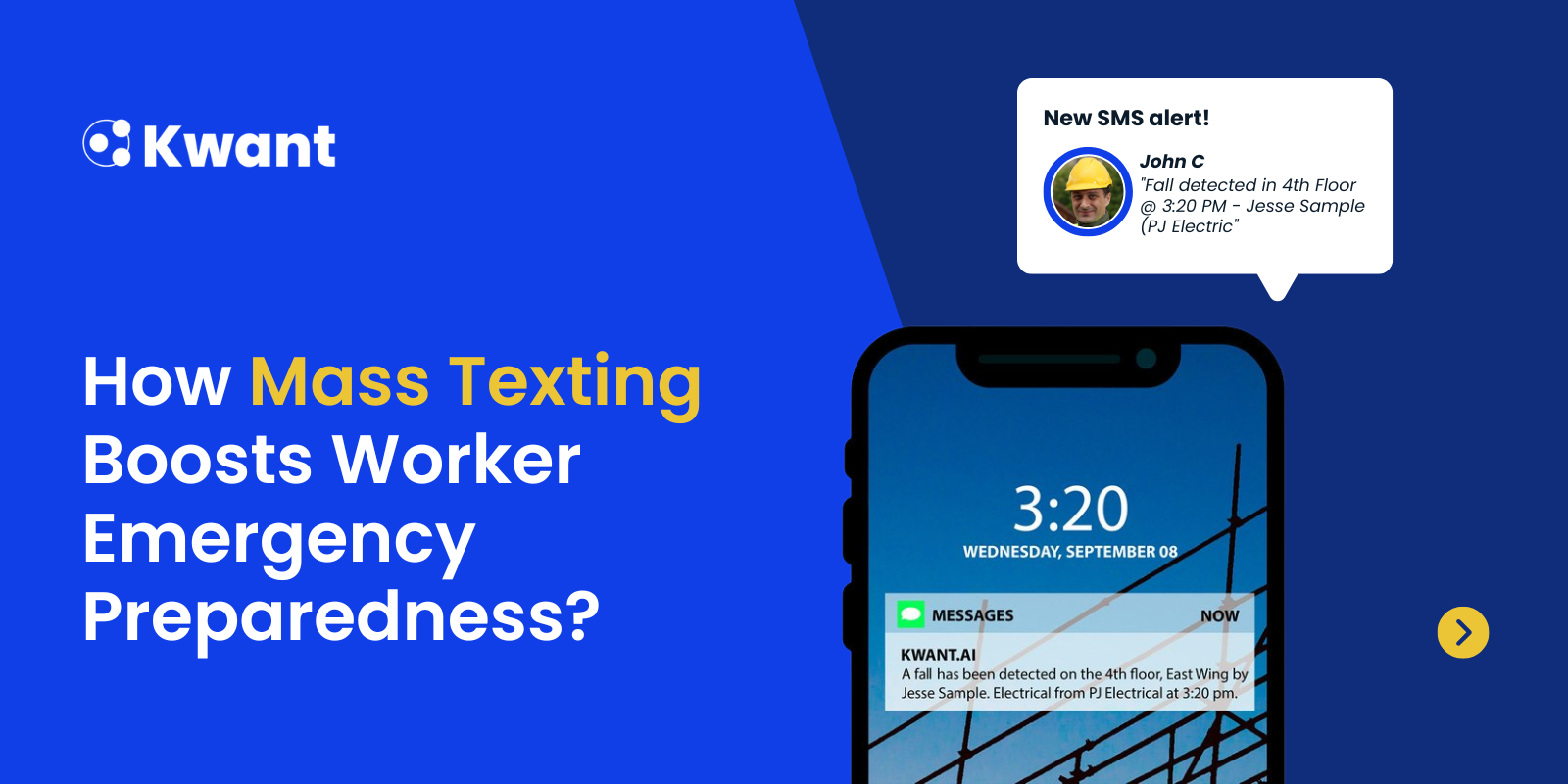


Worker Emergency Preparedness: A Step-by-Step Guide to Mass Communication in a Crisis
In the high-risk, fast-paced environment of construction, effective and rapid communication is essential for safeguarding workers and keeping projects on track. With constant exposure to hazards from unpredictable weather and equipment malfunctions to site-specific emergencies construction teams need real-time updates to make quick, informed decisions.
The U.S. construction industry, valued at over $2.4 trillion, continues to evolve with technology. Among the most impactful innovations is mass texting, which has emerged as a reliable and straightforward tool for improving worker emergency preparedness. By enabling instant alerts and verified communication, mass texting has transformed how managers prevent accidents, coordinate responses, and enhance jobsite safety.
The Problem It Solves: Communication Gaps During Emergencies
Construction sites are large, noisy, and constantly changing. Traditional communication methods, like radios, phone chains, or loudspeakers, often fail to reach every worker during a crisis. Whether it’s a medical emergency, fire, or severe weather, even brief communication delays can lead to confusion, injuries, or costly downtime.
According to Regroup (2024), construction accounts for roughly 20% of private-industry workplace fatalities, underscoring the importance of reliable communication systems. Management teams need the ability to instantly reach all workers, confirm safety, and coordinate evacuations across multiple zones or projects.
This is where mass text alerts become essential. Delivered directly to each worker’s smartphone even without internet access these alerts ensure no one is left uninformed when seconds count.
A challenge arises when some projects include workers without smartphones. In these cases, a crew lead can receive critical information and relay it to their team.
The Underlying Technology: Real-Time Mass Communication Systems
Today, 81% of Americans own a smartphone, and this mobile access is transforming the construction industry. Kwant’s digital safety platform leverages this ubiquity through cloud-based mass communication technology, seamlessly integrating safety alerts, IoT sensors, and worker data into one easy-to-use dashboard.
This integration allows managers to:
- Send real-time safety alerts to all workers or specific crews
- Communicate muster point locations during evacuations
- Send project updates, safety reminders, and schedule changes
- Verify worker safety and manage incident response in one place
Deployment and Privacy Challenges
Rolling out digital safety systems across multiple sites can pose challenges, including data security, connectivity gaps, and workforce adoption. Construction sites often operate in remote or high-interference environments, and teams may speak different languages.
Kwant addresses these issues with:
- Cloud scalability for multi-site coverage
- Multi-language alert support for diverse workforces
These features make real-time communication practical, secure, and inclusive across all workforce tiers.
Opportunities in the Field: The Future of Workforce Safety Management
The market for mass notification systems is expanding rapidly, valued at $14.2 billion in 2024 and projected to reach $46.9 billion by 2030 (Grand View Research), with a CAGR of 22.7%. For the construction industry, this is an opportunity to shift from reactive to proactive safety management.
By connecting IoT sensors, AI analytics, and mobile communication, contractors can anticipate risks and intervene before incidents occur, reducing downtime, insurance costs, and injury rates.
Why Mass Texting Is a Game-Changer for Construction Safety
Mass texting creates a direct communication line between management and workers, ensuring everyone receives critical information instantly. Unlike emails or bulletin board notices, SMS messages achieve an average open rate of 98%, with 90% read within three minutes (Amra & Elma, 2024).
This immediacy makes mass texting ideal for:
- Evacuation alerts for hazardous conditions
- Weather-related site shutdowns
- Medical emergency notifications
- Access control or restricted area alerts
- Daily site updates and shift changes
These capabilities maintain situational awareness, reduce confusion, and enable safer, more efficient site operations.
Key Features That Drive Safety
Instant Communication: Managers can send time-sensitive alerts to hundreds of workers in seconds, ensuring everyone knows what’s happening and what actions to take.
Targeted Group Messaging: Crew filtering allows messages to reach workers based on zone, role, or subcontractor group, reducing message fatigue and keeping communication relevant.
High Engagement: SMS messages bypass noisy jobsite distractions. With high read rates, managers can be confident their teams receive every alert even in high-risk or dispersed environments.
Message Tracking & Accountability: Every message creates a record of safety communication, providing traceability during incident investigations and proving compliance with safety protocols.
Real-World Applications of Mass Texting in Construction Safety
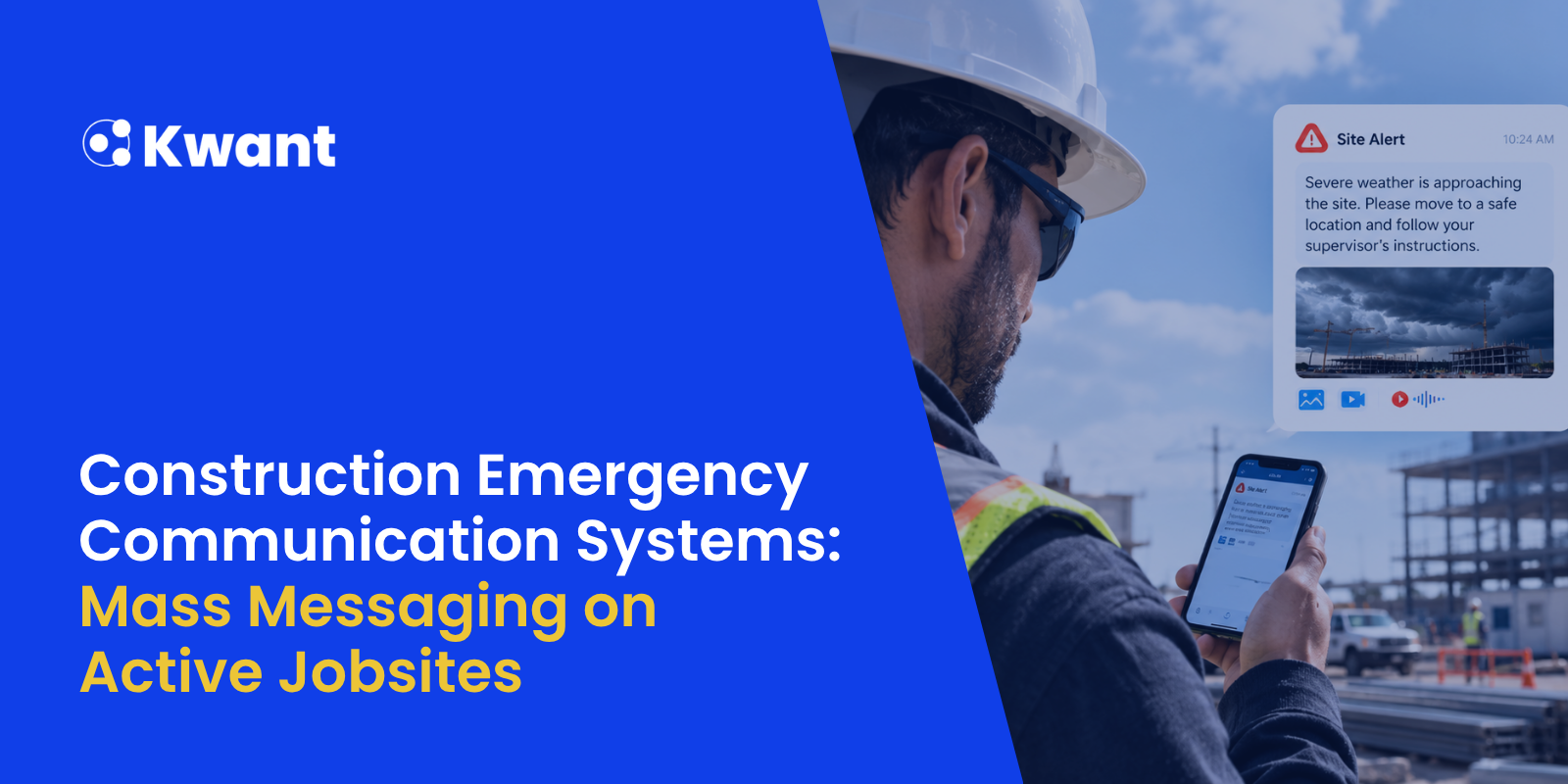
- Weather Alerts: Instantly notify crews to stop work and seek shelter from lightning or high winds.
- Medical Emergencies: Alert nearby teams to clear the area for emergency response access.
- Access Control: Prevent unauthorized entry during high-risk conditions like electrical testing.
- Shift Changes & Updates: Keep large, rotating workforces informed about daily site logistics.
Proactive communication enhances situational awareness, helping mitigate risks before they escalate.
Benefits for Worker Health and Safety Culture
Proactive Hazard Management: Enables faster response to emerging risks.
Enhanced Accountability: Provides a digital log of safety communication and compliance.
Empowered Workforce: Keeps workers informed, confident, and engaged in maintaining safety.
Embedding mass communication into daily operations cultivates a safety-first culture, extending beyond compliance to genuine worker care.
Kwant’s Unique Advantages
Kwant’s mass text alert system is purpose-built for construction, integrating real-time worker visibility, site analytics, and IoT safety sensors into one unified platform.
Key benefits include:
- Instant, site-wide alerts with geofenced targeting
- Evacuation management via real-time worker location tracking
- Verified safety checks after each alert
- Cloud-based dashboards for safety leaders and insurers
By connecting communication with location data, Kwant helps safety managers protect every worker instantly and efficiently.
Kwant also allows you to keep a record of all messages sent and export them to Excel. This enables project management to track communication frequency, type, and effectiveness for current and future projects.
Streamlined Emergency Preparedness
Emergencies may be unpredictable, but your response doesn’t have to be. Mass communication tools redefine how construction companies prepare for and manage crises, improving reliability, reducing incident response times, and strengthening worker confidence.
Kwant’s platform consolidates all workforce needs in one place, eliminating the need to toggle between multiple systems. For example, instead of downloading user data from a separate platform and manually inputting it into a mass texting system, everything is in one unified dashboard. This solves inefficiencies experienced by clients using separate platforms like HammerTech and standalone texting tools.
Kwant’s mass text alert feature makes emergency preparedness simple, secure, and scalable, so every worker stays informed and protected when it matters most.
Schedule a demo with a Kwant representative to see how your teams can communicate smarter, faster, and safer.
Want a sneak peek of Kwant in action? Check out our new segment: Kwant 101 – Onboarding a Crew in under 2 Minutes.
FAQs
1. What is a mass notification system and how is it used in construction?
A mass notification system is a platform that lets managers send simultaneous alerts to every worker on a jobsite—or to specific crews, zones, or subcontractor groups—through a single action. In construction, it's most commonly used for emergency evacuations, severe weather shutdowns, medical alerts, access control restrictions, and daily shift updates. Unlike phone chains or loudspeakers that break down across large, noisy sites, mass notification systems deliver each message directly to a worker's mobile phone via SMS—no internet connection required. For safety managers overseeing hundreds of workers across multiple zones, it replaces the chaos of manual communication with a single, reliable, auditable system.
2. How does mass texting improve emergency response on construction sites?
Construction sites are large, loud, and constantly changing—conditions where radios get missed, loudspeakers don't carry, and phone chains break down under pressure. Mass texting closes that gap by delivering instant alerts directly to every worker's phone, even in low-signal environments, without requiring internet access. SMS achieves a 98% open rate with 90% of messages read within three minutes, making it the fastest reliable channel available when seconds matter. Whether the situation is an evacuation order, a severe weather warning, a medical emergency, or a restricted-area lockdown, Kwant's mass alert system ensures every worker receives a clear, targeted message—and that the safety team has a verified record of who received it.
3. What are OSHA's requirements for emergency communication plans on construction sites?
OSHA requires construction employers to have an Emergency Action Plan (EAP) under 29 CFR 1926.35, which must cover procedures for reporting emergencies, evacuating workers, accounting for personnel after evacuation, and assigning rescue duties. For sites with ten or more workers, the EAP must be written and accessible to all employees. Mass notification systems directly support EAP compliance by providing the documented communication infrastructure OSHA expects—instant alerts for evacuation orders, digital logs of every message sent, and verified confirmation that workers received critical safety information. Kwant's cloud dashboard exports full communication records, making compliance audits straightforward rather than a scramble for paper trails.
4. What if some workers don't have smartphones or reliable connectivity on site?
Mass text alerts are delivered via SMS, which works on any mobile phone and doesn't require internet access—making them far more reliable in remote or low-signal environments than app-based notifications or email. For workers without personal devices, the most practical approach is designating crew leads who receive alerts and relay them immediately to their teams. Kwant's platform supports this crew-level structure natively, allowing safety managers to segment alerts by zone, trade, or subcontractor group so the right message reaches the right people through the right chain. On multilingual sites, multi-language alert support ensures language barriers don't become a safety gap.
5. How does mass texting help teams move from reactive to proactive safety management?
Reactive safety means responding after something goes wrong. Proactive safety means intervening before it does—and that requires fast, reliable communication infrastructure that works in real time. By integrating with IoT sensors and AI analytics, Kwant's platform enables safety managers to push alerts the moment a risk indicator is flagged: a zone entering high-hazard status, a weather condition crossing a threshold, or an access control breach triggering a restricted-area warning. Every alert is logged, timestamped, and exportable—giving safety leaders the data to track communication frequency, identify recurring risk patterns, and demonstrate due diligence. The result is a safety culture that responds to conditions as they develop, not hours after the fact.
6. How do you manage evacuation accountability for hundreds of workers on a large jobsite?
Knowing that an evacuation order was sent is not the same as knowing every worker made it to the muster point safely. On large, multi-zone sites with hundreds of workers across different trades and subcontractors, manual headcounts at assembly areas are slow, error-prone, and potentially dangerous if they require someone to reenter a hazard zone to find missing personnel. Kwant addresses this with real-time worker location tracking combined with mass alerts—so as evacuation messages go out, safety managers can see which workers have moved to safe zones, which haven't responded, and where the gaps are. Verified safety checks built into the alert workflow let workers confirm their status directly from their phones, giving incident commanders an accurate, live accountability picture without leaving the command post.

%20(1).svg)


