.svg)


Oil and gas construction is one of the most demanding and hazardous environments in the world. Projects span remote sites, refineries, chemical plants, offshore platforms, and massive multi-contractor zones where risks change minute by minute. In this environment, achieving “Compliance Without Compromise” requires more than checklists, it requires automated workforce safety systems, real-time visibility, and data-driven decision-making.
Today, forward-thinking energy and construction organizations are turning to safety automation, digital safety tools, and workforce compliance software to protect workers, streamline compliance, and improve operational efficiency. Automated safety systems are transforming how HSE teams, plant managers, project executives, and general contractors manage risk, monitor compliance, and maintain productivity.
The State of Oil and Gas Workforce Safety in 2026
Oil and gas safety continues to evolve under growing regulatory pressure, a shortage of skilled labor, and increasingly complex work environments. Traditional safety processes, paper logs, manual credential checks, radio-based communication, cannot keep up with the pace or scale of modern oilfield construction management.
Common challenges include:
- Incomplete or outdated worker training records
- Slow or inaccurate manual headcounts
- Limited visibility in confined or hazardous zones
- Difficulty coordinating subcontractors
- Delayed or inaccurate incident reporting
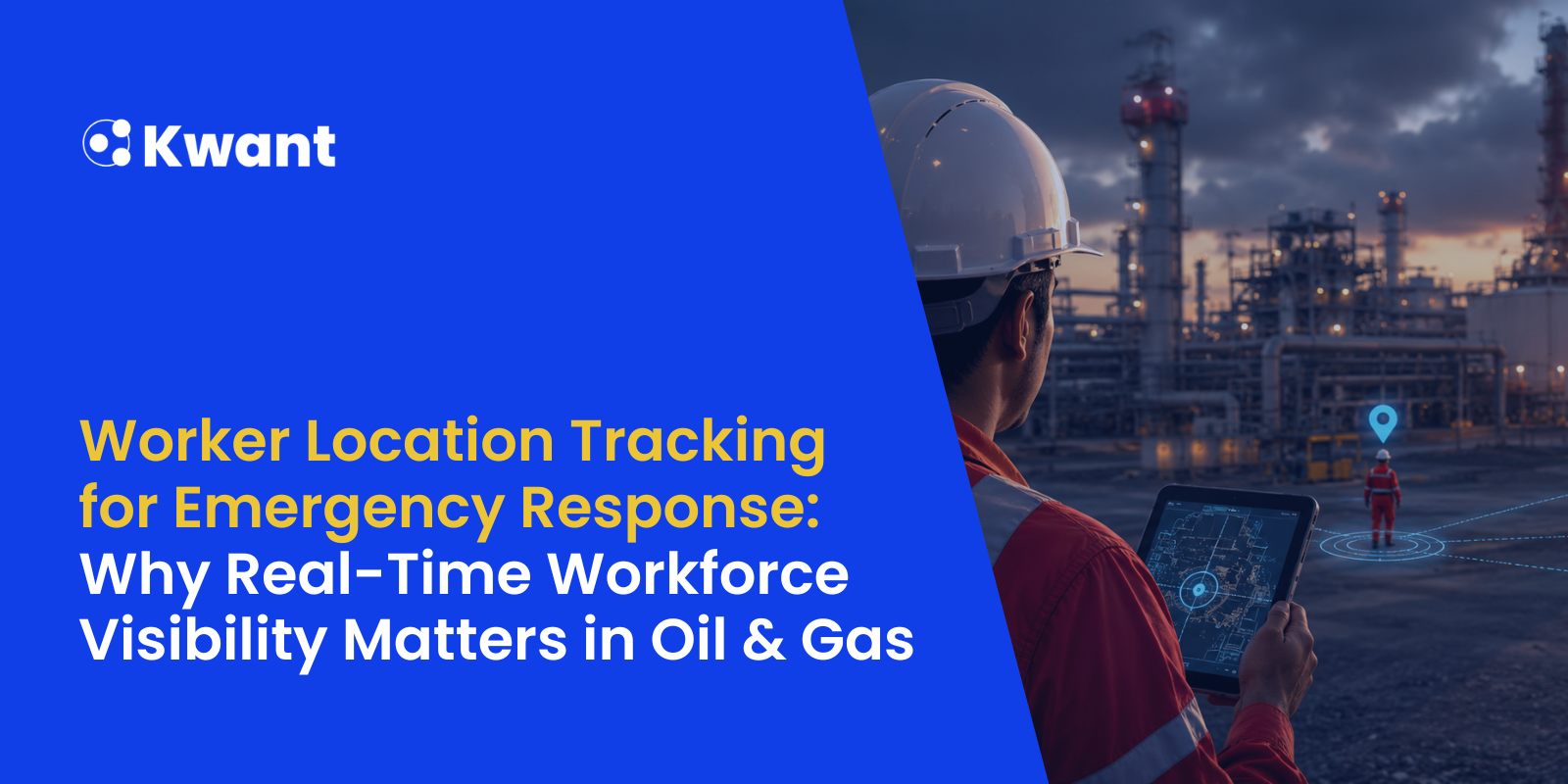
- Workforce movement across large campuses without real-time tracking
These challenges impact not only HSE management but also scheduling, labor planning, and operational continuity.
What Workforce Safety Automation Really Means in Oil & Gas
Safety automation in oil and gas refers to technologies that automatically collect, monitor, and manage worker and environmental data. These systems help teams maintain compliance, respond to risks instantly, and eliminate manual administrative burdens.
Core components include:
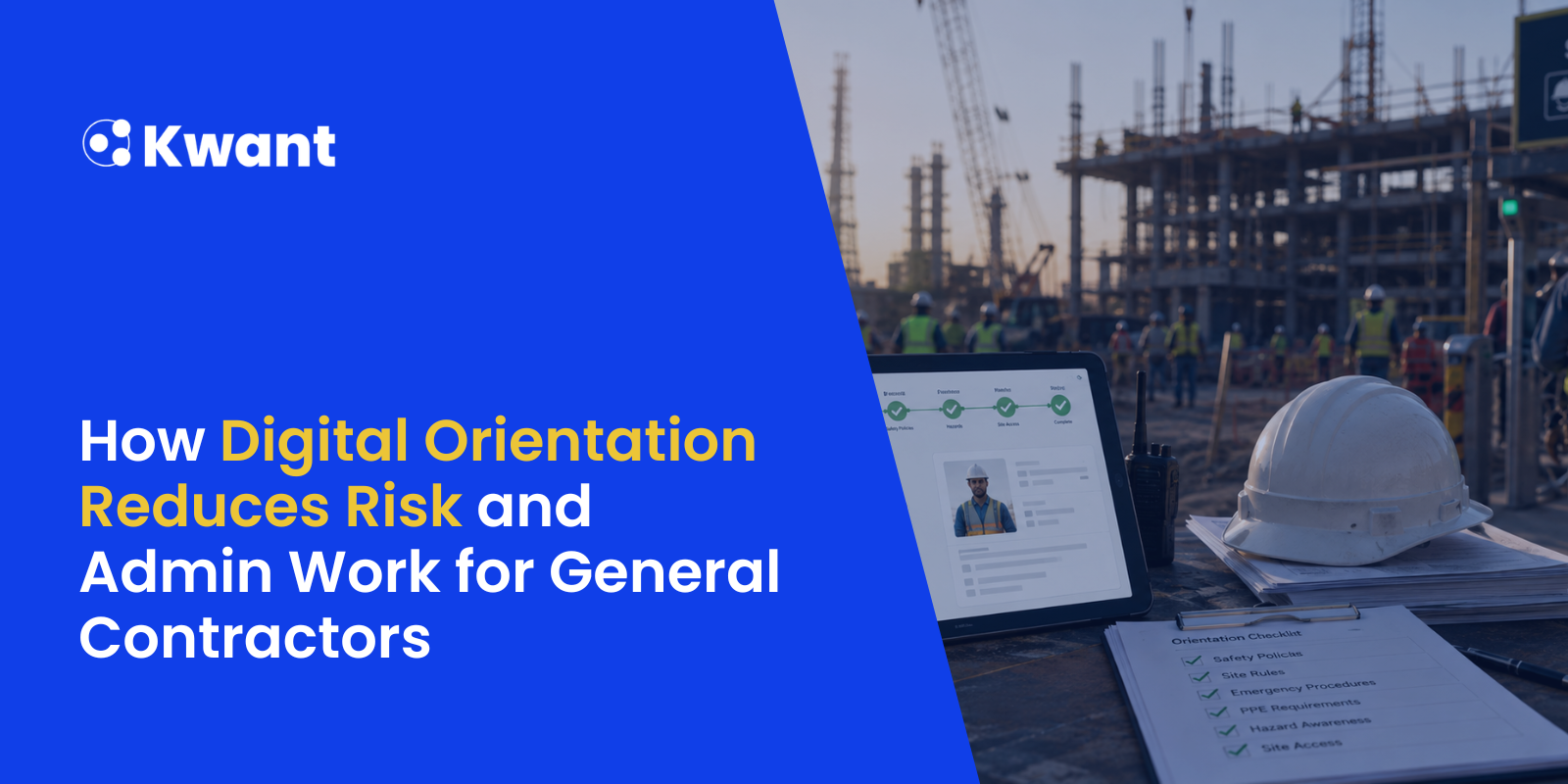
- Digital onboarding & credential tracking
- Automated access control using turnstiles, handheld scanners, or IoT sensors
- Wearables that detect falls, fatigue, heat stress, gas exposure, or worker movement
- Environmental sensors for air quality, temperature, and confined space conditions
- Safety monitoring systems providing real-time alerts
- Automated compliance reporting for audits and documentation
- AI and predictive analytics to identify patterns and near-miss conditions
- Custom dashboards integrated with Power BI and internal systems
- Mass communication and emergency alerting tools
These digital safety tools are now seen across greenfield mega-projects, turnarounds, and live operating facilities, where real-time visibility is critical.
Why “Automating Workforce Safety” Matters More Than Ever
While operational safety is always essential, focusing on workforce safety provides the most significant return because the workforce is the highest-risk and most dynamic part of the environment. When workers are safer, informed, compliant, and tracked, the entire site becomes more predictable.
Organizations adopting workforce safety automation see improvements in:
- Worker accountability
- Faster hazard detection
- Reduced exposure to high-risk zones
- Real-time emergency response
- Lower incident rates
- Higher productivity and schedule adherence
In short: workforce safety is a direct driver of operational excellence.
Key Benefits of Safety Automation for Oil & Gas Construction Teams
1. Real-Time Risk Prevention Through Accurate Workforce Data
Modern safety technology for oil & gas provides real-time visibility into workforce locations, conditions, and behaviors. This allows teams to identify risks immediately and intervene before an incident occurs.
Systems like Blackline Safety, Honeywell Connected Worker, and Kwant equip workers with sensors, wearables, and location-based alerts, creating a layered approach to risk prevention.
2. Automated Compliance Reporting Saves Hours Every Week
Manual reporting drains time from HSE teams and leads to human error. Automated compliance reporting ensures:
- Training records stay current
- Certifications sync across systems
- Daily reports and logs populate automatically
- Audits take minutes, not days
This is especially valuable in shutdowns and turnarounds where compliance requirements change rapidly.
3. Construction Compliance Automation Reduces Administrative Burden
With construction compliance automation, tasks that previously required spreadsheets and clipboards, such as headcounts, credential verification, and contractor compliance, run in the background.
Safety managers gain time back.
Project executives get cleaner, more reliable data.
Workers spend less time at check-in and more time being productive.
4. Improved Labor Resource Management
Oil and gas projects lose millions annually due to misplaced labor resources, slow worker deployment, and unbalanced staffing across zones.
Automation enables teams to:
- See where every trade is located
- Compare actual headcount to planned schedules
- Identify labor shortages or overstaffing
- Allocate teams faster and more efficiently
Across large industrial campuses, these micro-efficiencies stack up, saving hundreds of thousands of dollars in productivity every year.
5. Enterprise-Level Insights Across Multiple Sites
Energy companies implementing workforce compliance software at the enterprise level gain unmatched visibility across all projects, including:
- Worker movement across campuses
- Safety trends across regions
- Cross-project compliance rates
- Standardized reporting and dashboards
- Benchmarking between facilities
Custom dashboards, often built in Power BI, allow leadership to blend workforce data with operations, scheduling, asset management, or environmental streams for stronger, more predictive insights.
Essential Safety Automation Technologies Used Across Oil & Gas
These tools are transforming the way the industry approaches safety:
- Worker wearables (Blackline, Honeywell, Kwant)
- RFID and BLE smart badges for workforce tracking
- Smart access control systems for turnstiles and muster points
- AI-driven workforce monitoring platforms
- IoT-enabled gas, heat, and environmental monitors
- Automated mass notification systems
By adopting a combination of these technologies, companies reduce risk exposure while strengthening oil and gas compliance management end-to-end.
Use Cases Across Greenfield, Turnarounds & Live Facilities
Greenfield Projects
New mega-projects benefit from automated workforce tracking, digital onboarding, and compliance automation to manage thousands of workers entering the project at peak construction.
Turnarounds (TARs)
Turnarounds require fast mobilization of large contractor teams. Automation ensures:
- Fast onboarding
- Real-time headcounts
- Safe access control
- Accurate credential management
Live Facilities
Operating plants rely on automation for:
- Permit-to-work integrations
- Confined space monitoring
- Emergency mustering
- Proactive workforce management safety monitoring
This ensures compliance even as daily operations continue.
Key Stakeholders Who Benefit From Workforce Safety Automation
Workforce safety automation enhances decision-making for everyone involved:
- Safety Managers / HSE Teams: Better visibility, fewer manual tasks
- Plant Managers: Reduced operational disruptions
- Project Managers: Accurate staffing and scheduling
- Project Executives: Clear risk insights and reporting
- Leadership Teams: Enterprise-wide accountability and compliance
- Owners / EPCs: Stronger contractor management and performance
Everyone gains from a unified digital approach.
How Kwant Helps Oil & Gas Teams Achieve “Compliance Without Compromise”
Kwant’s workforce safety automation platform helps oil and gas organizations centralize compliance, track workers in real time, integrate wearables and environmental sensors, and deliver enterprise-level insights through custom dashboards and Power BI integrations. By combining smart access control, AI-driven risk prevention, and automated compliance reporting, Kwant empowers teams to achieve superior safety outcomes while improving productivity across greenfield projects, turnarounds, and live facilities.
Conclusion: The Future of Workforce Safety in Oil & Gas Is Automated
Oil and gas construction is too complex, and too dangerous, for manual safety processes to keep pace. As companies adopt digital safety tools, safety monitoring systems, and automated compliance technologies, they unlock a safer, more efficient, and more predictable work environment.
By focusing on workforce safety automation, organizations can reduce risk, improve compliance, increase productivity, and generate enterprise-scale insights that were impossible just a few years ago.
The path forward is clear:
Automated workforce safety is the foundation of safer, smarter, more efficient oil & gas construction.
Ready to elevate your workforce safety strategy? Speak with Kwant’s oil & gas solutions team today.
FAQs
1. What is workforce safety automation in oil and gas?
Workforce safety automation in oil and gas refers to technologies that automatically collect, monitor, and manage worker and environmental data across complex project sites. This in turn replaced the legacy paper logs, manual credential checks, and radio-based communication with real-time digital systems. It covers everything from automated credentialing and zone-based access control to IoT environmental sensors and AI-driven risk alerts. On greenfield mega-projects, turnarounds, and live operating facilities where conditions change minute by minute, automation gives HSE teams the continuous visibility that manual processes simply cannot provide. Kwant's platform brings all of these capabilities together, the access control, wearable tracking, compliance reporting, and predictive analytics — into one unified workflow.
2. What are the biggest safety risks in oil and gas construction?
Oil and gas construction sites face a combination of hazards that few other industries match: explosive atmospheres, high-pressure systems, toxic gas exposure (H2S, benzene), confined space entry, heavy lift operations, and remote locations where emergency response is slow. OSHA data consistently identifies falls and struck-by incidents as leading causes of fatalities — risks made worse by manual tracking errors and poor workforce visibility. Fatigue compounds all of them, especially on long-rotation sites where shift handoffs and late-night work increase the probability of human error. Platforms like Kwant add a real-time layer of protection by monitoring worker locations, flagging zone breaches, detecting fatigue indicators, and triggering instant alerts before a risk becomes an incident.
3. What regulations govern safety compliance in oil and gas construction?
Oil and gas construction safety is governed by a layered framework of standards depending on the project type and geography. In the U.S., OSHA 1910 (General Industry) and 1926 (Construction) set the baseline for most onshore sites, while offshore operations fall under API RP 75 — the Safety and Environmental Management System standard — and BSEE oversight. Internationally, IOGP (International Association of Oil & Gas Producers) guidelines provide the benchmark for global project alignment. Managing compliance across all of these frameworks simultaneously — especially with large multi-contractor workforces — is one of the biggest administrative burdens HSE teams face. Kwant's automated compliance reporting tracks certifications, credential expiration dates, and contractor documentation in real time, so audit readiness is a dashboard check rather than a multi-day paper exercise.
4. How do wearables and IoT sensors improve safety on oil and gas sites?
Smart wearables and IoT sensors extend safety monitoring into areas and conditions where supervisors physically cannot be. Wearables detect worker location, movement, fall events, and fatigue indicators in real time — sending automatic alerts when a worker enters a restricted zone, stops moving unexpectedly, or approaches a high-risk area without clearance. Environmental edge sensors monitor for hazardous gas levels, temperature extremes, and atmospheric conditions that signal danger before crews are exposed. On large, remote oil and gas sites where a single supervisor may be responsible for hundreds of workers across multiple zones, this connected layer of visibility is what enables proactive intervention rather than reactive incident response. Kwant integrates wearables and environmental sensors directly into its platform, so location data, safety alerts, and compliance records all live in one place.
5. How does safety automation improve turnaround and shutdown management in oil and gas?
Turnarounds and shutdowns are among the highest-risk periods in oil and gas operations — large contractor workforces mobilize rapidly, unfamiliar workers enter complex live facilities, and compressed timelines create pressure that increases human error. Manual safety processes break down fast under those conditions: credential verification queues slow worker entry, paper headcounts fail during musters, and compliance gaps go undetected until an incident or audit surfaces them. Automation eliminates each of those failure points. Kwant onboards workers digitally before they arrive, manages zone access automatically, tracks every worker's location for accurate muster accountability, and logs compliance in the background the entire time. HSE teams get to focus on the site — not the paperwork.

%20(1).svg)


