.svg)



Building or maintaining an LNG facility or refinery is a masterclass in complexity. Unlike a standard commercial jobsite, an oil and gas location tracking environment is a sprawling, industrial landscape dominated by massive steel structures, high-pressure systems, and remote locations.
For Owners and Project Leaders, the challenge of workforce visibility is two-fold: How do you maintain a signal in a forest of steel, and how do you ensure that only the right people are in the high-risk zones?
Kwant supports active O&G sites with daily headcounts exceeding 10,000 workers, including large-scale LNG construction programs where both of those questions have to be answered simultaneously, in real time, without gaps.
1. Overcoming the Steel Forest Signal Challenge
O&G sites are notorious for killing IoT signals. The density of equipment and property infrastructure can reflect or block traditional wireless tracking.
- The Kwant Solution: We address this through a high-density sensor strategy. By deploying a robust network of Kwant IoT sensors, we create a mesh that ensures 100% visibility, even in areas with heavy interference.
- The Hybrid Edge: For remote pipeline work or expansive new builds, Kwant provides Intrinsically Safe (IS) badges equipped with GPS. This allows for industrial worker tracking whether a worker is in the heart of a refinery or miles away on a remote pad. To overcome the signal interference caused by dense industrial infrastructure, we utilize ATEX and IECEx certified tracking hardware. By partnering with experts like Abeeway for specialized O&G asset and worker tracking, Kwant ensures that location data remains accurate even in the most challenging 'steel forest' environments.
2. Zone-Based Access Control for Industrial Sites
In a refinery or LNG plant, not all zones are created equal. Some areas require specific certifications or "hot work" permits. Relying on manual checkpoints to enforce these boundaries on a site with thousands of concurrent contractors is not a process. It is a liability.
Kwant allows you to set up zone-based access control for industrial sites where access is restricted by trade or individual authorization. Rather than relying on manual checkpoints, the system provides real-time personnel tracking for oil and gas that alerts leadership the moment an unauthorized worker enters a restricted area. This digital guardrail ensures that sensitive areas are handled with care and precise visibility.
Under OSHA's Process Safety Management standard at 29 CFR 1910.119, operators are required to control contractor access to process areas and verify contractor awareness of site hazards before entry. A system that generates an automatic alert when an uncertified worker enters a hazard zone creates a documented enforcement mechanism that satisfies this requirement and reduces audit exposure for the operator.
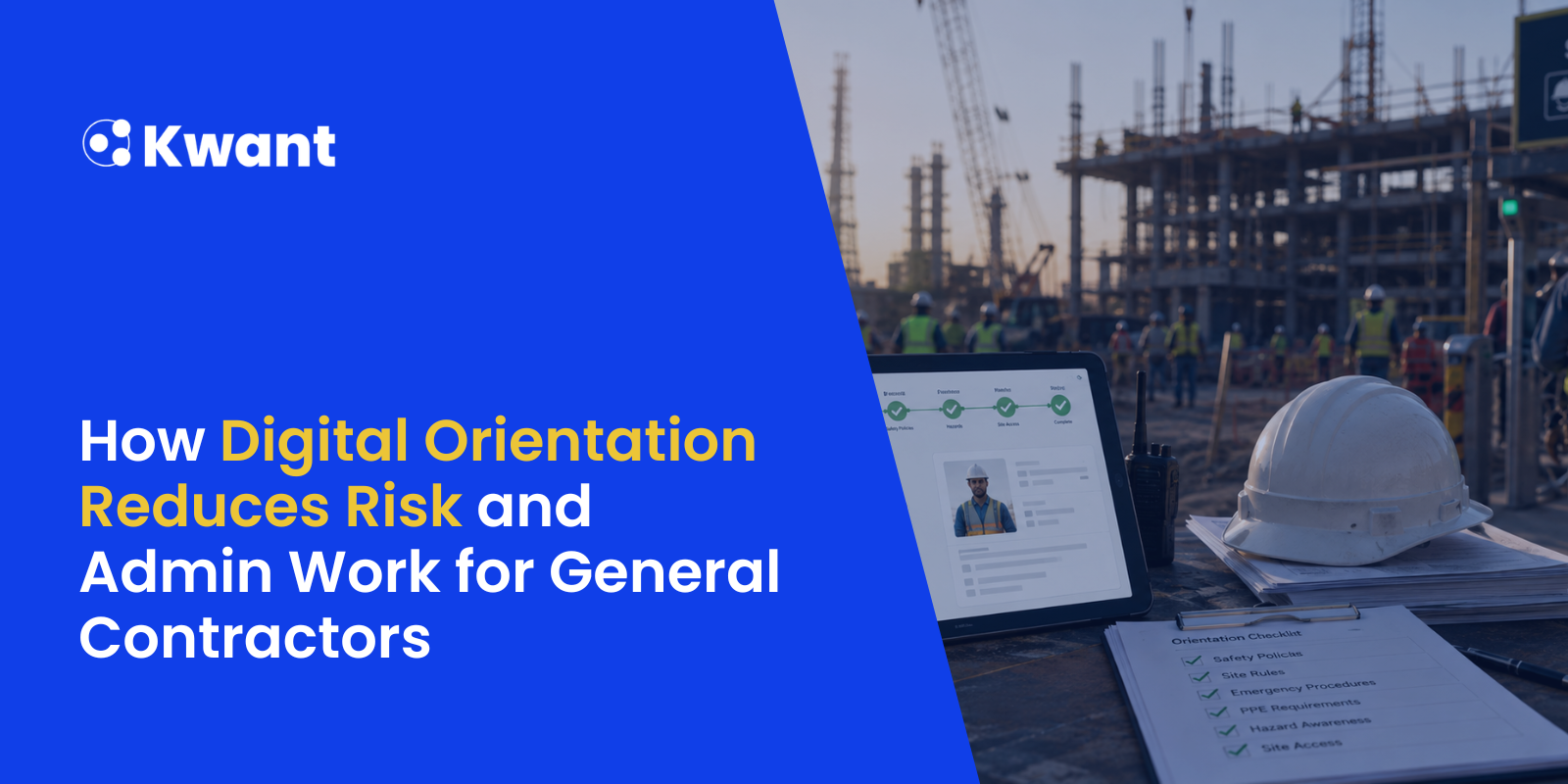
Before a worker ever reaches a zone boundary, Kwant's digital onboarding workflow ensures their certifications and site-specific safety orientations are verified and on record. That pre-arrival compliance step is what makes zone access authorization meaningful rather than administrative.
[Read Our Case Study: Supporting a leading U.S. LNG company]
3. Managing Fatigue and Workforce Thresholds
Safety in high-risk environments is often a byproduct of proper labor management. In O&G operations where 12-plus hour shifts are standard and rotating contractor rosters cycle through compressed turnaround schedules, fatigue is not a soft concern. Research consistently links extended shift sequences in high-hazard environments to elevated incident rates. OSHA's contractor safety guidance specifically identifies fatigue as a risk variable operators must manage as part of their PSM programs.
While some systems focus on minute-by-minute timing, Kwant looks at the bigger picture of worker health and site safety.
- Fatigue Monitoring: Kwant’s Fatigue monitoring provide data on total hours worked and consecutive days on-site across the labor pool.
- Risk Mitigation: By monitoring these thresholds, leadership can identify crews that are at higher risk of exhaustion-related incidents. This allows for proactive scheduling adjustments before a fatigue-related error occurs in a hazardous zone.
Safety is no longer just about personal caution; it’s about systemic oversight. Our platform aligns with the OSHA 2026 focus on Contractor Management, providing the hazardous zone workforce monitoring required to maintain a zero-incident environment in high-hazard facilities.
4. Emergency Response Tracking: The Speed of the Save
In an environment where seconds matter, a manual check-in is a liability. Kwant’s smart badges are equipped to send instant, automated text alerts to designated project leaders for:
- SOS Alerts: When a worker manually triggers an emergency signal.
- Fall Detection: Instant notification of a high-impact event.
- Hazardous Zone Workforce Monitoring: If a worker crosses a geofence into a high-risk area without the proper credentials.
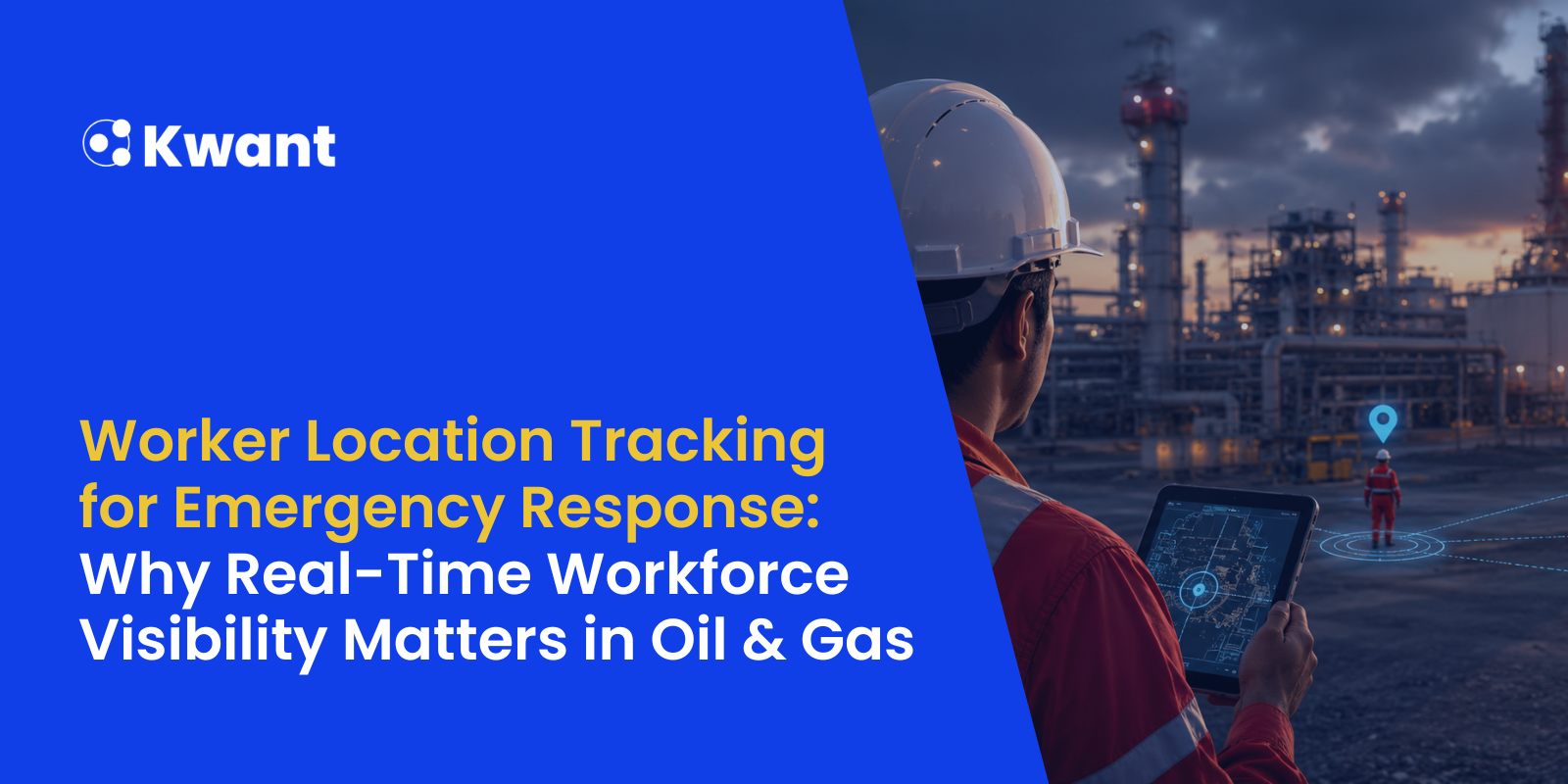
- Muster Points: During a crisis, emergency response tracking provides a real-time digital manifest of who has reached the assembly point and who remains in the danger zone.
On large turnarounds where manual evacuation accountability can take 60 minutes or more, the digital muster reduces that window to minutes, giving safety leaders the information to direct a response rather than conduct a search.
[Mass Messaging and Alerts for Construction Jobsite Management]
5. The Owner-Driven Push for Visibility
We are seeing a significant shift toward owner-driven safety mandates. Owners of critical infrastructure are no longer satisfied with reports of what happened yesterday. They want real-time jobsite insights now.
The move toward real-time visibility isn't just a tech trend—it's a operational mandate. As noted in the Deloitte 2026 Oil and Gas Industry Outlook, digital transformation is now the primary lever for offsetting labor shortages and safety risks in remote LNG and refinery operations.
- New Builds: Kwant allows GCs to meet the high-security requirements of O&G owners while maintaining the visibility needed to keep the project on schedule.
- Turnarounds & Maintenance: During high-pressure turnaround projects, the ability to coordinate thousands of contractors across shifts is the difference between a successful restart and a costly delay.
Kwant's Portfolio Analytics extends this visibility across every active site in an owner's program simultaneously, replacing fragmented site-by-site reporting with a single program-level dashboard.
The Insight: Standardizing High-Risk Safety
The future of Oil & Gas operations belongs to the facilities that treat workforce data as a critical utility. By using Intrinsically Safe sensors and GPS-enabled badges, Kwant provides the transparency required to manage the scramble of industrial construction.
By combining intrinsically safe sensors, GPS-enabled badges, zone-based access enforcement, and fatigue monitoring into a single platform, Kwant provides the transparency required to manage the full complexity of industrial construction. Whether you are managing a remote LNG build or a 24/7 refinery turnaround, the goal is zero incidents. And in 2026, zero incidents requires hazardous zone workforce monitoring.
FAQs
1. What is hazardous zone workforce monitoring in oil and gas?
Hazardous zone workforce monitoring is the real-time tracking of contractor and employee presence across restricted, high-risk areas within refineries, LNG facilities, and industrial plants. It combines zone-based access control, automated credential verification, and instant breach alerts to ensure only authorized, certified workers enter process areas, high-pressure zones, and energized spaces. Kwant delivers this through a mesh sensor network and intrinsically safe smart badges that log zone entry and exit continuously without requiring workers to manually check in.
2. How does Kwant maintain oil and gas location tracking inside steel-heavy environments?
Standard GPS and Bluetooth signals degrade significantly inside refineries and LNG plants due to dense steel infrastructure. Kwant addresses this with a high-density IoT sensor mesh that creates overlapping coverage across the facility, combined with ATEX and IECEx certified badges for intrinsically safe deployment in flammable atmosphere zones. For remote pad locations beyond sensor range, GPS-enabled IS badges maintain continuous industrial worker tracking across the full site footprint.
3. What certifications are required for tracking hardware used on O&G sites?
Any electronic device deployed in a hazardous area classified under ATEX or IECEx standards must be certified as intrinsically safe, meaning it cannot produce the spark or heat required to ignite flammable gas or vapor. Kwant's smart badges meet these certifications, making them deployable in the process areas, confined spaces, and high-pressure zones where conventional tracking hardware is prohibited by site regulation and insurance requirements.
4. How does zone-based access control support OSHA PSM compliance?
OSHA's Process Safety Management standard under 29 CFR 1910.119 requires operators to control contractor access to process areas and verify that contractors understand the hazards of their assigned work areas before entry. Kwant's zone-based access control enforces these requirements automatically by restricting entry based on certification status and trade authorization, generating an alert the moment an uncredentialed worker approaches a restricted boundary, and maintaining a timestamped, audit-ready access record for every zone entry event on the site.
5. What emergency response capabilities does Kwant provide for O&G sites?
Kwant's emergency response tracking operates across three parallel channels. SOS alerts fire instantly when a worker manually triggers an emergency signal. Fall detection sends an automated notification with the worker's exact zone location upon detecting a high-impact event. During a site-wide emergency, the digital muster provides a live manifest showing which workers have reached each assembly point and which zones still have unaccounted personnel, reducing evacuation accountability time from over 60 minutes on large turnarounds to minutes.
6. How does fatigue monitoring reduce incident risk on high-hazard O&G sites?
Kwant's Fatigue Management module tracks cumulative shift hours and consecutive days on-site for every worker in the labor pool. When a worker's accumulated hours in a high-risk zone approach thresholds associated with elevated incident risk, supervisors receive a proactive alert before the next shift begins. This is particularly critical on turnaround projects where 12-plus hour shifts are standard and the same specialized crews are rotated across multiple concurrent work packages, conditions that research and OSHA contractor safety guidance consistently identify as a primary driver of fatigue-related incidents.
7. How does Kwant support contractor management during large-scale turnarounds?
During a 30-day turnaround where thousands of contractors mobilize within 48 hours, Kwant's digital onboarding verifies certifications and site-specific safety orientations before workers arrive at the gate, eliminating Day One processing queues. Zone-based access authorization is tied directly to each worker's verified credential profile, so only compliant workers gain entry to the zones their trade and training cover. Portfolio Analytics then aggregates workforce data across every active work package and shift simultaneously, giving turnaround managers real-time visibility into crew deployment, bottlenecks, and schedule adherence across the full program.
8. Can Kwant scale across multiple O&G sites simultaneously?
Yes. Kwant's Portfolio Analytics provides a unified program dashboard across all active sites in an owner's or GC's portfolio, delivering real-time headcount, zone-level labor distribution, and safety compliance status across geographically distributed facilities without requiring separate reporting from each location. This multi-site visibility is particularly valuable for operators managing concurrent turnarounds or running LNG construction programs in parallel with ongoing refinery maintenance operations.

%20(1).svg)


