.svg)

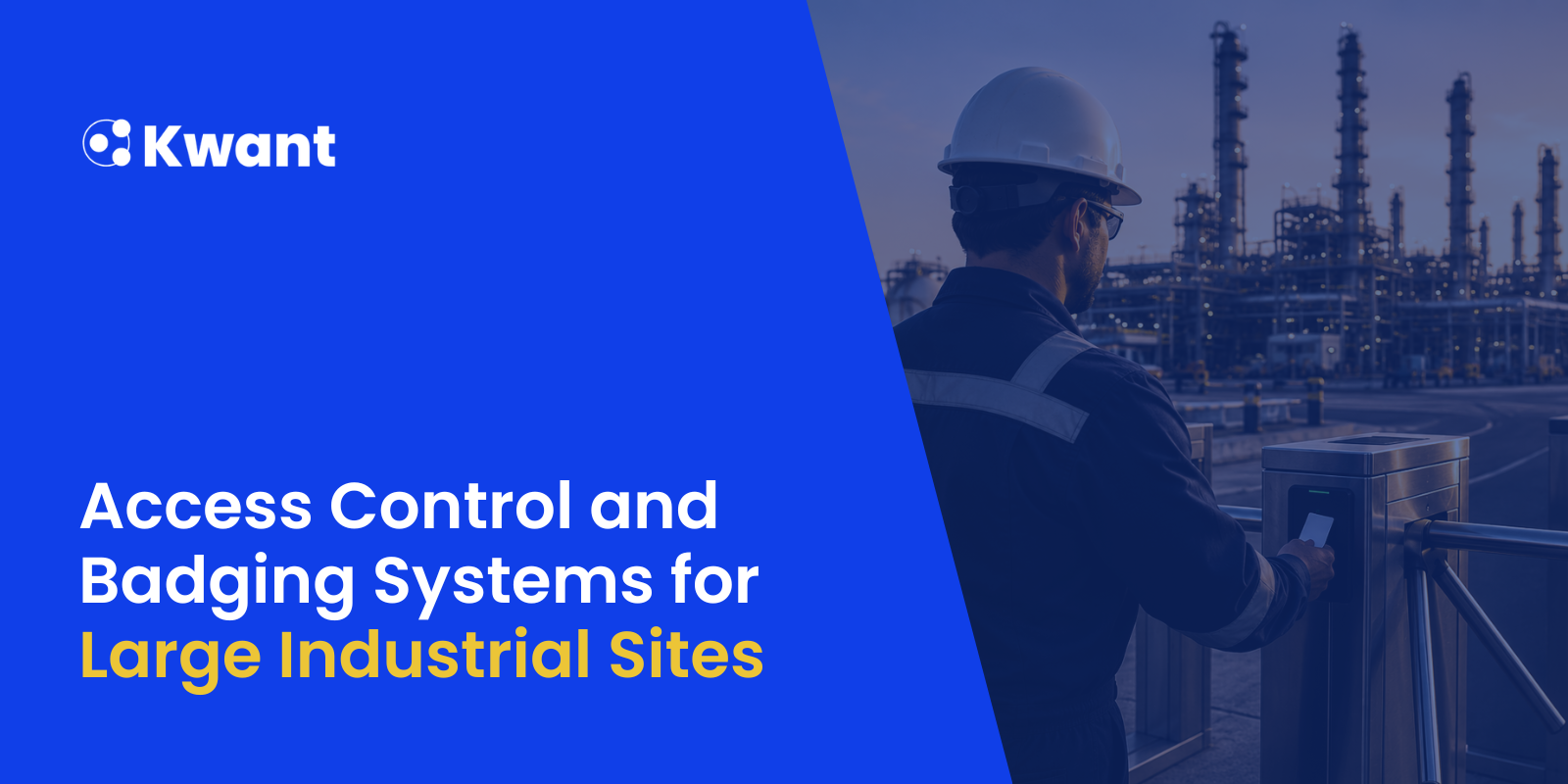


A worker shows up at an industrial site at 5:30 a.m. Their badge works. The gate opens. On paper, they are cleared to work.
But inside the fence line, nothing is simple.
They may be heading into a live process unit. Or a laydown yard near energized systems. Or a turnaround zone where hundreds of other workers are mobilizing at the same time. Their access depends not just on identity, but on training, certifications, contractor status, and whether their permissions match the specific area they are entering that day.
At scale, this is where access control stops being a gate function.
It becomes a real-time system of workforce decisions that directly affect safety, productivity, and operational continuity.
Large industrial projects have outgrown the idea that access control is just about entry and exit. The reality on oil and gas sites is more complex. Workforce movement is dynamic, zones are constantly changing, and compliance is not a one-time check at onboarding.
What is emerging instead is a shift toward access control systems that reflect how these sites actually operate: layered, distributed, and constantly changing.
Why Access Control in Oil and Gas Is Different
Access control in oil and gas and large industrial construction is fundamentally different from commercial construction because the site itself is not uniform.
A refinery or LNG facility is a collection of high-risk environments operating in parallel. Each area carries different hazards, different clearance requirements, and different operational rules.
A worker who is fully qualified for general construction work may still be restricted from:
- Active process units under maintenance
- Control rooms tied to operational systems
- Confined spaces with permit requirements
- Hot work areas under SIMOPS conditions
- Energized electrical zones
This creates a layered access environment where identity is only the starting point.
In practice, access depends on a combination of:
- Workforce credential management
- Site-specific safety training
- Contractor authorization status
- Zone-based permission rules
- Active permits tied to specific tasks
Standards like OSHA’s Process Safety Management requirements reinforce this structure by placing responsibility on operators to ensure contractors are properly trained and controlled within hazardous areas. But compliance frameworks alone do not solve the operational challenge.
The real issue is execution at scale.
On large projects, thousands of workers may flow through multiple zones in a single day. Turnaround events can compress months of activity into short windows where workforce volume spikes dramatically. In those conditions, access control becomes less about checking compliance at the gate and more about maintaining continuous awareness of who is allowed where, and why.
That is where traditional badging systems begin to break down.
The Cost of Getting Access Control Wrong
When access control fails in industrial environments, the consequences rarely appear in a single moment. They accumulate across operations until they surface as safety incidents, schedule delays, or audit failures.
One of the most immediate breakdowns is workforce friction. Workers arrive on site ready to mobilize, but access is delayed while supervisors verify training records or resolve credential mismatches. At scale, this creates bottlenecks that delay critical work before it begins.
Another failure point shows up during high-intensity phases like turnarounds. When hundreds of workers arrive simultaneously, systems that rely on manual verification or disconnected databases cannot process volume efficiently. The result is queues at gates, lost productivity hours, and disrupted sequencing of critical path work.
There is also the issue of fragmented compliance data. Contractor qualification systems may confirm that a company meets requirements, but they often do not reflect whether an individual worker’s certification is still valid on the day they enter a restricted zone. That gap between “approved contractor” and “approved worker in this location right now” is where risk accumulates.
Emergency response introduces another layer of exposure. Without real-time visibility into who is in which zone, site teams are forced to reconstruct workforce presence from logs that may not reflect current conditions. In a high-risk environment, that delay matters.
Finally, there is the cost that shows up in audits and investigations. When access and credential data are stored in separate systems, reconstructing workforce history becomes a manual process. What should be a real-time dataset becomes a retrospective exercise.
Individually, these issues may appear manageable. Together, they point to a structural limitation in how access control has traditionally been implemented on industrial sites.
What Modern Industrial Access Control Actually Looks Like
Modern access control systems on large industrial sites are no longer defined by a single checkpoint at the perimeter. They are defined by how well they connect identity, credentials, and location into a unified operational view.
There are three foundational layers.
The first is physical enforcement. This includes gates, badge readers, biometric verification, and zone entry points. These systems still matter, but they are only the interface.
The second is credential intelligence. This layer tracks worker certifications, training records, contractor status, and permit eligibility in real time. It determines whether a worker should be authorized to enter a specific zone at a specific moment.
The third is workforce visibility. This is where access control evolves into something broader. Every entry event becomes part of a live picture of workforce distribution across the site. This allows teams to understand not just who is on site, but where they are and what they are doing.
When these layers are connected, access control becomes operational infrastructure rather than administrative oversight.
This is especially important in environments where conditions change daily. A zone that is safe in the morning may become restricted by afternoon due to SIMOPS activity. A permit may be issued for a confined space entry that lasts only a few hours. A contractor’s authorization may change based on updated safety documentation.
Static systems cannot keep up with that level of variability.
Why Zone-Based Access Control Is Becoming the Standard
Zone-based access control is one of the most significant shifts in industrial workforce management.
Instead of treating the site as a single controlled environment, it breaks the site into operational zones, each with its own access rules.
These zones typically include:
- General laydown and staging areas
- Active process units
- High-risk maintenance zones
- Control rooms and operational interfaces
- Confined space entry points
- Hot work and energized areas
Each zone has different requirements tied to training, certification, and active work permits.
What makes zone-based control powerful is not just segmentation. It is adaptability.
Permissions can change dynamically as site conditions evolve. A worker may have access to a general area in the morning and lose access to a process unit in the afternoon if their certification lapses or if the zone enters a restricted phase.
Contractor management also becomes more structured. Instead of assigning access manually, workers are mapped to role-based templates that define which zones they can enter. Exceptions are logged and controlled rather than handled ad hoc.
Some large industrial projects, including LNG and refinery builds, are already using this model to manage workforce complexity at scale. In some cases, systems like Kwant are used to connect zone access rules with real-time workforce data and IoT-based location tracking, giving teams a more complete view of site activity.
The result is not just tighter access control. It is better operational awareness.
The Bigger Shift: From Access Control to Workforce Intelligence
The most advanced industrial sites are beginning to treat access control systems as part of a larger workforce intelligence layer.
Instead of viewing access events as isolated transactions, they are using them as signals that describe how work is actually happening across the site.
This includes understanding:
- Workforce density across zones
- Contractor distribution across the project
- Real-time occupancy in high-risk areas
- Movement patterns during peak activity periods
- Readiness during emergency response scenarios
When combined with credential and compliance data, this creates a live operational model of the workforce.
This is where the industry is starting to shift. Access control is no longer just about security or compliance enforcement. It is becoming a data foundation for project execution.
It also creates continuity beyond construction. On large LNG and industrial facilities, the same infrastructure used during construction can transition into operations, maintaining workforce visibility long after handover.
That continuity is increasingly important for owners who want consistent visibility across the full lifecycle of an asset.
What to Look for in Oil and Gas Badging Systems
Selecting an access control system for industrial sites requires evaluating more than hardware or badge technology.
The key question is how well the system connects workforce identity, credentials, and real-time access decisions.
Important considerations include:
- Whether access rules can be configured at the zone level and updated centrally
- Whether credential data is verified in real time rather than through periodic syncs
- How the system handles high-volume workforce surges during turnarounds
- Whether emergency response teams can instantly view workforce distribution by zone
- Whether contractor data integrates with pre-qualification systems like ISNetworld or PEC Premier
Whether the system supports both construction and operational phases of the facility lifecycle
The goal is not simply to control entry. It is to maintain accurate, real-time awareness of workforce activity across a complex environment.
A worker at the gate is no longer just an access decision. They are part of a larger operational system that reflects how work is progressing across the site.
The sites that recognize this are already moving away from static badging systems toward integrated workforce platforms that connect access, compliance, and visibility in real time.
Others are still trying to solve a dynamic problem with static tools.
That gap will continue to widen as industrial projects become larger, more distributed, and more operationally complex.
See how Kwant approaches workforce visibility, access control, and compliance on large Oil & Gas industrial sites. Request a demo at kwant.ai.
FAQ on Access Control & Badging Systems for Large Oil & Gas Sites
What is access control in oil and gas construction projects?
Access control in oil and gas refers to how workers are authorized to enter and move through industrial sites based on identity, training, and safety certifications. Unlike commercial construction, it also includes zone-based permissions tied to process units, hazardous areas, and operational restrictions. It is closely linked to compliance access systems in oil and gas environments where safety requirements vary by location.
How do oil and gas badging systems differ from standard construction site systems?
Oil and gas badging systems must account for more than site entry. They need to validate worker credentials in real time and enforce zone-specific access rules based on hazard levels. Standard systems typically stop at perimeter access, while industrial systems extend into workforce credential management and operational area control.
Why is zone-based access control important on industrial sites?
Zone-based access control ensures that workers can only enter areas where they are properly trained and authorized. This is critical on refinery and LNG sites where different zones carry different safety risks. It also helps manage SIMOPS conditions and supports safer coordination during high-intensity work phases.
How does workforce credential management improve site safety?
Workforce credential management ensures that certifications, training records, and compliance requirements are continuously validated before a worker enters restricted areas. This reduces the risk of expired or invalid qualifications being overlooked and helps prevent unsafe access in high-risk environments.
Can access control systems support both construction and operations phases?
Yes, modern systems are increasingly designed to transition from construction to operations. This allows owners to maintain consistent workforce visibility, credential tracking, and zone-based access control even after project completion. It reduces the need to replace systems at turnover and preserves workforce data continuity.
What should owners evaluate in compliance access systems for oil and gas sites?
Owners should evaluate whether the system provides real-time workforce visibility, supports zone-level access control, integrates with contractor pre-qualification systems, and delivers instant reporting for emergency response. The ability to connect access data with credential management is critical for both compliance and operational control.

.png)
%20(1).svg)


