.svg)

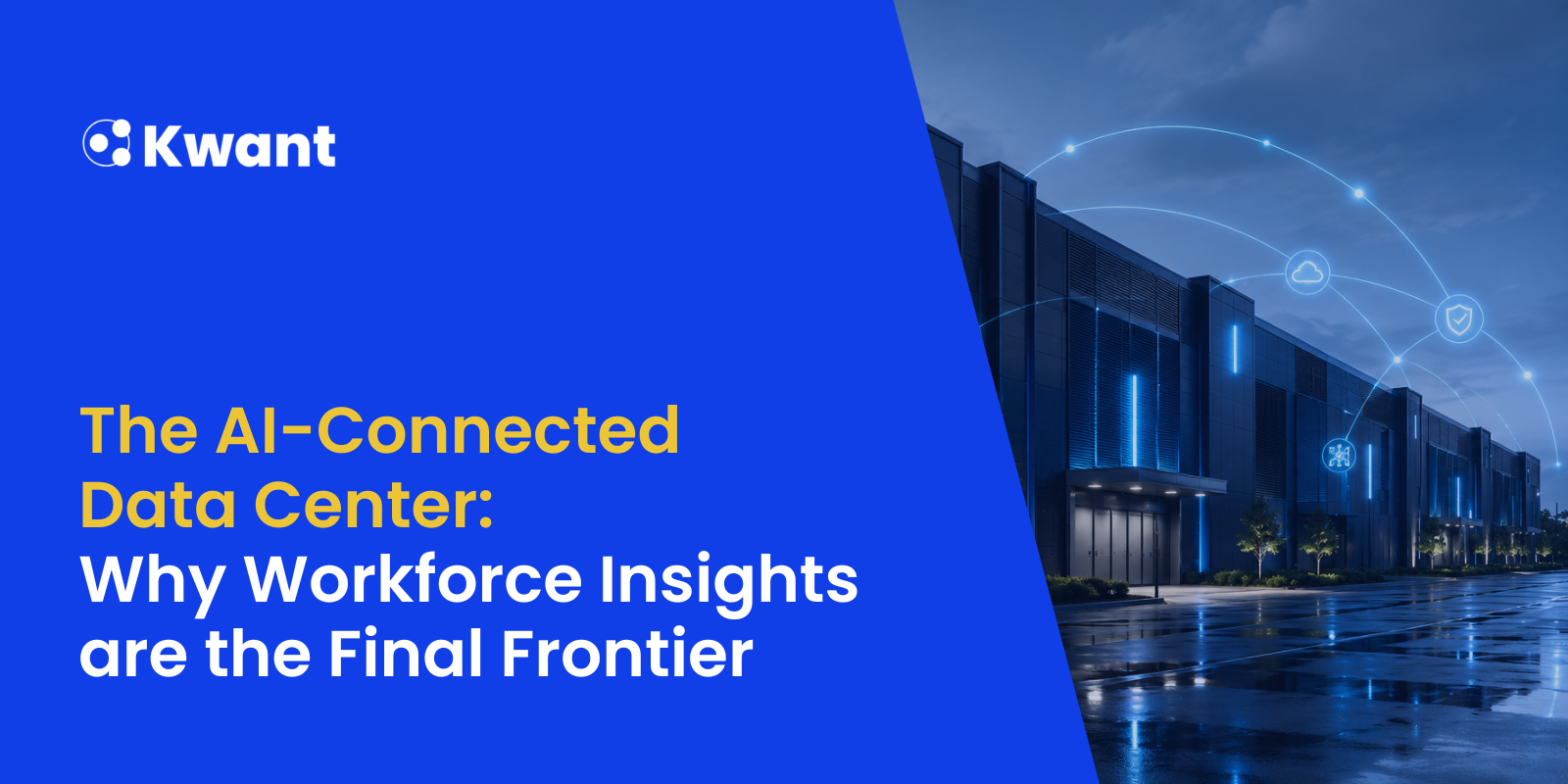


In 2026, building a data center is less like traditional construction and more like a high-speed industrial assembly. To meet the relentless demand of hyperscale users, project teams are deploying an arsenal of AI-driven technologies to de-risk schedules and ensure "Day One" performance.
On a modern site, you might see:
- Reality Capture AI (OpenSpace): Automatically mapping 360° photo data to floor plans to provide a "Google Street View" of daily progress. OpenSpace
- Autonomous Layout (Dusty Robotics): Using AI-powered rovers to print digital BIM models directly onto the floor with 1/16” accuracy. Dusty Robotics
- Contract Intelligence (Document Crunch): Using specialized AI to review thousands of pages of specs and contracts to highlight hidden risks in seconds. Document Crunch
- Unstructured Data Agents (Trunk Tools): Leveraging generative AI to organize messy project data and answer field questions instantly. Trunk Tools
These tools are revolutionary for managing the building. But the most volatile, expensive, and critical element of any data center build isn't the concrete or the conduit, it’s the people.
Kwant was founded on a simple premise: your workforce data should be as intelligent as your BIM model. Deployed across mission-critical campuses with Gray, Mortenson, Turner, Gilbane, Yates Construction, and other leading GCs, here is how we are delivering the "Higher Standard" of Workforce Insights today.
1. Predictive Resource Forecasting: The 3-Day Advantage
Traditionally, understanding if you have enough labor to hit a milestone required a "resource-loaded schedule." The problem? Most projects don't have one, and building one manually takes a scheduler weeks. By the time it’s finished, the site has changed so much that the data is obsolete.
Kwant’s AI solves this by creating the resource-loaded schedule for you. By pulling in multiple project inputs, our AI builds a comparison of budgeted vs. actual workforce in record time. Instead of waiting weeks, we deliver a suggested labor resource curve in 3 days. This allows leadership to see exactly where they need to ramp up trades before the bottleneck occurs, turning a reactive "scramble" into a predictive strategy.
2. The Kwant AI Assistant: Instant Reporting, No "Crunching" Required
Data center Project Managers and Admins are often buried in Excel, trying to reconcile time, location, trade, and subcontractor logs for the Owner. It’s a massive drain on productivity.
The Kwant AI Assistant acts as your digital analyst. It allows anyone on the team to run instant, complex reporting using natural language.
- “Show me the number of electricians in Building B compared to the last 3 Tuesdays.”
- “Schedule a weekly report of all workers who have reached their fatigue threshold this week and send to leadership at 6am on Saturdays”
By delivering these insights at the click of a button, we are reclaiming hours of administrative time every week—time that is better spent leading the site.
3. Standardizing Safety: The Future of Compliance (Beta)
Safety documentation arrives on-site in a thousand different formats, handwritten JHAs, PDFs, and digital forms. Standardizing this is a nightmare.
We are currently beta-testing an AI tool that solves the "Safety Gap." Kwant’s AI helps standardize incoming safety docs into a custom, searchable format regardless of how they were delivered. It then goes a step further, comparing those submissions against your internal safety plans and site rules. It doesn't just store the document; it tells you: "Does this submission actually meet our requirements?"
For data center owners who require construction-phase safety documentation as part of handover packages, this capability means the compliance record builds itself throughout the project rather than being assembled in the final weeks before turnover.
The Insight: Your Data, Your Decisions
At Kwant, we have been an AI-first company since our inception. We aren't just adding "AI" as a buzzword; we are building a system that takes your project data like the badge scans, the zone movements, the trade hours, the fatigue accumulations, the safety submissions, and transforms it into a competitive advantage.
While much of our most advanced predictive modeling is kept "under the hood" to protect our proprietary edge, the mission remains clear: to give Data Center Owners and GCs the visibility required to manage a high-security workforce at the speed of 2026.
The future of the jobsite is here. Are you building with it?
See how Kwant's AI workforce analytics work on active data center campuses or request a demo.
FAQs
1. What is AI workforce analytics in construction?
AI workforce analytics in construction is the use of artificial intelligence to process real-time workforce data, including badge activity, zone-level location, trade hours, and subcontractor headcounts, and surface actionable insights about labor performance, schedule risk, and safety compliance. On a data center campus, it means moving from weekly spreadsheet reconciliation to a live, continuously updated picture of how your workforce is performing against the project plan.
2. How does predictive workforce forecasting work on a data center build?
Predictive workforce forecasting combines real-time on-site labor data with project schedule inputs to model how current crew deployment compares to what the schedule requires at each upcoming milestone. When actual labor hours in a zone or trade package are trending below the pace needed to hit a critical path activity, the model surfaces the gap in advance, giving the project team time to accelerate mobilization rather than react after the milestone is missed.
3. What is the difference between AI workforce analytics and basic access control?
Basic access control confirms that a worker arrived on site. AI workforce analytics tracks where they went, how long they spent in each zone, how their hours compare to the productivity benchmark for that trade and phase, and whether the current labor distribution across the campus is aligned with the schedule. On a hyperscale build with 4,000-plus workers across multiple structures, that difference is the gap between managing your workforce and guessing at it.
4. How does the Kwant AI Assistant improve project reporting?
The Kwant AI Assistant allows any member of the project team to generate complex workforce reports using plain-language queries, without exporting spreadsheets or manually reconciling data from multiple sources. Because the underlying data is generated automatically from verified access and zone-tracking activity, every report reflects actual site performance rather than self-reported figures. Reports can also be scheduled to deliver automatically to leadership at defined intervals.
5. How does AI help standardize safety documentation on a data center campus?
Safety documentation on large construction campuses arrives in inconsistent formats from dozens of subcontractors. Kwant's AI safety tool standardizes incoming documents into a searchable, comparable format and validates them against internal safety plans and site rules, flagging submissions that do not meet requirements before they create audit exposure. For data center owners requiring construction-phase compliance documentation at handover, this means the record is built continuously rather than compiled under pressure at project close.
6. Can AI workforce analytics support multi-building campus programs?
Yes. Portfolio Analytics aggregates real-time labor data across every active structure on the campus simultaneously, giving project executives a unified view of crew deployment, trade productivity, and schedule alignment across all buildings without switching between separate project reports. When Building B's electrical package is trending behind while Building A's commissioning crew is creating demand for the same trade, the campus-level view surfaces that conflict in time to act on it.
%20(1).svg)


