.svg)

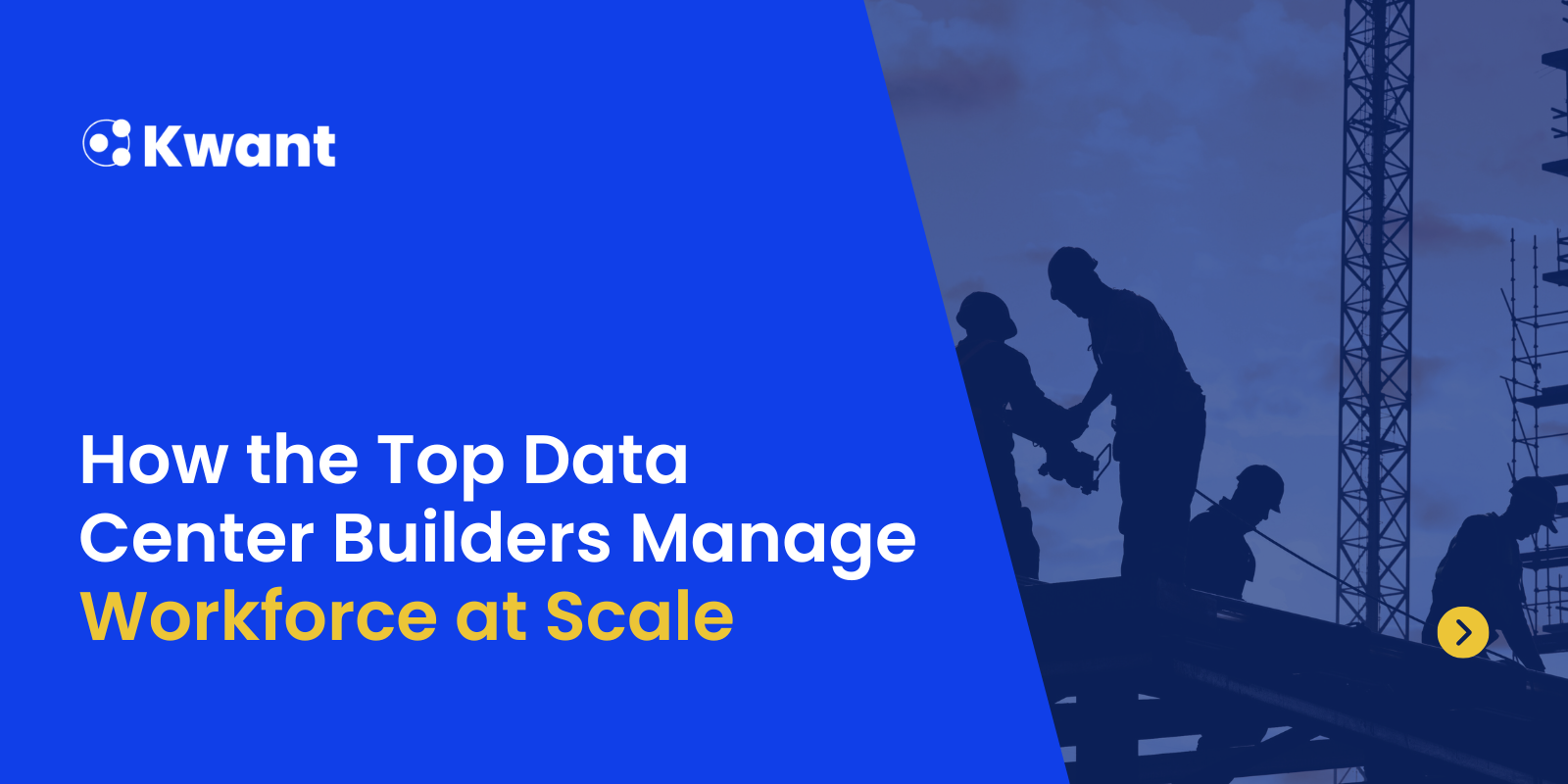


Introduction: The Workforce Scaling Challenge in Data Center Construction
Data center construction continues to expand rapidly across major U.S. markets such as Ashburn, Phoenix, and Dallas. Hyperscale campuses are growing larger, schedules are compressing, and labor density is increasing.
However, while capacity scales quickly, workforce complexity scales even faster.
On a single hyperscale project, thousands of workers from dozens of subcontractors may enter and exit the site daily. Electrical crews, mechanical contractors, fiber installers, and commissioning teams operate simultaneously. Shifts overlap. Security requirements remain strict.
This is why How the Top Data Center Builders Manage Workforce at Scale has become a defining operational challenge. Effective data center workforce management now directly impacts safety, compliance, productivity, and schedule certainty.
Why Workforce Management Is Different on Data Center Projects
Data centers operate under conditions that make workforce management uniquely complex:
- Strict security protocols with restricted zones and background checks
- High labor density during peak construction phases
- Trade stacking in tight, high-value environments
- Accelerated commissioning schedules
- Multi-site program execution across regions
Because of these factors, data center construction workforce management requires precision and real-time visibility. Traditional workforce tracking methods cannot keep pace.
Where Traditional Workforce Processes Break at Scale
When workforce operations rely on manual systems, issues surface quickly:
- Paper sign-in sheets provide inaccurate headcounts
- Spreadsheets cannot track certifications in real time
- Security teams manage inconsistent badging
- Owners lack visibility across projects
- Workforce analytics remain reactive
As workforce counts exceed 1,000–2,000 workers per day, these inefficiencies compound. Large-scale contractor management becomes fragmented, and project risk increases.
How Top Data Center Builders Centralize Workforce Operations
Leading general contractors treat workforce systems as critical infrastructure. They centralize workforce operations through unified platforms that integrate:
- Digital onboarding
- Access control systems
- Real-time workforce tracking in data centers
- Certification management
- Construction workforce analytics for data centers
By doing so, they shift from reactive workforce oversight to proactive workforce strategy.
Digital Onboarding Before Day One
Top builders remove paperwork before workers arrive onsite.
Digital onboarding allows subcontractors to:
- Upload licenses and certifications
- Complete safety orientations
- Submit background checks
- Sign compliance documentation
As a result, workers arrive pre-qualified. Security verifies credentials instantly. Gate congestion decreases significantly.
This approach strengthens data center workforce management by standardizing processes across multiple sites.
Automated Access Control and Real-Time Headcount
Manual check-ins cannot support hyperscale workforce volumes.
Top data center builders deploy:
- Turnstiles
- Smart badges
- Biometric systems
- Facial recognition technology
These systems enable real-time workforce tracking in data centers. Project teams can instantly see:
- Who is onsite
- Which contractor they represent
- What trade they belong to
- Where they are working
This visibility improves emergency response, labor planning, and overall site security.
Real-Time Certification and Compliance Tracking
Compliance requirements on data center projects are strict. Expired certifications or missing training can delay inspections and commissioning.
Modern workforce systems automate compliance tracking by:
- Flagging expired credentials
- Restricting access for non-compliant workers
- Monitoring safety training completion
- Generating audit-ready reports
This proactive oversight supports construction workforce analytics for data centers and reduces last-minute disruptions.
Workforce Visibility Across Trades, Shifts, and Zones
High-density trade stacking introduces safety and coordination risks.
With zone-based workforce visibility, project leaders can monitor:
- Labor density by room or floor
- Trade distribution across shifts
- Congestion trends
- Workforce movement patterns
This data helps teams resequence work, prevent overcrowding, and improve productivity. Workforce visibility data centers depend on enables superintendents to make informed, real-time decisions.
Standardized Reporting Across Multi-Site Programs
Many hyperscale owners build multiple facilities simultaneously. They expect consistent workforce reporting across all sites.
Centralized workforce platforms standardize:
- Daily headcount reporting
- Diversity and local labor tracking
- Compliance summaries
- Labor forecasting
- Contractor performance metrics
This gives executives program-level visibility instead of isolated site reports.
The Role of Workforce Platform Management
As workforce size increases, fragmented systems create risk. Separate tools for access control, onboarding, and reporting lead to disconnected data.
Workforce platform management consolidates operations into a single system of record. It aligns security, safety, and project leadership under one source of truth.
For data center construction workforce teams, this integration is essential for maintaining control at scale.
A Real-World Hyperscale Workforce Scenario
Consider a 100+ MW campus at peak activity:
- 2,500+ workers onsite
- 40–50 subcontractors
- Multiple overlapping shifts
- Highly restricted zones
Without centralized workforce management:
- Access delays slow productivity
- Certification gaps create compliance risk
- Trade stacking increases safety exposure
- Owners lack accurate reporting
With integrated workforce systems in place:
- Access becomes seamless
- Compliance is continuously monitored
- Labor density is actively managed
- Executives receive automated, real-time dashboards
The difference lies in operational visibility.
Measurable Outcomes of Platform-Driven Workforce Management
Top builders implementing centralized data center workforce management systems report:
- Reduced gate congestion
- Improved schedule adherence
- Stronger compliance performance
- Faster emergency response
- Improved labor forecasting accuracy
- Enhanced owner transparency
These measurable improvements strengthen both execution and client confidence.
Why Workforce Systems Are Now Critical Infrastructure
In data center construction, redundancy and resilience define physical infrastructure. Workforce systems now demand the same level of strategic planning.
Without scalable workforce infrastructure:
- Productivity declines
- Risk increases
- Visibility weakens
- Program oversight suffers
To manage workforce complexity across hyperscale environments, many leading contractors implement dedicated workforce management platforms such as Kwant. By centralizing digital onboarding, automated access control, real-time workforce tracking in data centers, and construction workforce analytics for data centers, Kwant helps builders maintain full workforce visibility across trades, shifts, zones, and multi-site programs.
As data center projects continue to grow in size and speed, scalable workforce systems are no longer optional—they are foundational.
Conclusion: Scaling Data Centers Requires Scalable Workforce Systems
The expansion of hyperscale data centers will only accelerate. Labor volumes will rise. Security standards will tighten. Owner expectations will increase.
Therefore, How the Top Data Center Builders Manage Workforce at Scale ultimately comes down to centralized, real-time workforce visibility.
Builders who invest in structured, platform-driven data center workforce management gain clarity, control, and consistency across even the most complex projects.
Ready to strengthen workforce visibility across your data center program?
Connect with the Kwant team to see how a unified workforce platform can help you scale labor operations, improve compliance, and deliver hyperscale projects with confidence.
FAQs
1. What makes workforce management on data center projects uniquely complex?
Data centers combine strict security protocols, high labor density during peak build phases, overlapping trades in confined spaces, and fast-paced commissioning schedules — often across multiple sites. Traditional workforce tracking can’t keep up with real-time headcounts, credential checks, or safety alerts at this scale. Platforms like Kwant centralize onboarding, access control, and real-time visibility to help teams manage complexity safely and efficiently.
2. Where do traditional workforce processes break down as headcount grows?
Manual systems — paper logs, spreadsheets, and siloed tools — collapse under hyperscale volumes. They distort headcounts, fail to track certifications in real time, and don’t provide unified visibility across projects. Once workforce counts exceed ~1,000–2,000 people per day, these gaps fragment management and elevate safety, compliance, and schedule risk. Kwant’s unified platform automates these processes and closes visibility gaps.
3. What does centralized, platform-driven workforce management include, and how does it change operations?
Leading builders use unified platforms that integrate digital onboarding, automated access control, real-time location tracking, certification management, and analytics into one system of record. This consolidates fragmented workflows, automates manual tasks, and gives project teams a single source of truth. As a result, teams pre-qualify workers, monitor compliance continuously, manage labor by zone and shift, and forecast workforce needs nationally and across multi-site portfolios with confidence.
4. How do digital onboarding and automated access control reduce risk and improve visibility?
Digital onboarding moves paperwork offsite so workers arrive pre-qualified with licenses, safety training, and background checks already verified. Automated access control with smart badges and sensors lets teams instantly see who’s onsite, their employer and trade, and where they’re working. This reduces gate congestion, prevents unauthorized access, and improves emergency response, labor planning, and compliance oversight.
5. Why are workforce platforms like Kwant now a critical infrastructure for construction projects?
Centralized workforce systems deliver reduced manual reporting, improved schedule adherence, stronger compliance tracking, faster incident response, and more accurate labor forecasts. Executives gain standardized, portfolio-level dashboards and analytics — including real-time insights, alerts, certification status, and performance trends — all in one place. Because visibility, safety, and productivity are foundational to execution in hyperscale environments, solutions like those offered by Kwant are now treated as essential infrastructure rather than optional software.
%20(1).svg)


