.svg)

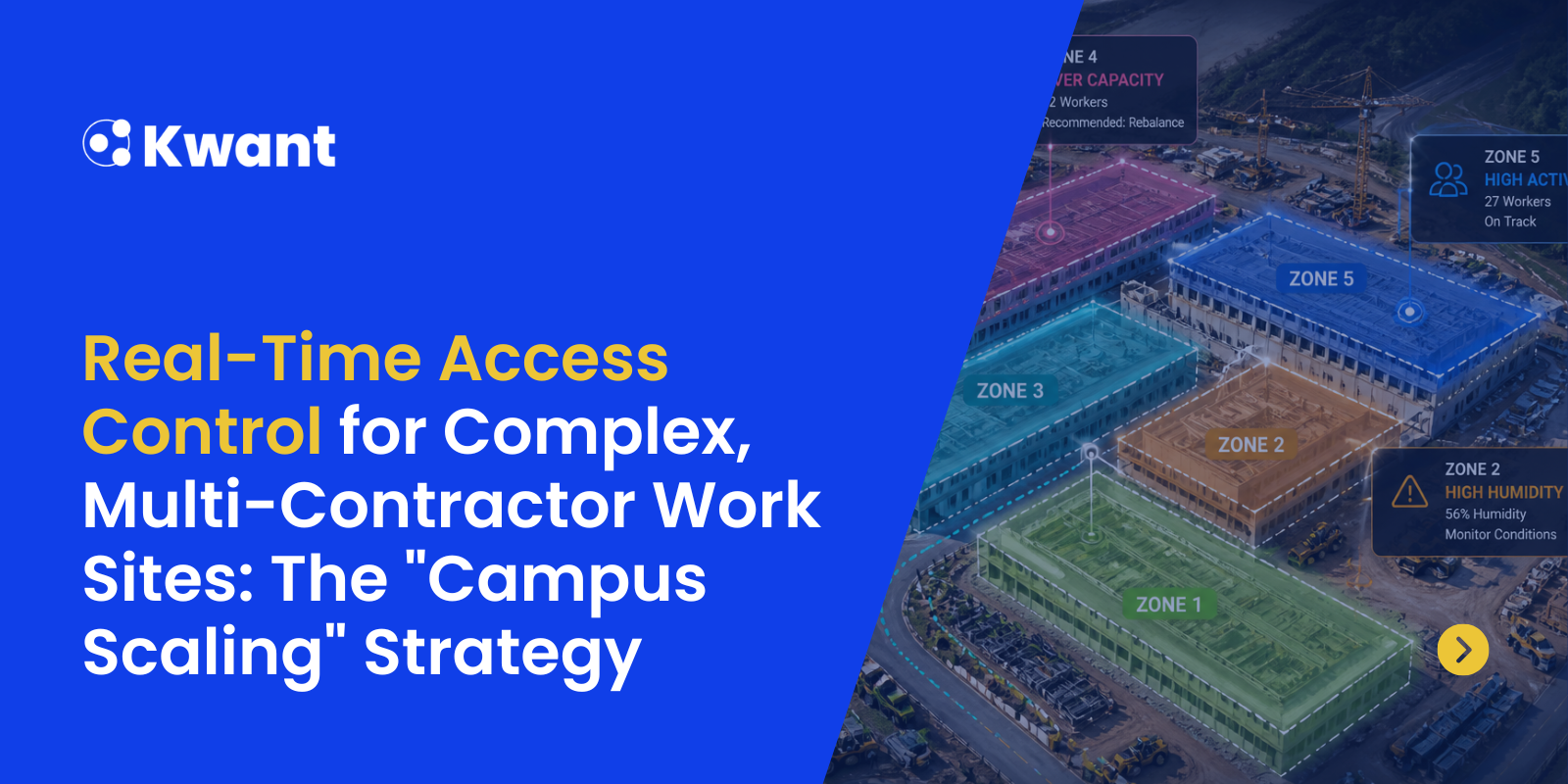


Every General Contractor knows the "Good News/Bad News" scenario: The good news is you just won the contract for six additional buildings on a data center campus. The bad news? You have to mobilize tomorrow, and your existing labor pool is already stretched across the first two projects.
When a project scales this fast, the traditional "gate-only" approach to access control breaks. You aren't just managing a site anymore. You are managing a shared labor ecosystem across separate budgets, timelines, and security requirements. A shared labor ecosystem means subcontractor crews are no longer dedicated to a single structure. They are instead deployed dynamically across whichever building needs them on any given day, making traditional gate-only tracking systems structurally inadequate for understanding actual labor deployment.
To survive this kind of growth, you need a system that translates from building to building—without requiring a dozen separate trailers and a small army of security guards.
Kwant's platform currently supports multi-building data center campus programs for some of the largest GCs in the mission-critical sector, including Mortenson, Turner, Gilbane, and Yates Construction, delivering real-time construction workforce visibility across concurrent structures where daily headcounts can exceed 4,000 workers distributed across eight or more active buildings simultaneously.
The Problem: The "Scramble" of Scaling
When an owner suddenly gets permits approved for 6 new buildings, the GC is left with three massive headaches:
- Labor Overlap: When the scheduler on Building 5 believes the MEP crew is available but they are still finishing a late punch list in Building 1, Building 5 loses a full day of progress and the GC absorbs the coordination failure cost. Without zone-level workforce visibility, this scenario repeats across every trade and every building until it becomes the program baseline rather than an exception. Which of your skilled trades are in Building 1, and which are needed in Building 5?
- Fragmented Budgets: How do you track the exact man-hours for 6 separate budgets when workers are moving between projects? When six buildings share overlapping labor pools but run under six separate contracts, verifying that a subcontractor's invoice for hours in Building 3 reflects actual presence in Building 3 requires a data source independent of the subcontractor's own timesheet. Portfolio Analytics provides that independent record
- Deployment Speed: You can’t wait 4 weeks to install 6 new sets of turnstiles. On a fast-track campus where Buildings 7 and 8 are added mid-stream with the same go-live timeline as the original structures, waiting four weeks for turnstile procurement and installation is not a schedule inconvenience. It is a Day One readiness failure that delays every successor activity downstream.
The Solution: Hardware-Agnostic Workforce Visibility
Hardware-agnostic means the platform delivers construction workforce visibility regardless of whether a building has dedicated turnstiles, relies on mobile badge scanning via the Kwant Mobile App, or uses Zone IQ contactless sensors. This allows the GC to scale the system across new buildings immediately without waiting for hardware procurement or installation lead time.
The "Higher Standard" of management doesn't wait for hardware. This is where Kwant’s Enterprise Workforce Management shifts the game. Because the system is built to scale, you can set up a "Workforce OS" for the entire campus that works at multiple levels:
1. Kwant Sensors: Passive Tracking, Zero Friction
Unlike traditional access control that requires a worker to stop and scan at every door, Zone IQ tells you which Data Hall, which Electrical Room, which MEP corridor they entered and how long they spent there. That is the data layer that makes predictive labor insights operationally possible.
- How it works: Once a worker has their smart badge, the sensors automatically detect their presence in specific zones.
- The Insight: Leadership gets instant, passive data on trade distribution. If the schedule says Building 3 should be empty for a floor pour, but the sensors show 12 HVAC techs are still in Zone B, you can react in real-time.
Without that visibility, the pour either gets delayed waiting for zone clearance confirmation or proceeds with workers present, creating both a safety exposure and a schedule variance that compounds across every subsequent activity in that building.
Knowing 4,000 workers badged in across the campus this morning is a headcount. Knowing exactly which 12 are in the wrong zone at the wrong time is intelligence.
2. Augmented Portfolio Analytics: Managing a Multi-Contract Campus as a Synchronized Program
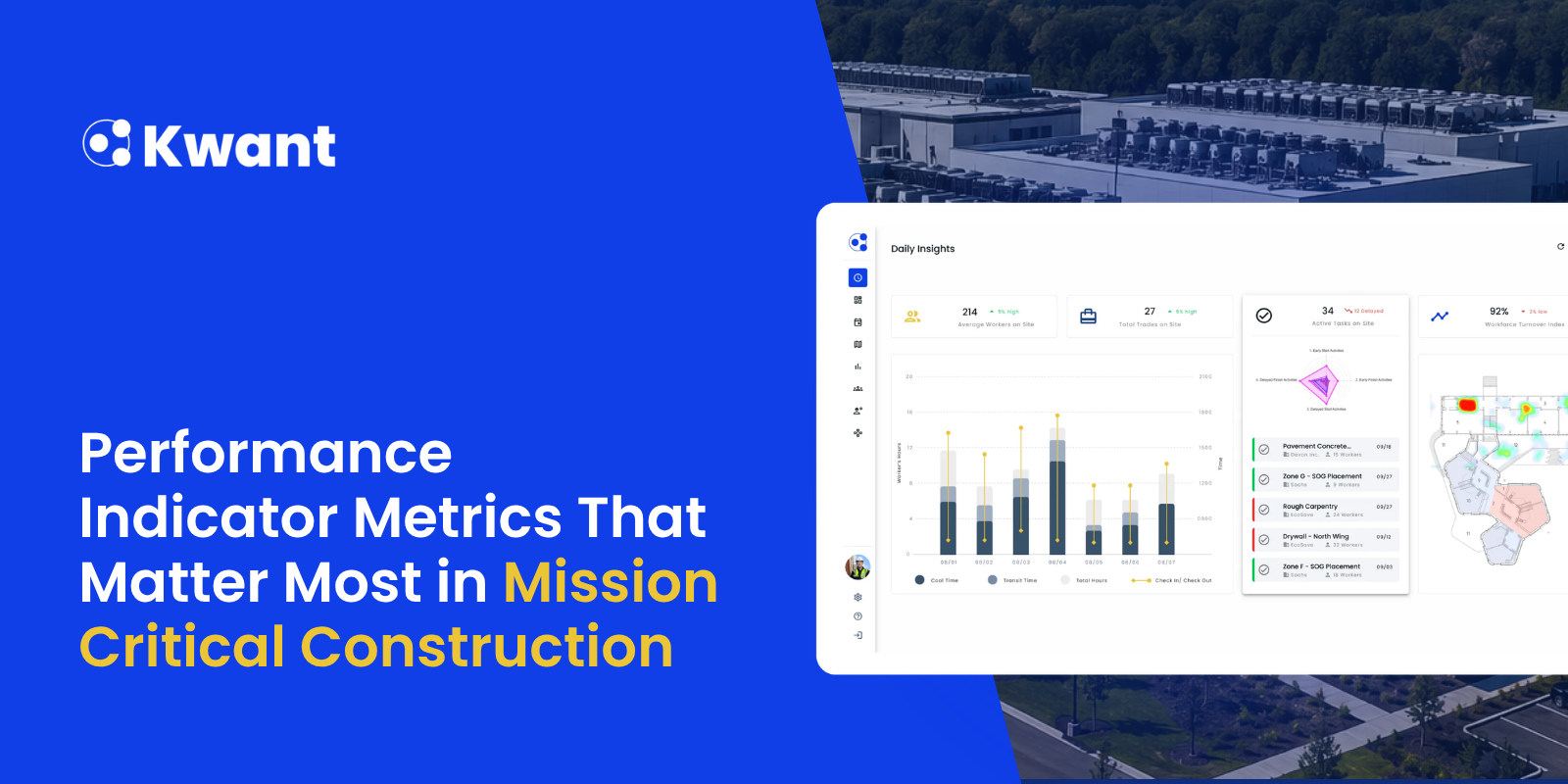
Running 6 active contracts on a single campus doesn't have to mean 6 disconnected look-aheads and progress reports. On a multi-building campus where each structure runs under a separate contract with its own budget, schedule, and cost code structure, traditional project management tools treat each building as an isolated entity. Kwant's Portfolio Analytics aggregates worker-level field data across every building, phase, and trade package into one unified program view. This provides schedule intelligence that starts at the individual craft worker and rolls up to the entire program.
- For the Project Executive / Program Manager: Get a real-time view of crew deployment across every active schedule activity without waiting for the Friday afternoon foreman huddle or the Monday morning two-week look-ahead. See which work areas are fully crewed and making progress, which are understaffed against the baseline, and where idle time is quietly eroding your float.
- For the Scheduler / Project Controls Manager: No more sifting through dense daily reports and manpower logs to guess your totals; because every worker is tracked by zone, Kwant automatically tags productive hours to the corresponding schedule activity. Actual hours flow directly into your activity-level progress, giving your schedule updates a ground-truth foundation instead of a best estimate, and saving you countless hours of reconciliation each month.
Kwant's Portfolio Analytics is currently deployed across multi-building campus programs for four of the largest U.S. data center builders, managing concurrent structures where labor deployment decisions on Building A directly impact schedule and budget outcomes on Buildings C, D, and E.
3. AI-Powered Predictive Insights
When you're "scrambling" to manage 8 buildings at once, you can’t be everywhere. Kwant’s AI-driven insights act as your digital eyes and ears. The system analyzes your real-time site data against your project schedule to flag potential bottlenecks before they happen.
AI-powered predictive insights means the system analyzes real-time workforce data against the project schedule baseline to identify labor variances while there is still time to intervene. If Building 3's electrical scope is budgeted for 150 workers per day over a two-week window but actual headcount is averaging 110 through the first four days, the system flags the variance and projects the completion delay before the activity becomes critical path. The scheduler and project executive see the alert the moment the pattern emerges, not three days after the milestone was missed.
For the GC managing six concurrent buildings with overlapping labor pools and fragmented budgets, predictive labor insights turns reactive crisis management into proactive program control, where variances are caught early and corrections are made before they propagate across the entire campus.
4. From Day One Readiness to Real-Time Intelligence
Campus scaling starts before the first worker arrives. Automated worker onboarding ensures every subcontractor crew mobilizing to Building 7 completes their site-specific safety orientation, uploads required certifications, and receives their smart badge or QR credential digitally before they reach the gate. This eliminates the Day One paperwork delay that multiplies across six concurrent mobilizations.
Once workers are on-site, AI construction reporting processes the zone-level presence data captured by Zone IQ sensors and generates cross-building labor summaries, trade-level productivity comparisons, and schedule variance reports on demand, giving project executives the visibility they need without waiting for the weekly reporting cycle.
The Insight: Access Control as a Campus Nervous System
In a complex, multi-contractor environment, thinking of access control as "the gate" is a missed opportunity. The real value is the passive data captured through contactless sensors and smart badges.
When you use a platform like Kwant, you aren't just "securing" a site; you are building a nervous system for your campus. You gain the visibility to answer complex questions: Who is where? Are we on budget? Is Building 6 ready for the next trade? By leveraging Zone IQ and AI-powered reporting, you stop "scrambling" and start leading—turning a complex, 8-building challenge into a repeatable, profitable success.
Who is where? Zone IQ sensors and smart badges provide zone-level location data in real time across every structure. Are we on budget? Portfolio Analytics compares actual labor hours by building and trade against budgeted baselines, surfacing cost variances before they compound. Is Building 6 ready for the next trade? Predictive labor insights flag crew shortfalls and trade stacking risks while there is still time to adjust mobilization schedules and prevent cascading delays. Are all subcontractors compliant? Automated COI and certification tracking ensures every worker on every building is qualified and insured before they reach the gate.
GCs managing multi-building data center campuses with Kwant report eliminating an average of 15 to 20 hours per week previously spent on manual headcount reconciliation, labor reporting, and cross-building coordination meetings, freeing project teams to focus on the build rather than the paperwork trail.
Ready to Scale with Kwant?
Scaling a campus? See how Kwant helps you manage multiple projects with one single source of truth.
FAQs
1. What is the difference between gate-only access control and zone-level workforce tracking on a construction site?
Gate-only access control records when a worker enters or exits the site perimeter. Zone-level tracking goes further, logging which specific area, such as a Data Hall, Electrical Room, or MEP corridor, a worker entered and how long they spent there. On a multi-building data center campus, gate-only data tells you a crew arrived. Zone-level data tells you whether they are in the right building, in the right zone, at the right time, which is the information that actually drives schedule decisions.
2. How GCs track labor hours across multiple buildings on a campus construction program?
The traditional method relies on foremen self-reporting crew hours by activity code at the end of each day, a process prone to error, delay, and disputes at pay application time. Platforms like Kwant use smart badges and Zone IQ contactless sensors to automatically attribute hours to schedule activities based on zone entry and exit timestamps. This gives schedulers a ground-truth record of where each trade spent productive time, across every building in the program, without manual reconciliation.
3. Can a workforce management system scale to new buildings without reinstalling hardware?
Yes, if the platform is hardware-agnostic. A hardware-agnostic system can onboard a new building using mobile badge scanning while permanent sensor infrastructure is procured and installed, meaning Day One readiness is not dependent on hardware lead time. Workers are badged in and tracked the moment the building becomes active, regardless of whether fixed sensors are in place yet.
4. How do you manage subcontractor labor costs across six separate budgets on one campus?
The core challenge is that overlapping labor pools, where the same crews move between buildings, make it impossible to verify invoiced hours using only subcontractor-provided timesheets. Portfolio Analytics solves this by maintaining an independent, sensor-verified record of which workers were in which building zones and for how long, giving the GC an objective basis for validating pay applications across all six contracts simultaneously.
5. What is predictive labor insight in construction, and how does it work?
Predictive labor insight means the system compares real-time workforce data against the project schedule baseline and flags variances while there is still time to correct them. For example, if a building's electrical scope is budgeted for 150 workers per day but is averaging 110 through the first several days of an activity window, the system projects the resulting delay and surfaces the alert before the activity hits the critical path, rather than after the milestone is missed.
6. How does Kwant handle worker safety across a multi-building campus program?
Kwant's smart badges include fall detection that sends an instant alert with the worker's time, location, and identity the moment an incident occurs. The platform also monitors fatigue risk patterns using scheduling data and wearable inputs, enabling safety managers to identify high-risk crew conditions before they result in an incident. For campus-wide communication, targeted safety alerts can be pushed directly to specific zones or buildings through the Kwant Mobile App, without requiring separate notification systems across a workforce of thousands.


.png)
%20(1).svg)


