.svg)

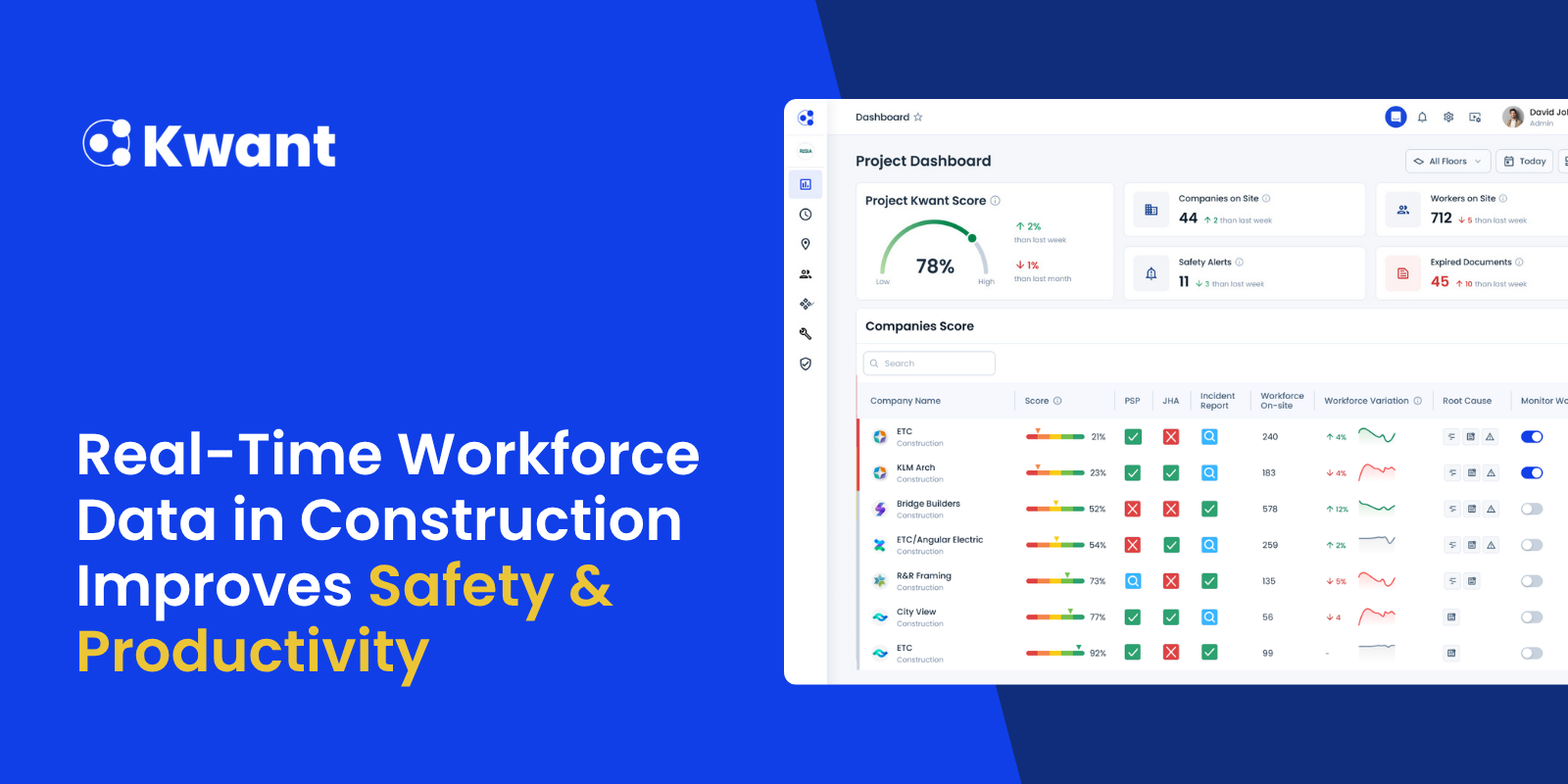


Construction projects have never been more complex. Large-scale developments now involve thousands of workers, hundreds of contractors, multiple shifts, and constantly changing site conditions. For project leaders, one of the biggest challenges is not a lack of data. It is the lack of visibility into what is happening right now.
Many construction teams still rely on fragmented systems to understand workforce activity. Badge reports, spreadsheets, contractor logs, manual headcounts, and disconnected safety processes create a delayed view of jobsite operations. By the time an issue appears in a report, the opportunity to prevent it has often already passed.
Safety teams may know how many incidents occurred, but not always the conditions that led to them. Project controls teams may understand planned labor requirements, but struggle to compare schedules against actual workforce movement. Field leaders may know who entered a site, but not where teams are working or whether resources are aligned with project priorities.
This gap between what teams know and what is actually happening is where real-time workforce data construction solutions are changing how major projects operate.
The future of construction management depends on moving from delayed reporting to continuous visibility. When leaders can understand workforce location, activity, compliance status, and productivity trends as they happen, they can make faster decisions, reduce risk, and keep complex projects moving.
Why Real-Time Workforce Visibility Matters on Complex Construction Projects
Construction has always depended on coordination. That challenge becomes significantly harder on large industrial and infrastructure projects where thousands of workers from multiple organizations operate simultaneously.
A data center construction site, for example, may involve electrical contractors, mechanical teams, equipment operators, commissioning specialists, and general labor crews working across different zones. Oil and gas facilities create similar challenges, with additional requirements around restricted areas, safety procedures, and specialized workforce qualifications.
In these environments, traditional workforce management approaches often cannot keep pace with operational complexity.
A daily attendance report may confirm who arrived at the site, but it does not show whether the right people are in the right locations at the right time. A contractor spreadsheet may confirm training completion, but it does not provide immediate insight into whether only qualified workers are accessing high-risk areas.
This is where construction safety monitoring technology becomes increasingly important.
Modern construction safety programs are built around prevention rather than reaction. Standards such as OSHA requirements, site-specific safety plans, and contractor compliance programs all depend on accurate workforce information. Without reliable visibility, teams are forced to rely on manual processes and assumptions.
Real-time workforce data provides a clearer operational picture by connecting workforce identity, access activity, location awareness, and productivity insights into a single view.
For general contractors and owners, this creates alignment between the field and the project office. Safety leaders gain better awareness of workforce conditions. Project controls teams gain more accurate labor intelligence. Executives gain confidence that resources are being managed effectively across the project lifecycle.
The Cost of Managing Jobsites Without Real-Time Data
The impact of limited workforce visibility extends beyond inconvenience. It creates operational risks that affect safety, schedule performance, and project costs.
One of the biggest challenges is delayed response.
When workforce information is collected manually, teams often discover problems after the fact. A safety manager may learn that an unauthorized worker entered a restricted area only after reviewing access records. A project manager may discover labor shortages after a milestone has already been delayed.
These delays create a chain reaction.
A few examples include:
1. Safety risks increase when workforce conditions are unclear.
If leaders cannot quickly identify who is on-site, where workers are located, or whether they have completed required training, emergency response and compliance management become more difficult.
2. Productivity issues remain hidden.
Construction teams often track hours worked, but hours alone do not explain productivity. Without workforce analytics software, it is difficult to understand whether labor is aligned with planned activities or whether crews are facing obstacles.
3. Contractor coordination becomes harder.
Large projects depend on many subcontractors working together. When every contractor manages workforce information differently, project leaders spend more time reconciling data instead of improving operations.
4. Project forecasting becomes less accurate.
Owners and project controls teams need reliable workforce intelligence to understand whether a project is tracking toward schedule commitments. Incomplete workforce data makes forecasting more difficult.
The challenge is not simply collecting more information. Construction leaders already have plenty of disconnected data sources. The challenge is creating a real-time operational view that turns workforce activity into actionable insight.
What Real-Time Workforce Data in Construction Management Looks Like
A modern workforce visibility approach connects three critical areas: people, processes, and project outcomes.
The goal is not to monitor workers for the sake of monitoring. The goal is to help teams understand how workforce activity impacts safety, compliance, and productivity.
A strong workforce intelligence platform typically brings together:
- Workforce identity management: Every worker should have a verified identity connected to their contractor, qualifications, onboarding status, and access permissions. Workforce identity management creates accountability across the entire project ecosystem.
- Real-time jobsite access management: Access systems should provide more than entry records. They should help teams understand who is entering the site, when they arrive, and whether they are authorized for specific areas.
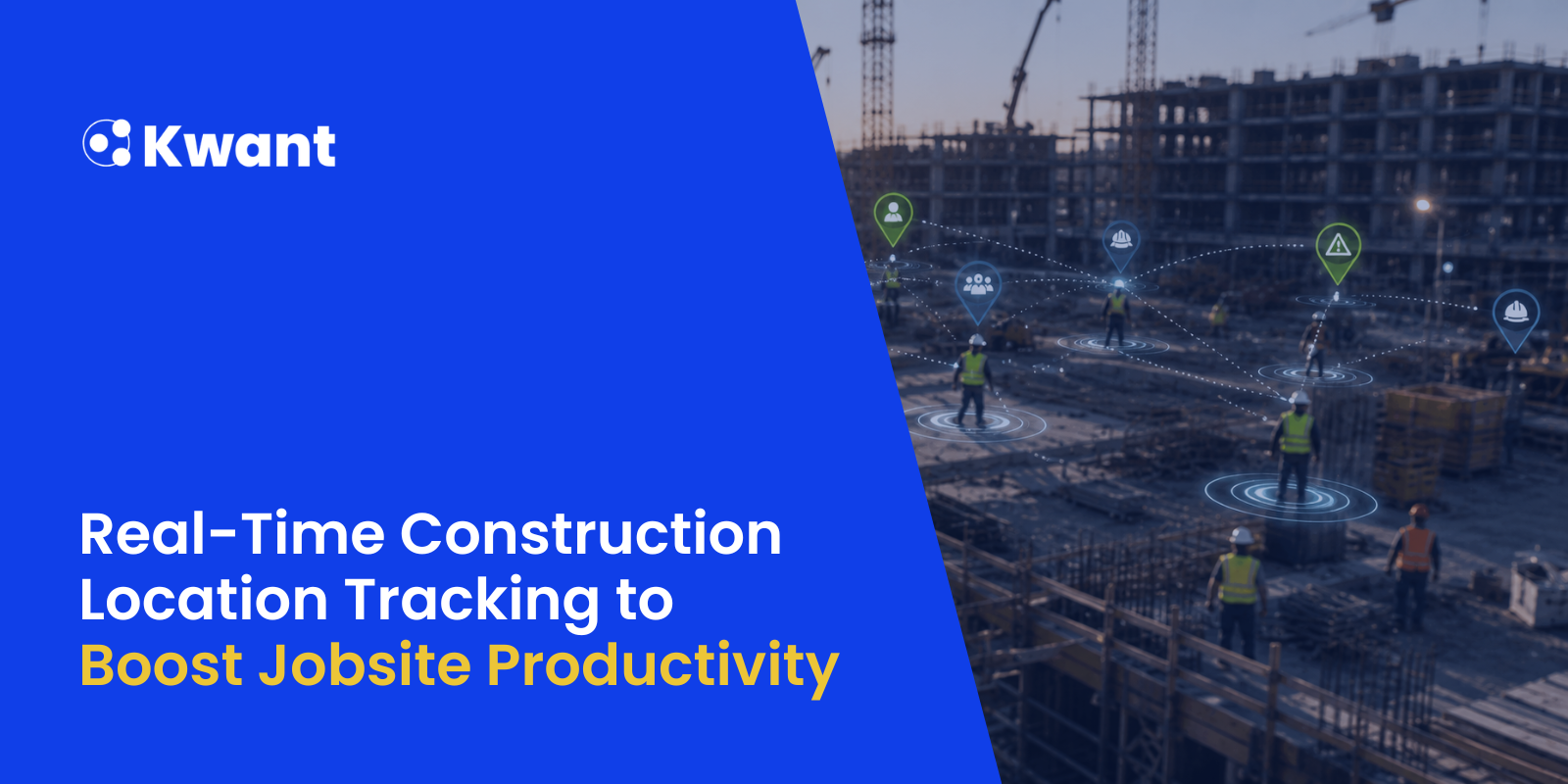
- Workforce location awareness: Knowing where workers are operating helps safety teams respond faster, improve emergency preparedness, and understand how labor is distributed across a project.
- Productivity insights: Real-time construction workforce data allows teams to compare planned labor requirements with actual workforce activity. This helps identify bottlenecks, resource gaps, and opportunities for improvement.
- Compliance visibility: Safety teams need confidence that workers have completed required onboarding, certifications, and site requirements before accessing active work areas.
When these capabilities work together, workforce information becomes an operational tool rather than a historical report.
What Automated Workforce Intelligence Changes on Active Jobsites
Real-time workforce data becomes most valuable when it moves beyond visibility and starts supporting better decisions. The purpose of workforce intelligence is not simply knowing where people are. It is understanding how workforce activity connects to safety performance, project progress, and operational outcomes.
For complex construction projects, this requires a shift from passive data collection to active workforce management.
A traditional jobsite model often looks like this:
A worker arrives, signs in, completes paperwork, and begins work. At the end of the day, information is reviewed through reports, spreadsheets, or disconnected systems.
A real-time workforce model changes that process:
A worker’s identity, access permissions, onboarding status, location, and activity data are connected with a central workforce operating system. Teams can see workforce conditions as they develop and address issues before they become larger problems.
This approach creates several improvements across safety and productivity operations.
Improving Safety Through Real-Time Workforce Data and Jobsite Visibility
Safety teams are responsible for managing constantly changing conditions. The workforce on-site today may be different from yesterday. Contractors rotate in and out. Work zones change. Hazards evolve as construction progresses.
Static reports cannot fully capture this environment.
Construction safety monitoring technology gives teams a more complete picture by connecting workforce information with jobsite activity.
For example, safety leaders can use real-time visibility to:
- Confirm that only authorized workers enter controlled areas
- Identify workers who have completed required onboarding or safety training
- Improve emergency response by understanding who is currently on-site
- Review workforce movement patterns to identify potential safety concerns
- Create more accurate records for audits and compliance reviews
This becomes especially important for industrial environments where site access, worker qualifications, and safety procedures are closely controlled.
For oil and gas facilities, energy projects, and other high-risk construction environments, workforce visibility supports stronger contractor accountability. Teams can better understand whether the right workers are present in the right areas with the proper requirements completed.
The result is a move from reactive safety management toward proactive risk reduction.
Measuring Productivity Beyond Hours Worked
Construction productivity has traditionally been difficult to measure because labor activity happens across constantly changing environments.
Knowing that 500 workers were on-site does not necessarily explain whether the project is progressing efficiently.
Productivity depends on several factors:
- Are crews assigned to the right locations?
- Are labor resources aligned with the construction schedule?
- Are contractors arriving when planned?
- Are workforce bottlenecks slowing critical activities?
- Are teams spending time on productive work or waiting for resources?
Real-time workforce data construction solutions help answer these questions by providing operational context.
Instead of relying only on timesheets or weekly reports, project teams can analyze workforce patterns as they happen.
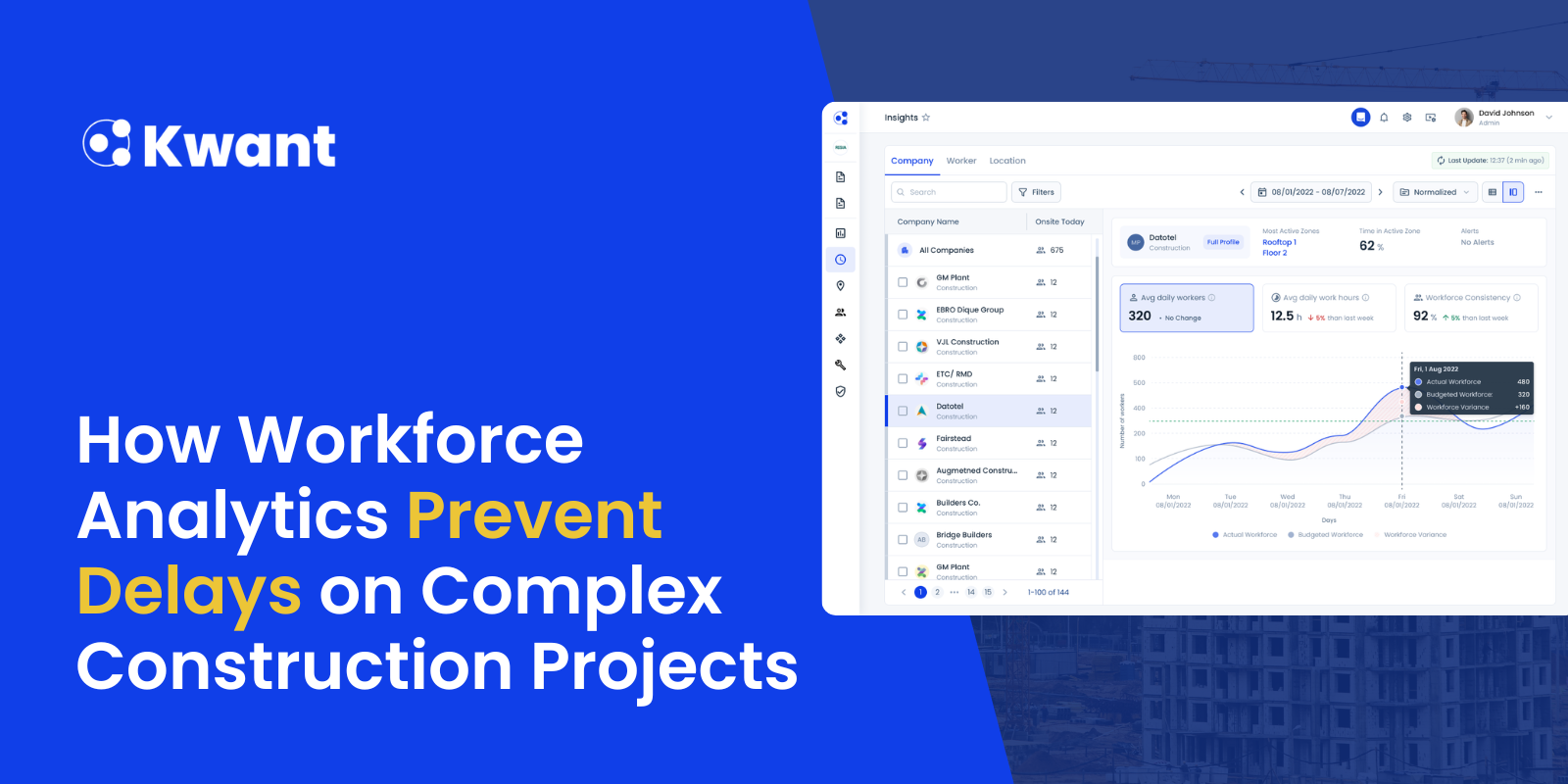
For example, project controls teams can compare expected labor deployment against actual workforce presence. If a major installation activity requires a certain number of skilled workers but fewer qualified workers are available, teams can identify the issue earlier.
This creates a more accurate foundation for schedule management and resource planning.
The Role of AI in Construction Workforce Data Monitoring
Artificial intelligence is becoming increasingly relevant in construction because projects generate large amounts of operational datakw. The challenge is turning that information into decisions.
AI safety monitoring and workforce analytics tools can help identify patterns that may not be obvious through manual review.
Examples include:
- Detecting unusual workforce activity patterns
- Highlighting areas with changing labor conditions
- Generating workforce reports from complex project data
- Helping teams identify trends across multiple projects
The most valuable AI applications are not replacing construction expertise. They are helping experienced teams spend less time searching for information and more time acting on it.
For large contractors managing multiple projects, AI-powered workforce intelligence can create a portfolio-level view of workforce performance, compliance trends, and operational risks.
How Leading Teams Are Building a More Connected Jobsite
The most advanced construction organizations are treating workforce data as a core project resource.
They understand that workforce information is not only a safety record or an administrative requirement. It is an operational signal that influences project decisions every day.
Leading teams are moving toward connected jobsite systems that bring together:
- Workforce identity
- Access management
- Digital onboarding
- Safety compliance
- Location intelligence
- Productivity tracking
- Project reporting
This connected approach creates consistency across projects and reduces dependence on manual processes.
A workforce intelligence platform can help organizations standardize how they manage contractors, improve visibility across multiple sites, and create a stronger connection between field operations and executive decision-making.
Companies managing large-scale construction programs are also looking beyond individual projects. Owners and enterprise contractors increasingly need visibility across their entire portfolio.
They want to answer broader questions:
- How efficiently are resources being deployed across projects?
- Where are compliance risks increasing?
- Which contractors consistently meet project requirements?
- How can workforce data improve future planning?
This is where workforce intelligence moves from a jobsite tool into a strategic capability.
Platforms like Kwant are designed around this operational model, supporting complex construction environments where workforce visibility, compliance, and productivity need to work together across large teams and multiple locations.
How to Evaluate a Workforce Intelligence Platform for Construction
Selecting a workforce platform requires looking beyond individual features. The right solution should support the way construction teams actually operate.
Construction leaders should evaluate several areas:
Workforce identity and contractor management
A modern system should provide a reliable record of every worker on a project.
Consider:
- Can the platform manage multiple contractors and subcontractors?
- Does it maintain worker profiles, qualifications, and onboarding records?
- Can teams quickly verify workforce readiness?
Real-time jobsite visibility
The platform should provide more than historical attendance information.
Look for:
- Real-time workforce counts
- Access activity tracking
- Location awareness
- Visibility across multiple jobsite areas
Safety and compliance workflows
Compliance management should be integrated into daily operations rather than handled separately.
Important capabilities include:
- Digital onboarding workflows
- Training and certification tracking
- Automated compliance checks
- Audit-ready workforce records
Productivity measurement
A useful platform should help connect workforce activity with project performance.
Questions to consider:
- Can teams compare planned labor against actual workforce activity?
- Does the system provide actionable workforce analytics?
- Can project teams identify productivity challenges earlier?
Scalability across projects
Large contractors and owners need solutions that work beyond one site.
The platform should support:
- Multiple locations
- Enterprise reporting
- Standardized processes
- Integration with existing construction technology systems
The best workforce management solutions do not create another isolated data source. They connect workforce information with the broader project ecosystem.
The Future of Construction Is Workforce Intelligence
Construction will continue becoming more complex. Projects are larger, schedules are tighter, and workforce challenges are increasing.
The organizations that perform best will be the ones that can see and understand their operations in real time.
Workforce data is becoming a foundation for better safety decisions, stronger productivity management, and more predictable project outcomes.
The next generation of construction leaders will not rely only on reports that explain what already happened. They will use real-time intelligence to understand what is happening now and what needs to happen next.
Visibility is becoming a competitive advantage.
See How Kwant’s Real-Time Workforce Data Can Improve Your Jobsites
Kwant helps construction teams connect workforce visibility, safety compliance, access management, and productivity insights across complex projects. See how a modern workforce intelligence platform can support safer, more efficient construction operations.
FAQ on Real-Time Workforce Data in Construction
What is real-time workforce data construction technology?
Real-time workforce data construction technology provides continuous visibility into workforce activity across a jobsite. It connects information such as worker identity, access activity, location, onboarding status, and workforce trends. Instead of relying on delayed reports, construction leaders can make decisions based on current conditions.
How does real-time workforce data improve construction safety?
Real-time workforce data improves safety by helping teams understand who is on-site, where workers are operating, and whether workforce requirements have been completed. Construction safety monitoring technology can help reduce blind spots by providing faster access to critical workforce information during daily operations and emergencies.
Is workforce analytics software only useful for large construction companies?
While large contractors and industrial projects often see immediate value because of their scale and complexity, workforce analytics software can benefit any organization managing multiple contractors or changing jobsite conditions. The key value comes from improving visibility, reducing manual processes, and helping teams make better decisions with accurate workforce information.
What is the difference between a contractor management system and a workforce visibility platform?
A contractor management system typically focuses on administrative processes such as contractor records, documentation, and compliance requirements. A workforce visibility platform expands beyond administration by connecting contractor information with real-time jobsite activity, access management, location insights, and productivity tracking.
Can AI safety monitoring replace safety managers?
No. AI safety monitoring is designed to support safety professionals, not replace them. It helps teams identify patterns, organize information, and respond faster, while experienced safety leaders continue making decisions based on their knowledge of the site and project conditions.
How should companies start implementing a workforce intelligence platform?
Companies should begin by identifying their biggest visibility gaps, whether related to safety compliance, contractor coordination, productivity tracking, or access management. A successful implementation usually starts with connecting workforce identity and operational data, then expanding capabilities as teams gain confidence in the system.
%20(1).svg)


