.svg)



Overview
Before anyone pours concrete, installs steel, or energizes equipment, one question determines how efficiently a project will run: Where is the workforce right now?
Construction has never lacked schedules, manpower plans, or daily reports. What it has lacked is visibility. Superintendents can estimate where crews should be. Project controls teams can compare labor hours against the schedule. Owners can review weekly progress updates. But none of those tools answer what's happening on the jobsite at this moment.
That gap becomes expensive on large projects. Crews spend valuable time walking across sprawling sites, waiting for access, searching for supervisors, or arriving at work areas before materials and equipment are ready. Small delays repeated hundreds of times across thousands of workers quietly erode productivity without appearing in a project schedule.
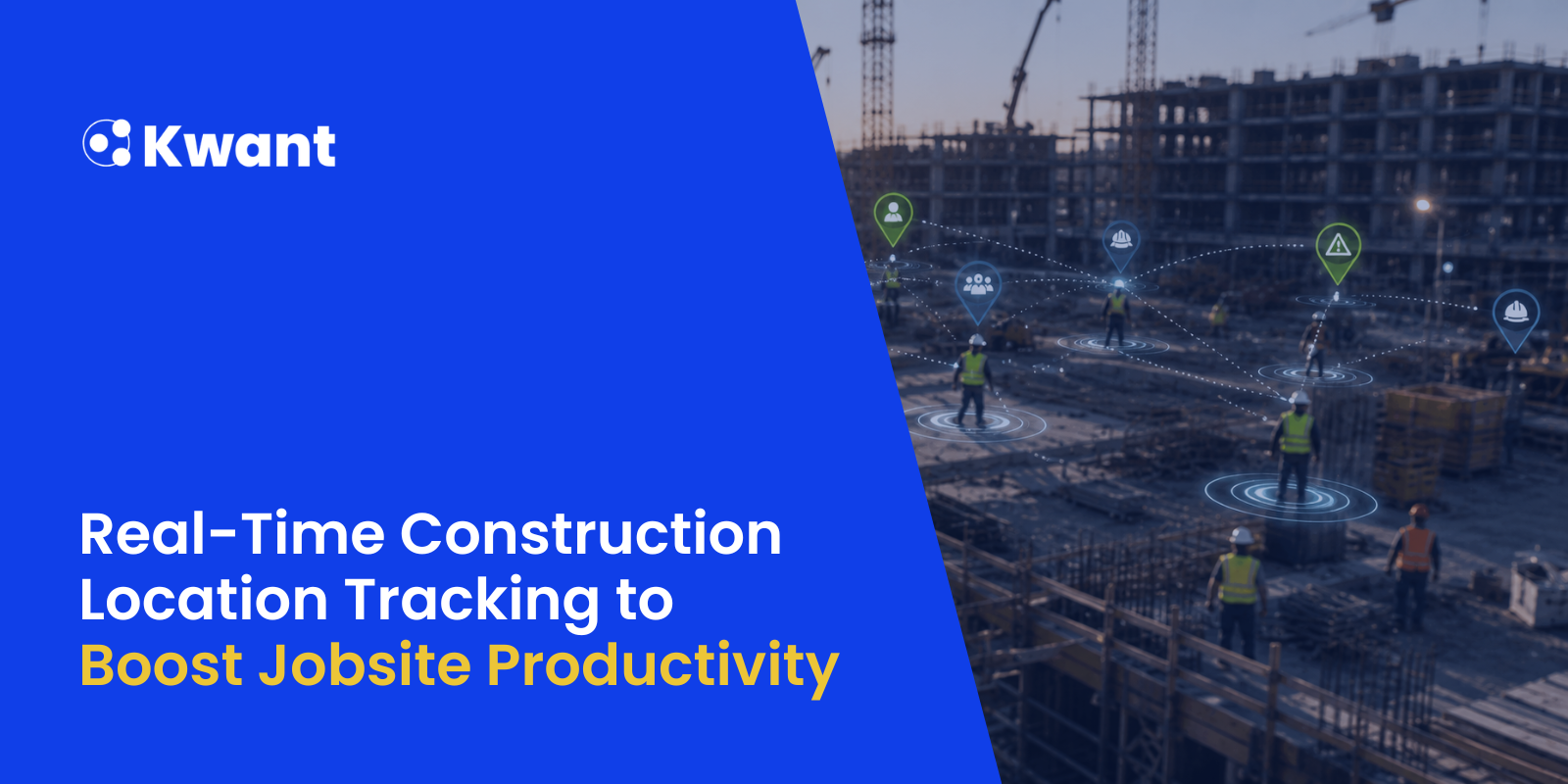
This is why construction location tracking has become more than a safety tool. For leading contractors and owners, real-time workforce visibility has become a practical way to improve labor productivity, coordinate work more effectively, and make faster operational decisions based on facts instead of assumptions.
Why Construction Location Tracking Is Different on Modern Jobsites
Today's construction projects operate at a scale that traditional workforce management methods were never designed to support.
Large commercial developments, data centers, industrial facilities, and energy projects often span hundreds of acres, involve dozens of subcontractors, and have thousands of workers moving across multiple active work zones every day. A superintendent may oversee several buildings under construction simultaneously, each progressing on different schedules with different trades.
Knowing who badged into the site is no longer enough.
Project teams need to understand:
- Where workers are actively spending time
- Whether labor is distributed according to the construction schedule
- Which areas are becoming congested
- Which trades are arriving before prerequisite work is complete
- Whether crews are moving efficiently between work zones
These insights directly influence labor productivity, schedule reliability, and project costs.
Unlike manufacturing, where production happens inside a controlled facility, construction sites change constantly. Access points move. Temporary structures appear and disappear. Work zones expand. Material deliveries alter traffic patterns. A productive workflow one week may become inefficient the next.
This dynamic environment makes real-time worker accountability significantly more challenging than simply recording attendance.
Real time construction location tracking must also support operational realities such as:
- Multiple subcontractors working concurrently
- Restricted access areas
- Phased turnover of completed spaces
- Temporary site logistics
- Changing workforce sizes throughout project phases
Many projects also operate under OSHA 29 CFR 1926 construction safety requirements for worker accountability during emergencies, while owners increasingly expect detailed workforce reporting throughout the project lifecycle. Data from a real-time location system supports both operational decision-making and emergency preparedness without requiring separate systems.
The organizations seeing the greatest improvements aren't collecting more data simply because they can. They're collecting the right data to answer operational questions that affect daily execution.
The Cost of Getting Construction Location Tracking Wrong
Poor workforce visibility rarely causes a project to fail overnight.
Instead, productivity slowly deteriorates through hundreds of small inefficiencies that compound over months.
A foreman spends twenty minutes locating another crew before work can begin. Electricians arrive at an area that isn't ready because another trade is still working. Concrete crews wait for inspections that were delayed because supervisors couldn't quickly verify workforce readiness. Workers cross the entire site multiple times each day simply to access equipment or staging areas.
Individually, these events seem minor. Collectively, they create measurable schedule impacts and labor overruns.
The consequences extend well beyond lost time.
Labor Deployment Becomes Reactive
Without real-time workforce data in construction, project managers often rely on yesterday's reports to make today's staffing decisions.
By the time an issue appears in a daily report, the opportunity to correct it has already passed.
Instead of proactively balancing labor across work fronts, managers spend their time responding to problems after productivity has already declined.
Workforce Planning Loses Accuracy
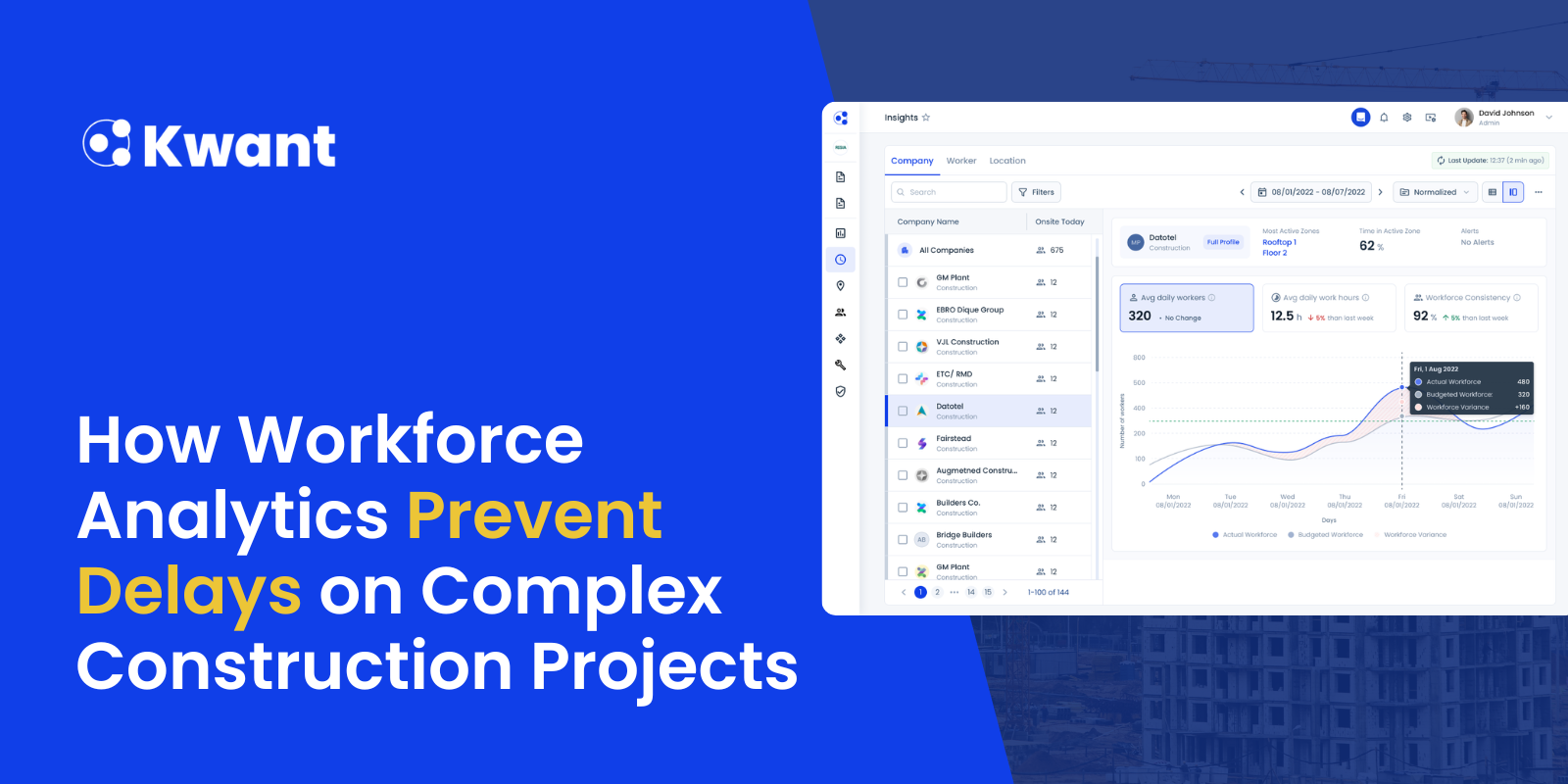
Forecasting labor needs depends on understanding how work is actually progressing—not how it was expected to progress.
If project controls teams cannot compare planned labor against actual workforce distribution, forecasting becomes increasingly unreliable as the project advances.
This disconnect often results in:
- Overstaffed work areas
- Underutilized crews
- Delayed trade sequencing
- Missed productivity targets
- Schedule compression later in the project
Multi-Site Operations Become Difficult to Manage
Large contractors rarely oversee just one project.
Regional teams may manage multiple campuses simultaneously, each with different workforce demands and subcontractor mixes.
Without effective multi-site workforce management, executives struggle to compare labor performance across projects, identify recurring operational issues, or allocate resources where they're needed most. Portfolio analytics address this directly — giving program managers a single enterprise-level view of workforce activity across all active sites rather than assembling reports from individual project teams.
The result is inconsistent execution across the portfolio rather than standardized best practices.
Decisions Depend on Assumptions Instead of Evidence
Perhaps the biggest cost is invisible. When leaders lack reliable workforce visibility, conversations shift from evidence to opinions. One manager believes a crew is understaffed. Another believes productivity is on target.
A subcontractor reports delays caused by another trade.
None of these perspectives are necessarily wrong, but without objective location and workforce data, resolving disagreements becomes slower and more subjective.
The most productive projects reduce uncertainty by replacing assumptions with measurable operational insight.
What the Right Approach Looks Like
Effective construction location tracking is not about watching workers. It is about understanding how workforce movement affects project execution.
The right approach connects worker location, labor activity, access events, and project context into a clearer operational picture. The goal is not simply knowing where someone is standing. The goal is understanding whether the workforce is positioned to complete the work efficiently.
On modern jobsites, this starts at the hardware level. Workers wear smart wearables, IoT-enabled smart badges or hard hat tags equipped with GPS, BLE, and RFID, that continuously transmit location signals to edge sensors deployed across the site. This creates a persistent location mesh that feeds data into the platform in real time, without requiring manual check-ins or supervisor intervention.
A modern workforce visibility strategy should answer four operational questions:
This requires moving beyond traditional labor tracking construction methods that depend primarily on manual reports, spreadsheets, or badge scans at a single entry point.
Access control tells a project team that someone entered the site. It does not explain where that person spent the day, whether they reached the correct work zone, or whether labor was aligned with the construction schedule.
A workforce intelligence approach combines access information with real-time location insights to create a more complete view of jobsite operations.
For example, a project controls team may see that a mechanical subcontractor has the correct number of workers onsite. However, location data may reveal that many workers are spending significant time outside their assigned work areas due to congestion, access limitations, or sequencing issues.
That difference matters.
The workforce exists. The hours are being logged. But the project may still be losing productivity.
Real-time visibility helps teams identify these gaps earlier.
Turning Worker Location Into Productivity Intelligence
Location data becomes valuable when it is connected to the decisions construction leaders make every day.
The most advanced teams are not measuring movement for the sake of measurement. They are using workforce location insights to improve planning, coordination, and execution.
Measuring Labor Distribution Across Work Zones
Large projects often have multiple crews working simultaneously across different areas.
A data center campus may have electrical teams working inside one building, commissioning teams preparing another area, and civil crews supporting site development elsewhere.
Without location intelligence, leadership may know total headcount but not whether labor is distributed effectively.
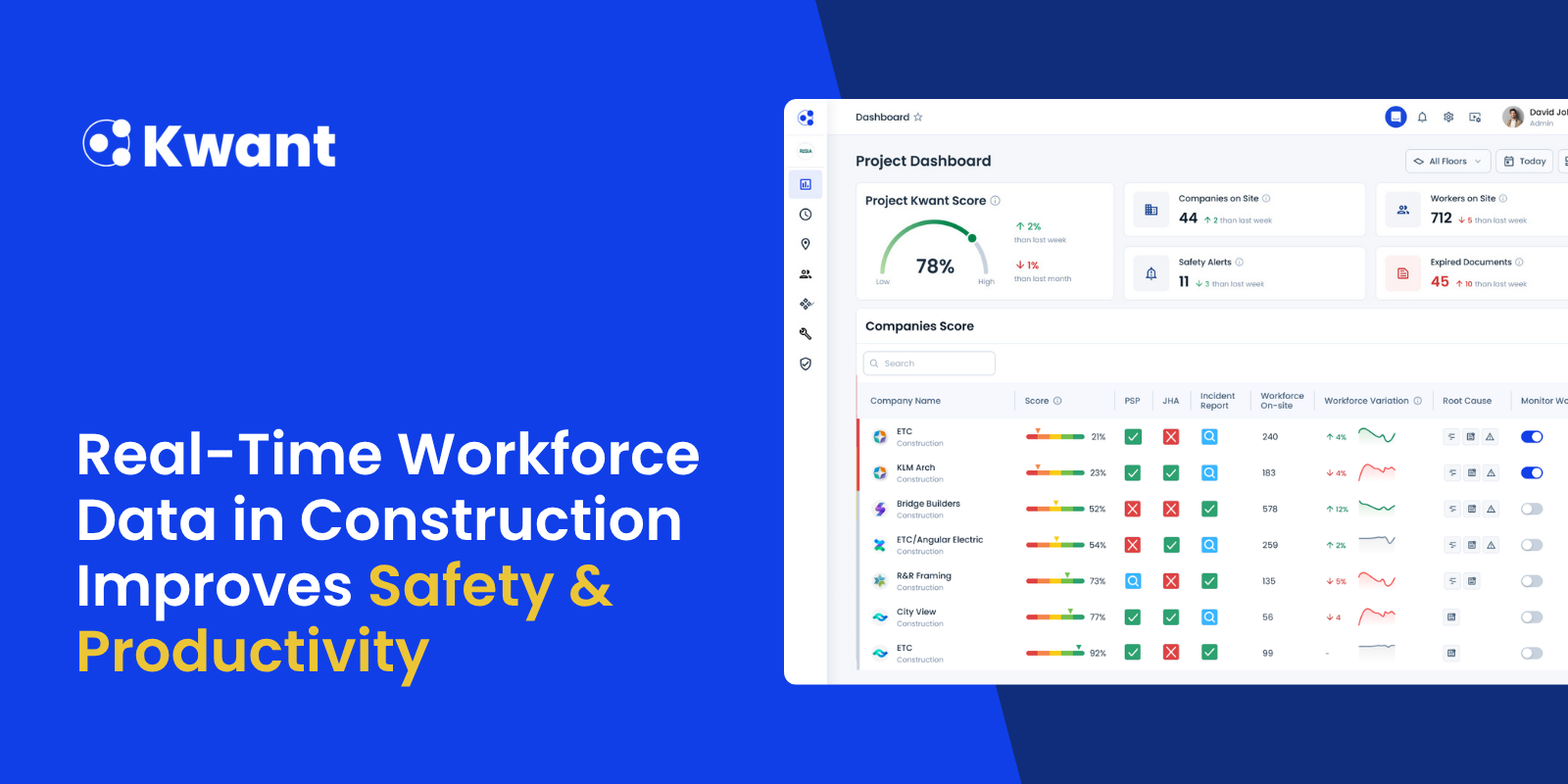
Real-time workforce data like from the Kwant Zone IQ heatmaps helps teams understand:
- Which zones have the highest workforce concentration
- Whether crews are positioned according to project priorities
- When certain areas become overcrowded
- Where additional resources may be needed
This allows project managers to make adjustments before productivity issues become schedule impacts.
Understanding Movement Patterns
Worker movement provides important operational signals. Excessive movement between areas can indicate:
- Poor site layout
- Material availability issues
- Inefficient access routes
- Coordination problems between trades
For example, if workers repeatedly leave an assigned area to access tools or materials, the issue may not be workforce performance. The issue may be logistics.
Location intelligence helps leaders identify the difference.
Instead of asking, "Why is this crew taking longer?" teams can ask, "What conditions are preventing this crew from working efficiently?"
That shift creates better solutions.
Improving Contractor Management
Modern construction projects depend on complex networks of subcontractors. General contractors and owners need confidence that every contractor is meeting expectations, following site requirements, and contributing toward project milestones.
A modern contractor management system should provide more than onboarding documents and compliance records. It should provide visibility into workforce participation throughout the project.
With better workforce data, teams can evaluate:
- Contractor attendance patterns
- Labor allocation by company
- Workforce activity across project phases
- Compliance with site access requirements
This creates a stronger connection between workforce management and project performance.
Supporting Safety and Accountability
Productivity and safety are closely connected.
When teams know where workers are located, they can respond faster during emergencies, verify workforce presence, and improve accountability across complex sites.
Real-time worker accountability is especially valuable on large industrial projects where evacuation procedures, restricted areas, and changing work conditions create additional challenges. Mass text alerts allow safety teams to reach workers in specific zones within seconds during an incident, while digital muster management confirms accountability at assembly points without manual headcounts.
Location visibility supports emergency response plans by helping teams understand who may be affected and where resources need to be directed. The goal is not replacing existing safety practices. It is providing better information to support them.
Construction Insights: Real-Time Worker Location Tracking for Emergency Response in Oil & Gas Projects
Why Real-Time Workforce Data Is Becoming a Competitive Advantage
The construction industry has historically managed labor through timesheets, daily reports, and manual observations.
Those tools still have value, but they provide a delayed view of reality. Leading construction organizations are moving toward a more connected operating model where workforce data becomes part of daily decision-making.
The difference is similar to the evolution from financial reporting to real-time financial dashboards. A monthly report can explain what happened. Real-time visibility helps leaders decide what to do next.
The same principle applies to construction workforce management.
Forward-thinking teams are using workforce intelligence to connect:
- Site access management
- Worker location data
- Labor forecasting
- Productivity measurement
- Safety processes
- Contractor oversight
This creates a more complete operational picture across individual jobsites and entire project portfolios.
For example, teams managing multiple infrastructure projects can compare workforce patterns across locations, identify successful practices, and standardize improvements.
A platform like Kwant supports large-scale projects where workforce visibility is critical, helping teams understand worker presence, movement, and operational trends across complex construction environments.
The future of construction productivity will not come from simply adding more workers to projects. It will come from understanding how existing resources are being used and removing the barriers preventing teams from working efficiently.
How to Evaluate a Construction Location Tracking Platform
Choosing a workforce visibility platform requires more than evaluating whether it can track location. Construction leaders should focus on whether the technology helps improve daily execution, supports project goals, and fits the realities of complex jobsites.
A useful evaluation process should consider the following areas.
Accuracy and Reliability in Real Jobsite Conditions
Construction environments are unpredictable.
A location tracking solution needs to function across large sites, changing layouts, temporary structures, and different project phases. For industrial and energy projects, hardware must also be intrinsically safe and ATEX-certified for use in hazardous atmospheres.
Ask:
- How does the platform maintain visibility across large or complex sites?
- Can it support multiple active work zones?
- Does it continue providing value as the project changes?
A solution that works only in controlled environments will struggle on real construction projects.
Connection Between Workforce Data and Business Decisions
Location data alone does not improve productivity. The value comes from turning information into decisions. Project teams should look for platforms that connect workforce visibility with operational workflows, including:
- Labor planning
- Productivity analysis
- Safety processes
- Contractor management
- Project reporting
Tools like Kwant's Bob AI Assistant allow teams to query workforce data in natural language. Eliminating the need to build reports manually before making operational decisions.
The goal is to move from simply collecting workforce information to understanding what actions should follow.
Integration With Existing Construction Systems
Large contractors and owners rarely operate with a single platform. Workforce data often needs to support broader project management workflows, including scheduling, reporting, compliance, and operational reviews.
A workforce management solution should complement existing systems rather than create another disconnected source of information.
Integration capabilities allow teams to connect workforce insights with the tools they already use to manage projects.
Support for Multiple Contractors and Sites
Large-scale projects often involve hundreds of companies and thousands of workers.
A strong platform should help organizations manage complexity across:
- Multiple contractors
- Different project locations
- Various workforce requirements
- Changing project phases
This is especially important for companies managing portfolios of infrastructure, energy, industrial, or commercial projects, where portfolio-level workforce analytics provide the consolidated visibility that individual project dashboards cannot.
Actionable Analytics Instead of More Data
One of the biggest mistakes organizations make is collecting information without defining how it will be used.
Before implementing construction location tracking, teams should define the decisions they want to improve.
Examples include:
- Identifying productivity bottlenecks
- Improving workforce allocation
- Reducing unnecessary movement
- Improving contractor accountability
- Comparing performance across projects
The best solutions make information easier to interpret, not harder to manage.
Construction productivity has always depended on people, planning, and coordination. But as projects become larger and more complex, traditional methods of understanding workforce activity are no longer enough. Knowing how many workers arrived at a jobsite is only the starting point. The next level of workforce management is understanding how those workers interact with the project itself.
Where are they working? Are they positioned where they create the most value? Are site conditions helping or slowing them down?
These questions require a new level of visibility.
Real-time workforce data gives construction leaders the ability to manage projects based on what is happening, not what happened yesterday. The companies that build this capability will be better positioned to deliver safer, more predictable, and more productive projects.
See How Real-Time Workforce Visibility Improves Construction Operations
See how Kwant helps construction leaders gain real-time workforce visibility, improve jobsite accountability, and make better decisions with workforce intelligence built for complex projects. From IoT-enabled smart wearables and Zone IQ heatmaps to AI-powered reporting and portfolio-level dashboards, every capability is connected within a single platform.
Request a demo to explore how modern workforce management can support your next project.
FAQ: Construction Location Tracking and Workforce Productivity
What is construction location tracking, and how does it work?
Construction location tracking uses technology to provide visibility into where workers are located across a jobsite. Unlike traditional access control systems that only record when someone enters or exits a site, location tracking provides a broader view of workforce movement and activity throughout the project. This information helps teams improve workforce planning, safety coordination, and productivity decisions.
How does real-time worker accountability improve jobsite safety?
Real-time worker accountability helps project teams understand who is onsite and where workers are located during active operations. This can support emergency response, improve visibility in restricted areas, and help safety teams verify workforce presence during critical events. It does not replace established safety procedures, but it provides better information for teams responsible for protecting workers.
Is construction location tracking the same as employee monitoring?
No. Effective construction location tracking is designed to improve project operations, not monitor workers for individual performance. The primary purpose is understanding workforce distribution, improving coordination between teams, and identifying operational challenges that impact productivity. Leading organizations use this data to improve jobsite conditions and resource planning.
How can location data improve workforce productivity in construction?
Location data helps teams identify patterns that affect productivity, such as inefficient movement between work areas, workforce congestion, or labor being assigned away from priority activities. By understanding how labor is actually distributed across a project, managers can make better decisions about scheduling, logistics, and resource allocation.
Can construction location tracking support multi-site workforce management?
Yes. Organizations managing multiple projects can use workforce visibility platforms to compare workforce activity across locations and identify operational trends. This is especially valuable for general contractors and owners managing large infrastructure programs, where consistent reporting and workforce intelligence across multiple sites are difficult to achieve with manual processes.
How is a workforce visibility platform different from a contractor management system?
A contractor management system typically focuses on managing contractor information, onboarding, documentation, and compliance requirements. A workforce visibility platform adds operational insight by showing how workers are participating in the project after they arrive onsite. The two systems can work together to provide a more complete view of workforce management, from onboarding through daily execution.
%20(1).svg)


