.svg)



The most expensive hour in construction is the one where a worker is on-site but isn't working. In the traditional model, "Day One" for a new subcontractor is a wash, spent in a trailer filling out paperwork, waiting for badge printing, and sitting through generic safety orientations that could have been completed three days ago.
To reach a "Higher Standard," leading firms are separating access from onboarding. By moving to a digital-first approach, every worker is oriented, verified, and ready to go before they even step foot on-site. The combination of automated worker onboarding and AI construction reporting changes this dynamic at every level of the project hierarchy, from the individual worker completing their orientation on a personal device to the owner reviewing portfolio-level labor trends from a custom dashboard without sending a single request to the GC.
1. The Worker: Digital Readiness is the New PPE
Imagine a journey where the worker is the driver of their own compliance. In the old way, a worker arrives and is a "passive" participant in a slow administrative process.
The Kwant Way: Automated Worker Onboarding Kwant’s onboarding features can be deployed on jobs of any size, with or without sensors or turnstiles. On mission-critical data center campuses, oil and gas facilities, and airport construction projects where subcontractor credentialing is audited by the owner or a regulatory body, having a verified, timestamped digital onboarding record from Day One is not a convenience. It is a compliance requirement that legacy paper processes structurally cannot meet.
This "hardware-lite" approach allows the worker to:
- Complete Orientations Remotely: Watch site-specific safety videos and take quizzes on their own device.
- Upload Credentials: Digitally submit OSHA 30 cards, licenses, and certifications.
- Instant Verification: Once the admin approves the digital profile, the worker receives a QR code.
The Result: The worker moves from "Parked" to "Productive" in minutes. They arrive on-site, scan their code, and start their trade.
2. The Admin: Eliminating the "Paper Gap"
For the site admin or safety manager, the headache isn't just the onboarding. It's the ongoing tracking. Managing expiration dates for hundreds of COIs (Certificates of Insurance) and licenses across dozens of active subcontractor firms is a full-time job that is prone to human error.
An expired Certificate of Insurance on an active subcontractor is not just a paperwork problem. It means the GC is exposed to uninsured liability for any incident involving that subcontractor's workers from the moment the COI lapsed. On a large site with dozens of concurrent subcontractor firms, manual tracking of that exposure is not a manageable process. It is a risk that compounds silently.
The Kwant Edge: Certification & Document Management Kwant automates the "nags." The system tracks worker certifications and proactively alerts both the admin and the worker before a credential expires. Whether you use a high-security turnstile or just the Kwant Mobile App for spot checks, the data remains consistent. You no longer have to worry about a sub-contractor with an expired license being a liability on your roof.
3. The Project Manager: Reclaiming the Weekend with AI
It’s Friday afternoon. The Owner wants a detailed breakdown of trade hours across three different buildings for a Monday morning board meeting. Usually, this means the PM is staying late to export five different Excel sheets, manually scrub the data and produce a report that is already partially out of date before it is sent.
AI construction reporting means the system processes live workforce data, including verified hours by trade, by building, and by zone, and generates structured, shareable reports on demand without manual export, spreadsheet reconciliation, or analyst involvement. Because workforce visibility is built into the core of the platform, the data is already clean when the PM needs it.
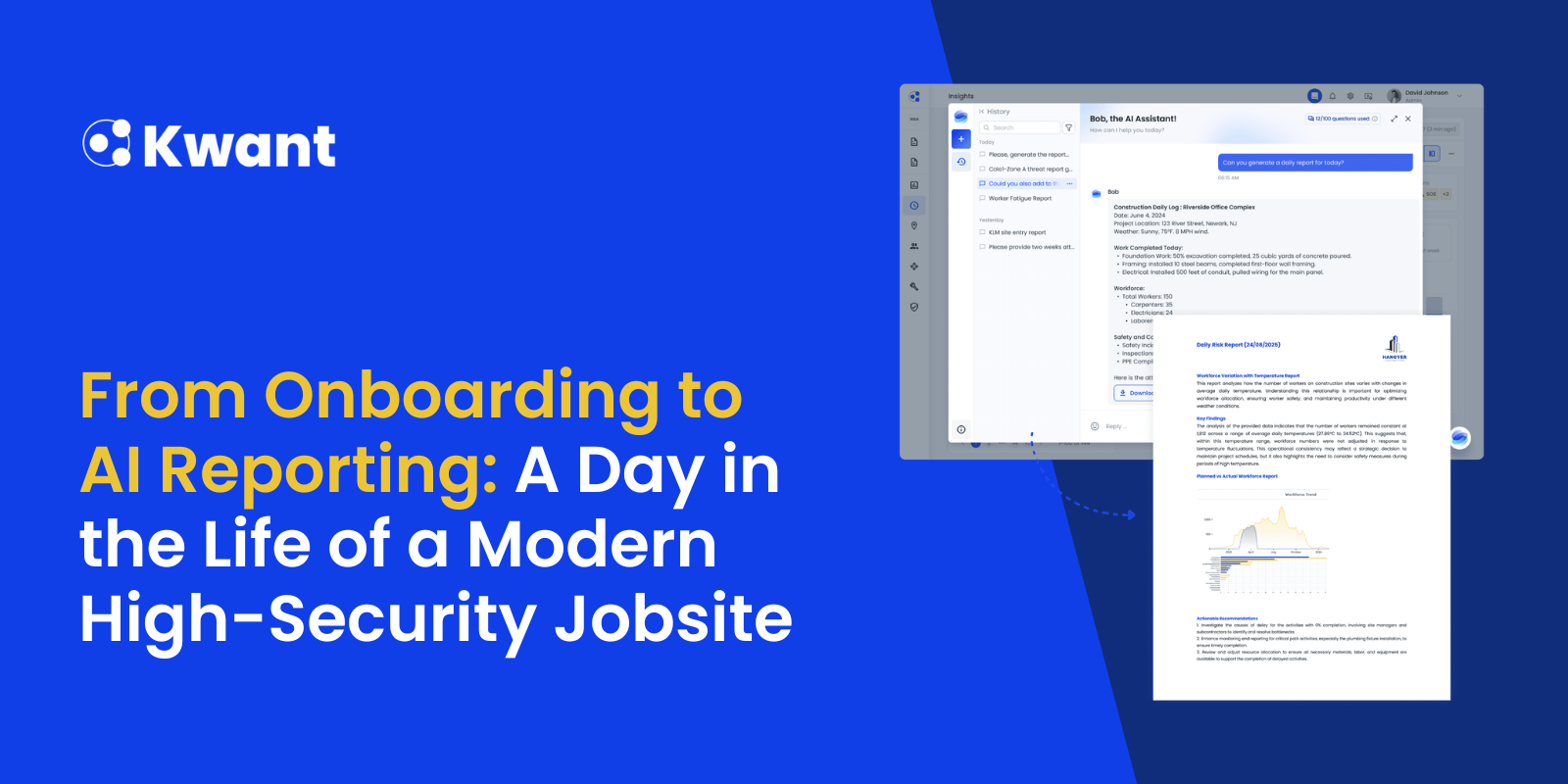
The Kwant Way: AI Construction Reporting With Workforce visibility built into the core of the project, the data is already clean. The PM simply asks Bob, the Kwant AI Assistant to generate the report. Because the system integrates with Procore, the man-hours are pushed automatically, ensuring the budget and the schedule are always in sync. The PM goes home on time, and the report is based on real-time data.
4. The Owner: Transparency as a Service
In the traditional model, owners were "in the dark." They had to reply on the GC for updates, leading to a relationship built on friction rather than facts.
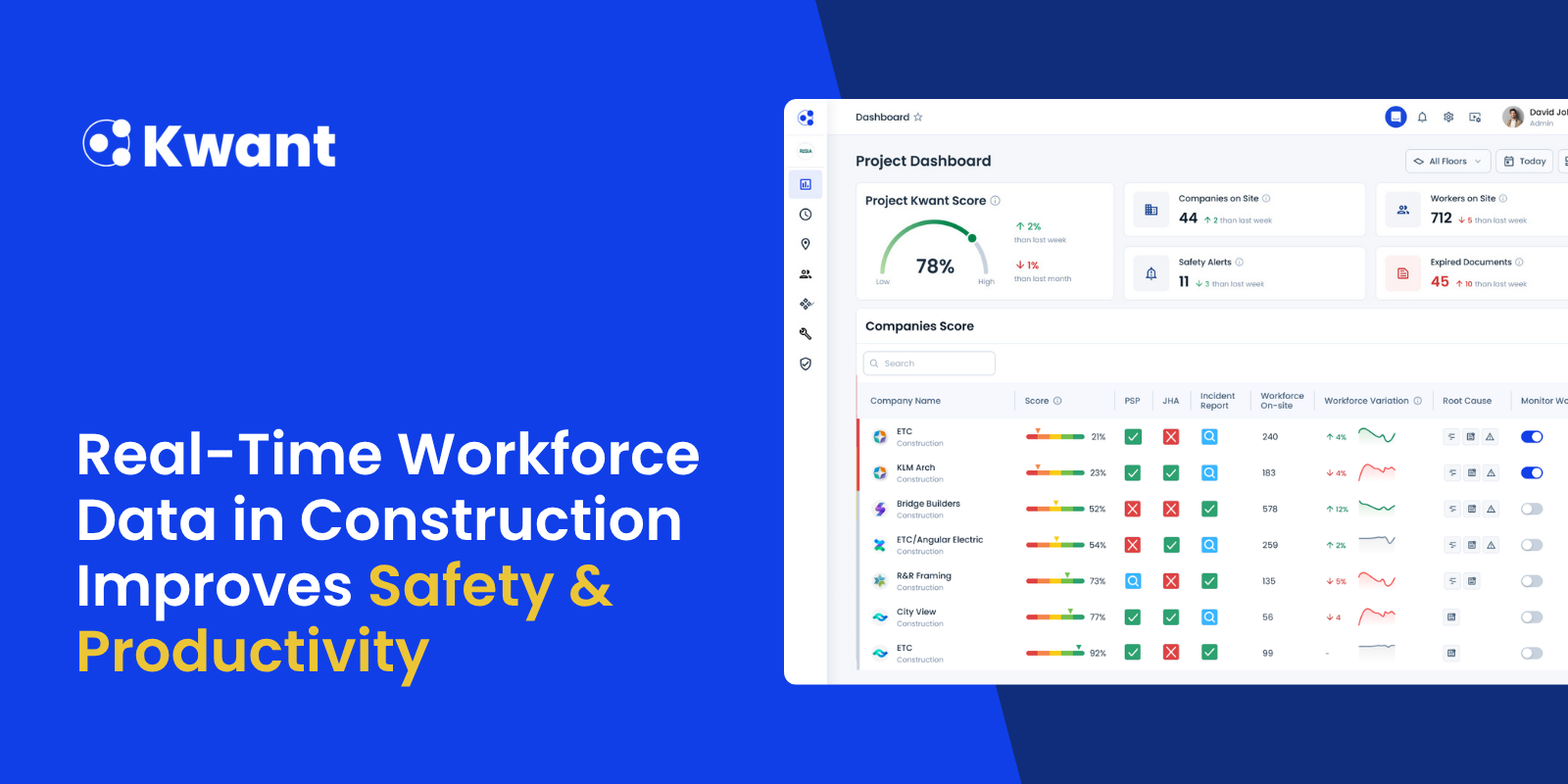
The Kwant Way: Enterprise Portfolio Analytics The Owner has a custom dashboard showing every project in their portfolio. They can see:
- Real-time headcount across all sites.
- MWBE and Diversity reporting generated at the click of a button.
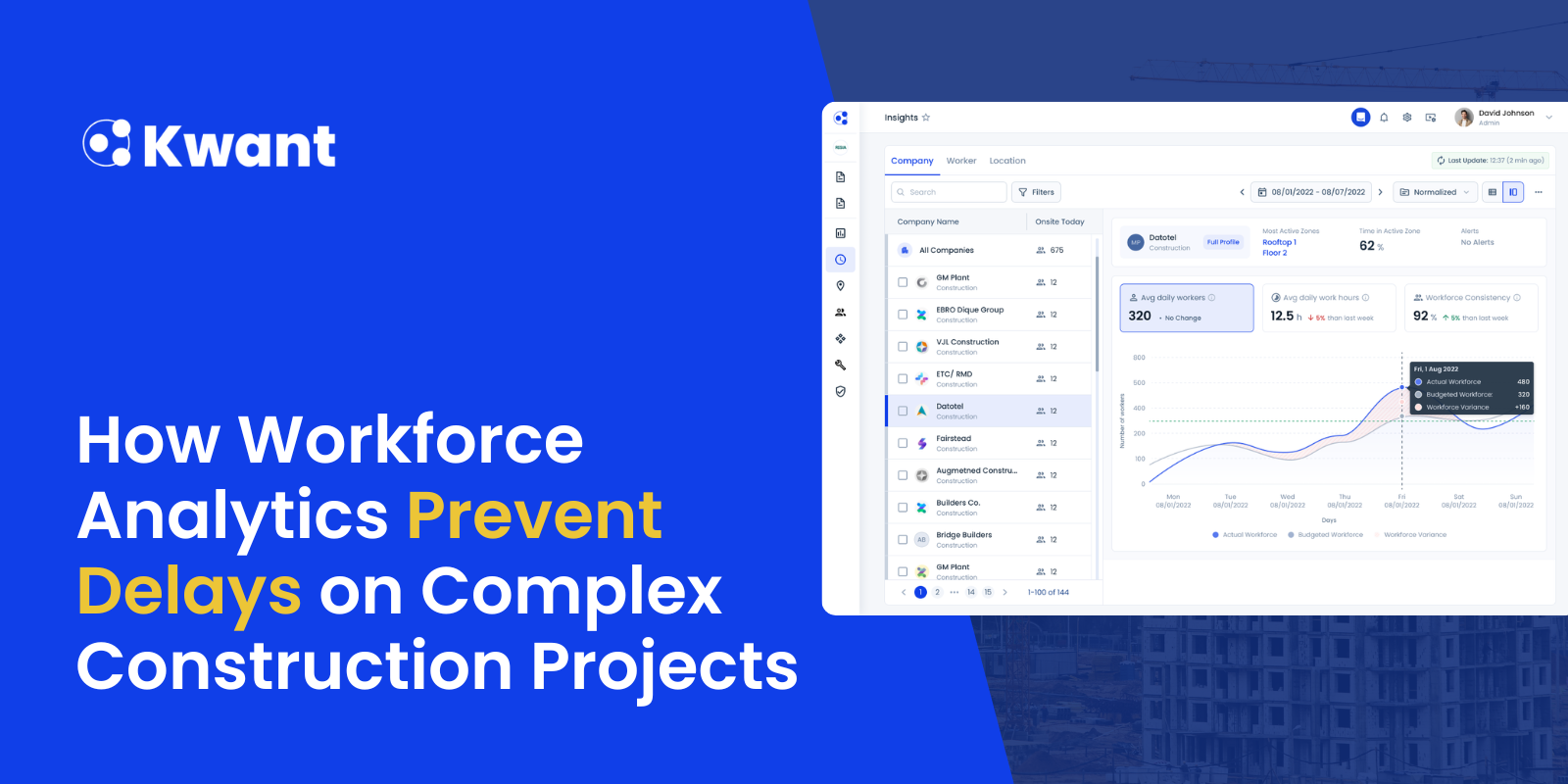
- Labor Trend Analysis: Understanding which trades are over-performing or lagging.
For owners operating under federal, state, or municipal contracts that mandate Minority and Women-owned Business Enterprise compliance reporting, automated generation from live workforce data eliminates the manual reconciliation that typically consumes hours of administrative time per reporting cycle. What was previously a multi-day administrative exercise becomes a single click.
The owner no longer needs to ask for an update. The data is always current, always accessible, and always accurate.
The Insight: Modern Onboarding is for Everyone
You don't need a $100k turnstile setup to have a 21st-century jobsite. Whether you are building a small multifamily complex or a hyperscale data center, the goal is the same: remove the friction between the person and the work.
Kwant clients report saving an average of over 20 hours per week on manual headcounts, credential tracking, and reporting tasks that automated worker onboarding and AI construction reporting eliminate from the weekly workflow. Every hour recovered is an hour that goes back into the build.
By focusing on automated worker onboarding, you build a safer, more compliant workforce before they ever arrive. Whether you are building a small multi-family complex or a hyperscale data center, the goal is the same: Removing the friction between the person and the work.
See how Kwant's automated worker onboarding works on projects of any size, with or without turnstile hardware. Or request a Demo to see the full platform, from Day One onboarding through AI construction reporting across your entire portfolio.
FAQs
1. What is automated worker onboarding in construction?
Automated worker onboarding in construction is a digital process that allows workers to complete safety orientations, upload certifications, and receive verified site credentials before they arrive on-site. Rather than processing paperwork in a trailer on Day One, the worker arrives already compliant, scans their QR code at the gate, and begins their trade immediately. Every step in the process creates a timestamped, audit-ready record tied to that worker's profile.
2. How does AI construction reporting work?
AI construction reporting processes verified workforce data, including hours worked by trade, building & zone. Then it generates structured reports on demand without manual data export or spreadsheet reconciliation. A project manager can request a cross-building labor breakdown, a safety compliance summary, or a subcontractor hours report and receive it in seconds rather than hours. Because the underlying data is captured automatically through site entry tracking, the reports reflect actual workforce activity rather than estimates.
3. Does automated worker onboarding require turnstiles or sensors?
No. Kwant's automated worker onboarding is hardware-lite by design. It works on projects of any size with or without dedicated access hardware. Workers complete their onboarding on their own device, receive a QR code upon approval, and are scanned at the gate using the Kwant Mobile App or any compatible scanner. Turnstiles and location sensors can be added for higher-security requirements but are not a prerequisite to getting started.
4. How does Kwant's platform integrate with Procore?
Man-hours logged through Kwant's site entry tracking push directly into Procore as verified time and attendance records. This means the project management platform always reflects actual worker presence rather than manually entered estimates. The integration eliminates double-entry, reduces reporting errors, and ensures that budget and schedule data in Procore remains aligned with what is actually happening on site.
5. What compliance frameworks does automated onboarding support?
Onboarding and credential management system like Kwant.ai supports compliance requirements across multiple frameworks and project types. For ISO 27001-adjacent builds, it creates a verifiable access and credentialing record from Day One. For OSHA-governed construction sites, it ensures every worker has completed required safety orientations before site entry is permitted. For projects with MWBE reporting obligations under federal or municipal contracts, it generates compliance reports automatically from verified workforce data.
6. Who benefits most from AI construction reporting?
Project managers benefit by eliminating the manual work of compiling weekly and monthly labor reports. Owners benefit by gaining direct, real-time visibility into portfolio-level workforce data without relying on GC-provided updates. Safety managers benefit by having an always-current record of which workers are on-site, which certifications are active, and which credentials are approaching expiration. The entire project team benefits because every role works from the same verified data source rather than reconciling between disconnected systems.

%20(1).svg)


